In today’s industrial landscape, steam generation systems play a vital role across a wide spectrum of sectors—ranging from food processing units and textile dyeing houses to chemical plants, pharmaceuticals, paper mills, plywood factories, and agro-based industries. As industries grow and energy demands rise, the need for reliable, efficient, and compliant boiler systems continues to increase. While the boiler itself often receives the most attention, one critical component quietly working behind the scenes is the industrial chimneys.
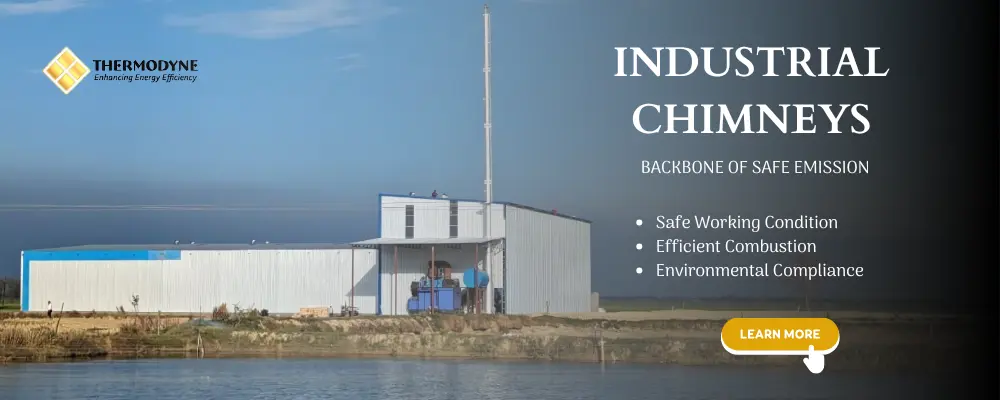
Often overlooked yet indispensable, industrial chimneys ensure that boilers, thermic fluid heaters, hot water generators, hot air generators, and furnaces operate safely, efficiently, and within environmental regulations. Designed as tall vertical structures, an industrial chimney serves as a secure passage to vent flue gases generated during fuel combustion. Its engineering, height, configuration, and structural design have a direct impact on boiler performance, workplace safety, and environmental compliance. Every chimney in industry is a critical link between the combustion equipment and the environment, making it an essential part of modern plant design.
This blog explores the importance of industrial chimneys, the science behind their height and design, the relevance of chimney engineering under India’s tightening pollution norms, and the impact of chimney performance across various sectors using steam and thermal energy.
The Role of Industrial Chimneys in Combustion and Steam Generation
Every combustion-based system releases flue gases—heat, smoke, and particulate matter—that must be safely removed from the vicinity of workers and equipment. A properly designed chimney for boiler systems provides the vertical passage needed to release these gases into the atmosphere at a height where their impact is significantly reduced.
Beyond just the passage of gases, the industrial chimney contributes to the overall efficiency and reliability of a boiler system in many ways.
a. Ensuring Safe Working Conditions
Chimneys help prevent exposure to unsafe combustion byproducts such as SO₂, NOx, CO, and particulate matter. A factory chimney channels these emissions to a safe height, protecting boiler operators, technicians, and factory workers from harmful pollutants.
b. Aiding Efficient Combustion Through Natural Draft
Boiler efficiency depends heavily on draft quality. A well-engineered boiler chimney generates strong natural draft, pulling fresh air into the combustion chamber while pushing exhaust gases upward. Insufficient draft results in:
- Incomplete combustion
- High soot formation
- Increased fuel consumption
- Irregular flame patterns
A properly calculated industrial boiler chimney design ensures a smooth, uninterrupted draft that supports reliable and efficient combustion.
c. Maintaining Pressure Stability in the Boiler
For high-pressure systems such as water tube boilers or heavy-duty steam generators, consistent draft is essential to maintain balanced furnace pressure. A properly sized chimney in boiler applications prevents dangerous backpressure, protecting internal tubes and walls from thermal stress.
d. Reducing Heat Loss and Fuel Consumption
Chimney dimensions—height, diameter, insulation level, and material—directly influence heat loss in flue gases. Correct industrial chimney design minimizes unnecessary heat escape, improving fuel utilization and overall boiler efficiency.
Why Chimney Height Matters: The Science of Draft and Dispersion
When industries consider chimney selection or evaluate different types of industrial chimney, the first and most important factor is height. Chimney height is not only a structural requirement but also a scientific parameter that influences draft formation and pollutant dispersion.
a. Effective Dispersion of Flue Gases
A taller industrial chimney ensures greater dilution and dispersion of pollutants in the upper atmosphere. This drastically reduces ground-level concentration of smoke and harmful gases.
b. Creation of Adequate Natural Draft
Natural draft depends on:
- Flue gas temperature
- Ambient air temperature
- Height of the chimney
- Gas density difference
A tall steam boiler chimney enhances this temperature gradient, generating stable draft that helps ensure:
- Smooth flue gas evacuation
- No backflow or reverse draft
- Correct air–fuel ratio
- Reduced unburnt particles
c. Mandatory Compliance With Indian Pollution Standards
In India, pollution control laws strictly regulate chimney for industry installations. The CPCB and SPCBs define minimum chimney heights based on:
- Fuel type—coal, briquettes, biomass, gas, diesel
- Boiler or heater capacity
- Emission volume
- Locality—industrial, urban, rural
- Stack monitoring requirements
Industries must comply with these norms to avoid penalties or production shutdowns. A compliant industrial chimney ensures long-term operation without regulatory interruptions.
Standards Governing Industrial Chimney System Design in India
Indian industries follow IS 6533 (Part 1 & 2) for chimney design. These standards regulate:
- Structural load calculations
- Wind load and seismic load resistance
- Shell thickness
- Internal flue arrangement
- Access platforms and ladders
- Corrosion allowance
- Foundation design
Whether it is a small chimney industrial unit or a tall RCC stack, these standards ensure long-term safety, durability, and stable performance.
Materials Used in Industrial Chimneys
Depending on pollution load, temperature, and industry requirements, chimneys are built using different materials.
a. Mild Steel (MS) Chimneys
- Most widely used
- Suitable for boilers of medium capacity
- Cost-effective
- Require periodic protective coating
- Popular choice among many industrial chimney manufacturers
b. RCC Chimneys
- Ideal for heavy industry and power plants
- High structural stability
- Corrosion resistant
- Long service life
c. Stainless Steel Chimneys
- Preferred in food, chemical, and pharma industries
- Withstand corrosive gases
- Low maintenance but higher cost
d. Twin-Wall or Insulated Chimneys
- Used where flue gas temperature is very high
- Prevent condensation
- Improve chimney lifespan
Choosing the right material ensures stable operation, safe emissions, and reduced maintenance over the chimney’s life.
Rising Importance Under Indian Environmental Regulations
India’s environmental regulations now place stricter demands on emissions, making the industrial chimney system more important than ever. Programs such as NCAP and state-level directives focus on:
- Lowering particulate matter
- Ensuring safe dispersion
- Introducing stack emission monitoring
- Avoiding ground pollution
Industries are also shifting from coal to cleaner fuels such as biomass and gas, which often requires redesigned or upgraded chimneys
The Need for Quality Industrial Chimney Manufacturers in India
Industries today require engineered, compliant, and durable chimneys—and this is exactly where Thermodyne delivers unmatched reliability. As one of the trusted industrial chimney manufacturers in India, Thermodyne ensures precise draft design, strong construction, corrosion-resistant materials, and complete SPCB/CPCB documentation. From fabrication to installation, every chimney is built for long life, safe operation, and full regulatory compliance.
Choose Thermodyne for performance-driven, approved, and industry-ready chimney solutions.
Conclusion
An industrial chimney is far more than a simple structural addition—it is a critical component that supports safe combustion, efficient boiler performance, and regulatory compliance. As industries expand and environmental standards become stricter, the importance of chimney engineering grows significantly.
Whether it is a biomass boiler in a rice mill, a gas-fired steam boiler in a hotel, or a heavy-duty industrial furnace in a chemical plant, every installation depends on a safe, efficient, and compliant chimney.
Industries investing in well-designed chimneys benefit from:
- Higher fuel efficiency
- Stable steam generation
- Lower maintenance
- Better workplace safety
- Long-term compliance
As India’s industrial sector continues to evolve, robust chimney systems will remain essential to modern boiler engineering and sustainable, safe industrial growth.