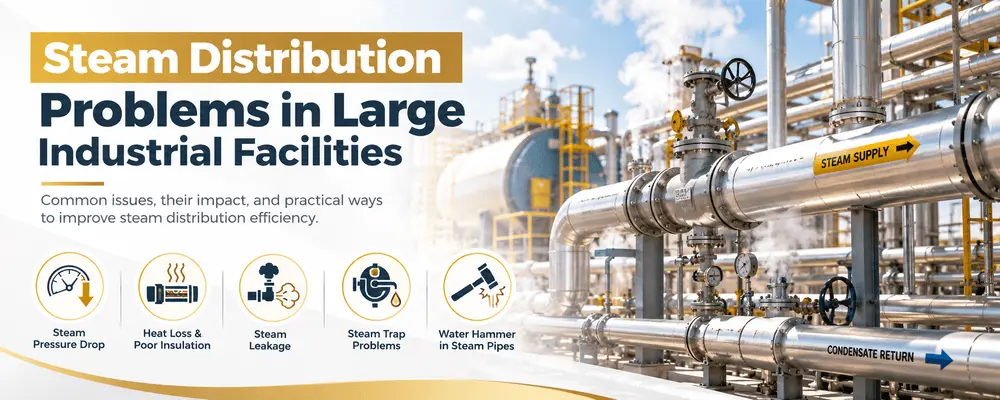
Steam supports countless industrial processes, from heating and drying to sterilisation and chemical reactions. Generating it efficiently is only half the job. A well-designed steam distribution network determines whether steam reaches production equipment at the right pressure, temperature, and quality. In large facilities, weaknesses in steam distribution quietly increase fuel consumption, disrupt process reliability, and raise operating costs. Understanding where these problems begin is the first step toward solving them.
Understanding the Industrial Steam Distribution System
A steam distribution system carries steam from the boiler to the main steam header, then through distribution pipelines and branch lines to end-use equipment such as heat exchangers, dryers, and process vessels. Along the way, pressure-reducing valves, control valves, separators, and strainers regulate and condition the steam.
Correct pipe sizing, pressure management, drainage, and layout are fundamental in large plants. Undersized pipes cause excessive velocity, while oversized pipes add surface area, heat loss, and condensate formation. Poor design anywhere in steam distribution can reduce performance across the whole plant, so every section of the network deserves careful engineering attention.
Common Steam Distribution Problems in Large Industrial Facilities
Steam Pressure Drop
Some steam pressure drop is expected in a properly designed network, so not every reduction indicates a fault. Problems arise when losses become excessive, typically because of undersized pipes, long pipeline runs, high steam velocity, numerous fittings, or demand that has changed since the original design. Low pressure at the point of use can reduce heat transfer, slow production, and cause inconsistent product quality. Assessing the steam distribution network against actual loads helps separate normal losses from genuine problems.
Heat Loss and Poor Steam Pipeline Insulation
Missing, wet, or damaged steam pipeline insulation allows heat to escape. This differs from pressure loss: the steam cools and condenses, arriving wetter and carrying less usable energy to production equipment. Fuel is wasted, and the extra condensate adds to the load on drainage. Periodic inspection, particularly around valves, flanges, and fittings, helps maintain the quality of delivered steam.
Steam Leakage
Steam leakage through valve glands, joints, flanges, and damaged pipeline components wastes energy already spent generating steam and may reduce the pressure available to users. Small leaks often go unnoticed for long periods. Regular inspection and timely repair are essential, and repairs should follow site safety procedures, since pressurised steam and hot condensate are hazardous.
Steam Trap Problems and Condensate Accumulation
Steam traps discharge condensate and non-condensable gases while limiting live steam loss. Steam trap problems occur when traps fail open and waste live steam, or fail closed or are wrongly selected, allowing condensate to accumulate and reduce heat transfer. Correct trap selection, scheduled testing, and maintenance keep steam distribution lines properly drained.
Water Hammer in Steam Pipes
Water hammer in steam pipes often develops when condensate collects at low points or in poorly drained lines and is swept along by fast-moving steam. The resulting impact can damage pipelines, supports, and valves, and it poses a serious risk to personnel. A well-drained steam distribution network, combined with gradual warm-up procedures during start-up, reduces this risk.
How to Improve Steam Distribution Efficiency
Practical improvements should match actual operating conditions and engineering requirements:
- Size pipes correctly and assess steam pressure drop against process needs.
- Maintain steam pipeline insulation and inspect it periodically.
- Detecting and repairing steam leakage routinely.
- Test and maintain steam traps regularly to prevent steam trap problems.
- Arrange condensate drainage and return properly. A well-designed condensate recovery system can reduce makeup water demand and the energy needed to heat it.
- Install and maintain separators, strainers, drip legs, and drainage points where required.
- Monitor steam pressure, temperature, condensate return, and overall system performance.
- Review layouts whenever production demand or plant capacity changes.
No single measure suits every plant. Load profiles, pipe routing, and process requirements differ, so each recommendation should be reviewed by qualified engineers before implementation.
Conclusion
Identifying and correcting steam distribution problems improves energy efficiency, process consistency, equipment reliability, and overall operating performance. Pressure loss, heat loss, steam leakage, and condensate accumulation each have distinct causes, and each needs its own solution.
Industrial plants should assess their steam distribution networks regularly and consult qualified steam-system professionals for engineering recommendations suited to their facility. Contact Thermodyne Engineering Systems to evaluate your steam system and plan dependable improvements.