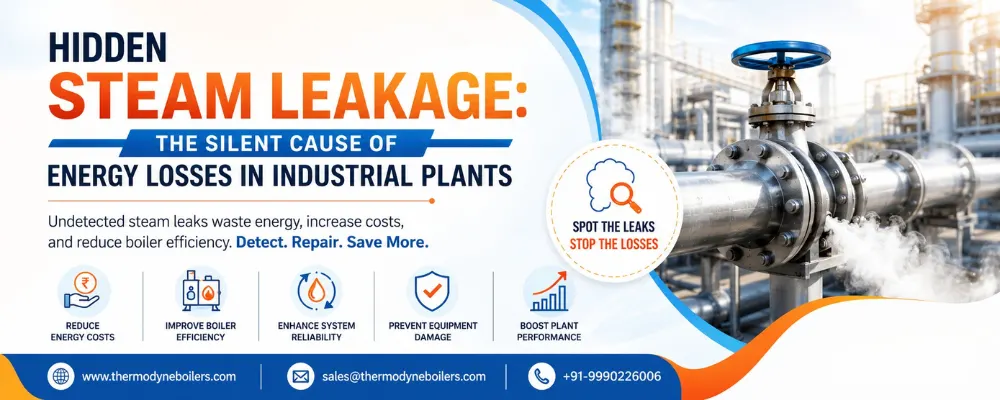
Steam leakage is one of the most overlooked yet costly problems in industrial energy management. Every undetected leak silently drains your budget, overloads your steam boiler, and reduces overall plant efficiency — often without triggering a single alarm.
If you operate an industrial boiler or manage a large-scale manufacturing facility, you already know that steam is the backbone of your operations. But here is what most plant managers fail to address in time: steam leakage quietly accounts for 20–30% of total energy losses in a typical steam system — and the majority of it goes undetected for months, sometimes years.
This blog explains what causes steam leakage, how it impacts your steam boiler efficiency, and what steps you can take right now to detect and fix it before it costs you crores.
What Is Steam Leakage and Why Does It Matter?
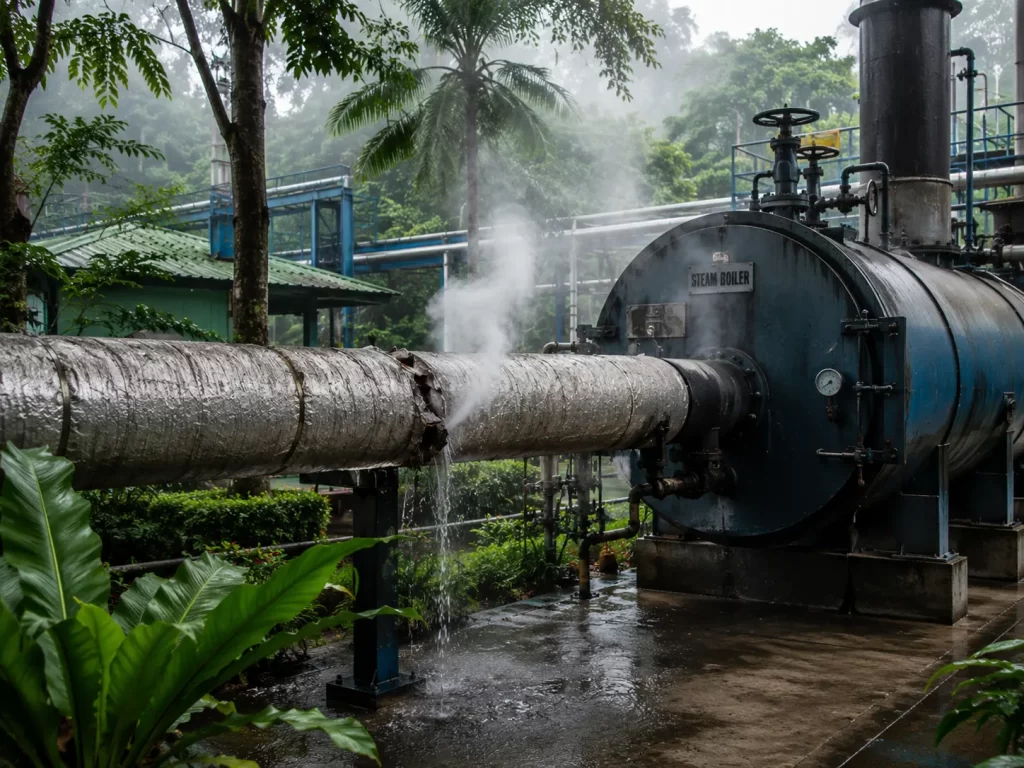
Steam leakage refers to the unintended escape of pressurized steam from any point in the steam distribution system — including pipes, valves, flanges, steam traps, and joints. Unlike a visible water leak, steam leakage is often invisible to the naked eye, especially in high-pressure environments where steam immediately vaporizes upon escape.
For a medium-sized industrial boiler operating at 8–10 bar pressure, even a 3mm leak point can waste over 50 kg of steam per hour. Multiply that across 15–20 leak points in a large facility, and you are looking at a staggering energy loss that directly inflates your fuel bill and reduces your steam boiler output capacity.
According to the U.S. Department of Energy, steam leakage in industrial facilities can account for up to 25% of total steam generation — making it the single largest source of avoidable energy loss in any steam system
Top Causes of Steam Leakage in Industrial Boiler Systems
Understanding the root causes of steam leakage is the first step toward prevention. In most industrial boiler setups, leakage originates from the following points:
1. Failed or bypassed steam traps
A failed steam trap is the leading cause of steam leakage in any distribution network. When a trap fails open, it continuously passes live steam into the condensate return line, wasting enormous amounts of energy without any visible sign of damage.
2. Worn flange gaskets and valve packing
Over time, the gaskets at flange joints and the packing inside valves degrade due to thermal cycling. This leads to steam leakage at connection points — a problem especially common in aging industrial boiler pipelines that have not been inspected in over five years.
3. Pipe corrosion and mechanical damage
Internal corrosion, water hammer events, and physical impact can create pinhole leaks in distribution pipes. These steam leakage points are among the hardest to detect because they are often located behind insulation or in hard-to-reach areas of the plant.
4. Improper installation and maintenance gaps
Incorrect torquing of bolts, use of wrong gasket materials, or skipped maintenance schedules all contribute to steam leakage over time. A well-maintained steam boiler system with proper installation practices can reduce leak frequency by up to 60%.
How Steam Leakage Impacts Your Energy Costs
The financial impact of steam leakage goes far beyond the obvious waste of steam. Here is the full picture:
- Your steam boiler works harder and burns more fuel to compensate for lost steam pressure
- Condensate recovery drops, increasing water treatment and makeup water costs
- Uneven pressure in the distribution network reduces process quality in production lines
- Persistent steam leakage accelerates corrosion and reduces overall pipe lifespan
- Safety risks increase — escaping high-pressure steam can cause serious injury to workers
A comprehensive audit of a typical industrial boiler network often uncovers 15–30 active steam leakage points. Repairing all of them can yield annual savings of ₹20 lakh to ₹2 crore depending on facility size and steam pressure.
How to Detect Steam Leakage: 2 Proven Methods
Modern steam leakage detection does not require shutting down your plant. These methods work effectively on live systems:
- Infrared thermography — Thermal cameras detect temperature anomalies caused by steam leakage through insulated surfaces and behind walls
- Steam trap testing — Systematic testing of every trap using temperature or ultrasound helps catch the most common source of steam leakage before it escalates
Preventing Steam Leakage: Best Practices for Boiler Maintenance
Prevention is always cheaper than repair. To keep your steam boiler system running at peak efficiency and minimize steam leakage, follow these boiler maintenance best practices:
- Conduct a full steam trap survey at least once a year
- Replace all gaskets and valve packing during scheduled shutdowns
- Schedule thermography surveys every 18–24 months for your entire pipe network
- Train your operations team to recognize early signs of steam leakage
- Track repair history and steam consumption benchmarks to spot anomalies early
Final Takeaway
Steam leakage is not just a maintenance issue — it is a direct drain on your profitability. Every day a leak goes undetected, your industrial boiler burns extra fuel, your steam boiler ages faster, and your energy costs climb higher. A structured steam leakage audit, done annually, is one of the highest-ROI investments any plant manager can make. The question is not whether you have steam leakage — the question is how much it is costing you right now.
FAQs related to Steam leakage-
Steam leakage is the unintended escape of pressurized steam from pipes, valves, flanges, steam traps, joints, or other components of a steam distribution network. Even small leaks can lead to significant energy and fuel losses over time.
In many industrial facilities, steam leakage can account for 20–30% of total steam generation losses. A small leak of just a few millimeters can waste hundreds of kilograms of steam every day, increasing fuel consumption and operating costs.
The most common causes include:
- Failed steam traps
- Damaged valve packing
- Worn flange gaskets
- Corroded pipelines
- Water hammer damage
- Improper installation and maintenance practices
Steam leakage forces the steam boiler to generate additional steam to maintain process demand. This increases fuel consumption, lowers steam boiler efficiency, raises operating costs, and places extra stress on boiler equipment.
Hidden steam leakage can be identified through:
- Infrared thermography inspections
- Ultrasonic leak detection
- Steam trap testing programs
- Regular plant energy audits
- Visual inspection of insulation damage and condensate accumulation
Steam traps are designed to remove condensate while retaining live steam. When a steam trap fails in the open position, it allows live steam to pass continuously into the condensate system, causing substantial energy losses.
Yes. Steam leakage often occurs beneath insulation due to corrosion, damaged welds, or pipe deterioration. These leaks may remain unnoticed for long periods because the insulation hides visible signs of steam escape.
High-pressure steam leakage can cause severe burns, reduce workplace visibility, damage nearby equipment, and create hazardous operating conditions for plant personnel.
Most experts recommend:
- Annual steam trap surveys
- Regular visual inspections
- Infrared thermography surveys every 18–24 months
- Routine maintenance checks during plant shutdowns
Steam leakage can be minimized by:
- Conducting regular maintenance inspections
- Replacing worn gaskets and valve packing
- Monitoring steam trap performance
- Repairing insulation damage promptly
- Implementing a preventive maintenance program
Depending on steam pressure, plant size, and operating hours, steam leakage can cost industries anywhere from a few lakhs to several crores annually in wasted fuel, water treatment expenses, and lost production efficiency.
Yes. Steam leakage repair projects typically offer one of the fastest returns on investment (ROI) in industrial energy management. Many facilities recover repair costs within a few months through reduced fuel consumption and improved boiler performance.
Yes. Steam leakage reduces condensate recovery efficiency, increasing makeup water requirements, chemical treatment costs, and overall boiler operating expenses.
Common indicators include:
- Unexplained increases in fuel consumption
- Reduced steam pressure at process equipment
- Frequent boiler firing cycles
- Hot spots on insulated pipes
- Excessive condensate losses
- Higher-than-normal water consumption