Thermodyne Engineering Systems

Powertherm High Pressure Boiler – Trusted Solution for Power & Process Industries
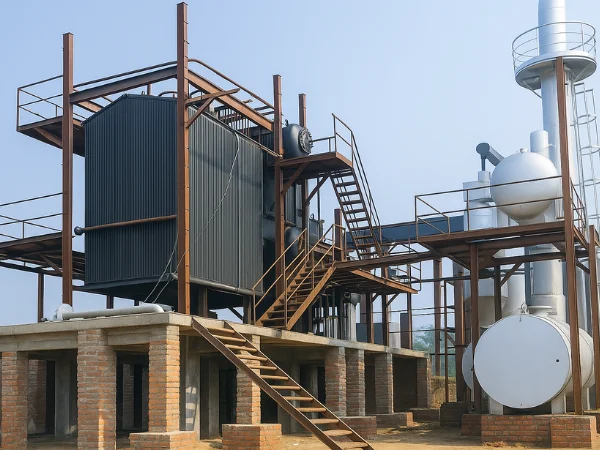
High Pressure Boiler : Powertherm
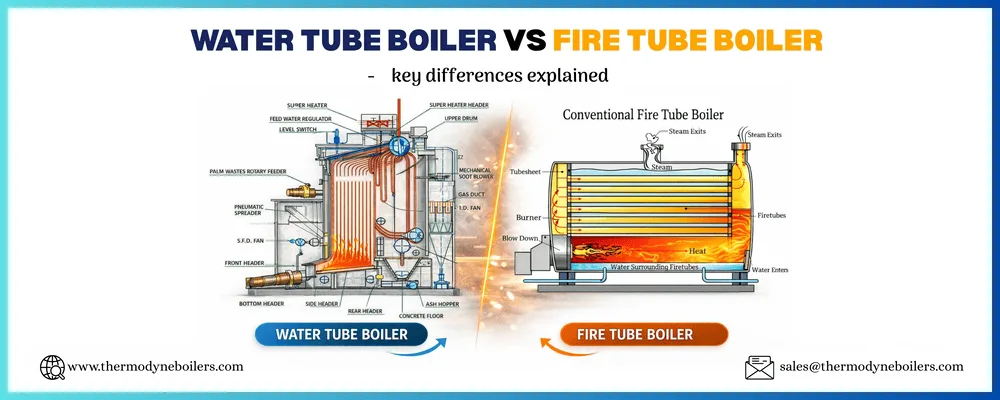
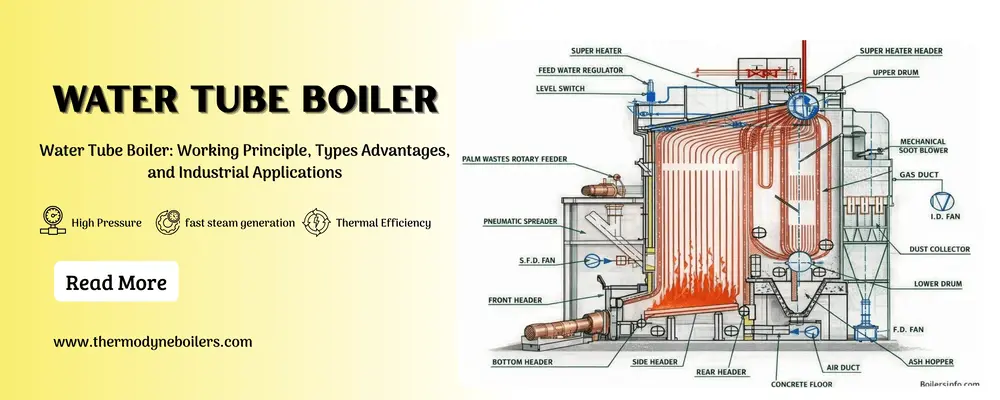
Powertherm is a high pressure boiler engineered for efficient heat transfer, reliable operation, and continuous steam generation. Designed as a water tube boiler, it circulates water inside the tubes while hot flue gases pass over them, ensuring maximum heat absorption and improved thermal efficiency.
In this advanced boiler design, water flows between the steam drum and water tubes, gradually absorbing heat until it is converted into saturated steam. The water tube configuration supports faster steam generation, higher operating pressures, and enhanced safety compared to conventional boiler systems.
High pressure boiler Powertherm is available in both natural circulation and forced circulation configurations. In natural circulation systems, water movement occurs due to density differences created by temperature variations. In forced circulation systems, pumps actively circulate water through the tubes, ensuring uniform heat absorption and stable performance under demanding operating conditions.
This high pressure boiler is designed with robust construction, optimized heat transfer surfaces, and advanced engineering features to deliver dependable performance. Its fuel flexibility, low maintenance requirements, and high operational efficiency make it a reliable solution for continuous steam generation while helping reduce operating costs and improve overall system productivity.
Capacity
Fuel Options
Model Option
Industry Segments
Advantages
Product Video
Capacity
- High Pressure Boilers Powertherm are available in capacities from 10 TPH to 25 TPH.
Fuel Options
Model Option
Industry Segments
Power plants
Chemical and petrochemical industries
Refineries
Paper and pulp industries
Sugar mills
Textile processing units
Food processing plants
Pharmaceutical manufacturing
Advantages
- The heat of combustion is utilized more efficiently due to the use of a large number of small-diameter tubes.
- To reduce flow resistance, Powertherm boilers use a parallel arrangement of water tubes.
- Boiler components are mostly arranged horizontally, ensuring better accessibility and ease of operation.
- Uniform heating of all parts reduces the risk of localized overheating and eliminates thermal stress issues.
- High water velocity inside the tubes prevents scale formation, ensuring better performance and longer life.
Product Video
Suggested Products


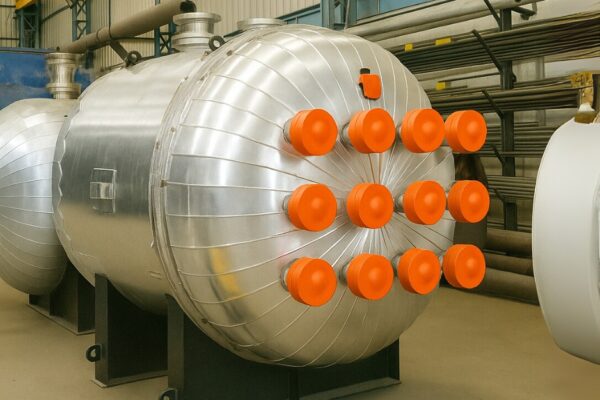

Wastetherm- (Waste Heat Recovery Boiler)

Steam Accumulator

Book a free Consultation
Related Blogs
High Pressure Boiler (Powertherm) related FAQs
A high-pressure boiler is a boiler that generates steam at a pressure of more than 15 psi. High-pressure boilers are used in a variety of industries, including power generation, manufacturing, and healthcare.
There are two main types of high-pressure boilers: fire-tube boilers and water-tube boilers. Fire-tube boilers have a firebox that heats tubes that carry water or steam. Water-tube boilers have tubes that carry water or steam that are surrounded by a firebox.
The factors to consider when choosing a high-pressure boiler include the size of the boiler, the type of fuel that will be used, the efficiency of the boiler, the cost of the boiler, and the safety features of the boiler.
The safety precautions that should be taken when using high-pressure boilers include:
- Boiler should always be operated by trained personnel.
- Boiler should be regularly inspected and maintained.
- Boiler should be properly ventilated to prevent the buildup of carbon monoxide.
- Boiler should be located in a safe area away from flammable materials.
- Boiler should have a pressure relief valve that will automatically release steam if the pressure inside the boiler gets too high.
- Boiler should have a safety valve that will automatically shut down the boiler if the pressure inside the boiler gets too high.
The environmental impacts of using high-pressure boilers include:
- Boiler can emit pollutants into the air, including carbon monoxide, nitrogen oxides, and sulfur dioxide.
- Boiler can also consume a significant amount of water.
The future trends for high-pressure boilers include:
- The use of more efficient boilers that emit fewer pollutants.
- The use of boilers that can operate on renewable fuels, such as biomass and solar energy.
- The development of new technologies that can improve the safety and efficiency of boilers.
High-pressure boilers are used in industries that demand high steam output and thermal efficiency. Key applications include:
Power generation
Chemical and petrochemical processing
Oil refineries
Sugar and paper mills
Textile and dyeing units
Food and beverage processing
Pharmaceutical manufacturing
District heating systems
These boilers are ideal for operations that require consistent, high-temperature steam for extended periods.
High-pressure boilers require regular maintenance to ensure that they operate safely and efficiently. The maintenance procedures for high-pressure boilers include:
- Inspection: High-pressure boilers should be inspected regularly by a qualified technician to identify any potential problems.
- Cleaning: High-pressure boilers should be cleaned regularly to remove any build-up of sediment or debris.
- Testing: High-pressure boilers should be tested regularly to ensure that they are operating safely and efficiently.
Contact us for more details about our boilers, installations and services.