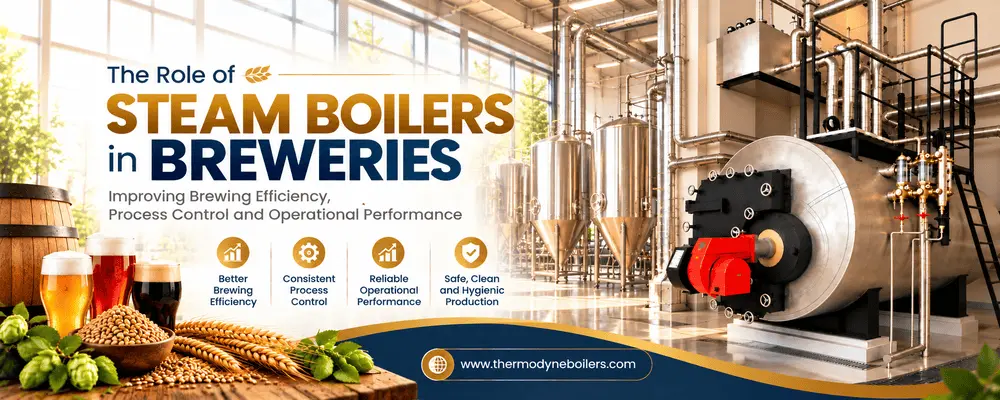
Every consistent pint begins with consistent heat. From the first infusion of hot water to the final rinse of a returnable keg, brewing depends on thermal energy that is predictable, controllable and available exactly when the brew schedule demands it. In most plants, a well-planned Steam Boiler for Brewery installation sits at the centre of that requirement, converting fuel into steam that carries heat safely to wherever the process needs it. Whether you run a small craft brewhouse or a high-volume plant, understanding how steam supports each stage helps you specify the right steam boiler for brewery operations.
Where Steam Supports the Brewing Process
Mashing and Wort Boiling
During mashing, the grist and water must be held at defined temperature rests so enzymes can convert starches into fermentable sugars. Steam supplied to a jacketed mash tun offers gentle, adjustable heating without direct flame contact. For wort boiling, a correctly sized steam boiler for brewery duty can feed a kettle jacket, internal calandria or external heater.
Hot Water, Indirect Heating and Sanitation
Steam also generates hot liquor for mashing and sparging and heats water through heat exchangers. Because heating is indirect, steam does not contact the product, which supports hygienic operation. The same supply serves clean-in-place systems, tank cleaning, keg washers and bottle washers, where hot cleaning solutions are essential for sanitation. This is why many plants treat an industrial steam boiler as a central utility, with one steam boiler for brewery installation serving both brewhouse and packaging.
Why Steam Pressure and Steam Quality Matter
Brewing equipment is designed around a particular steam pressure, and steam temperature follows pressure. Unstable pressure therefore changes heating rates, boil intensity and batch repeatability. A dependable steam boiler for brewery system should hold stable pressure when kettle heating coincides with cleaning cycles.
Steam quality matters as well. Wet steam carries water droplets that reduce heat transfer and can disturb control, so correct boiler operation, properly sized piping and working steam traps all help a steam boiler for brewery system deliver dry, usable steam to each vessel.
Selecting the Right Boiler Capacity
Managing Fluctuating Steam Demand
Brewery demand is rarely flat. The kettle boil, hot-water generation and washing create short peaks, often when brewing and cleaning overlap, followed by quieter periods. Sizing for the peak alone can leave a boiler cycling at low load, while undersizing causes pressure drops. A realistic load profile, built from brew schedules, vessel volumes and packaging timetables, is the right starting point for any steam boiler for brewery projects.
Craft Breweries and Larger Plants
| Factor | Small craft brewery | Medium and large brewery |
|---|---|---|
Typical steam use |
Kettle, hot liquor, cleaning |
Multiple brews, packaging lines, extensive cleaning |
Boiler priority |
Compact size and good turndown |
Capacity, flexibility and standby |
Configuration |
Often a single unit |
Load analysis, sometimes multiple boilers |
Planning focus |
Room for growth |
Continuous reliability |
A compact steam boiler for brewery unit may suit a craft operation, while larger facilities need a brewery boiler system designed around load diversity and future expansion.
Fuel and Operating Pressure
Fuel availability and cost vary by location, so the choice among gas, oil, biomass or other fuels should reflect local supply. Operating pressure should meet the highest requirement among connected equipment, with allowance for piping losses. Every buyer of a steam boiler for brewery plant should confirm both early.
Improving Efficiency Through System Design
Distribution, Condensate and Heat Recovery
Insulated, properly sized piping and correctly installed traps reduce heat loss and prevent water carryover. Returning condensate recovers heat and treated water, reducing the energy needed to make fresh steam. Where technically suitable, flash steam, flue gas or blowdown heat recovery may further reduce avoidable losses. An energy-efficient steam boiler depends on the whole system working together, not on burner choice alone, and a steam boiler for brewery installation benefits from this integrated view.
Feedwater Treatment and Blowdown
Scale and corrosion reduce heat transfer and shorten equipment life. Appropriate feedwater treatment, a deaerator or feed tank where the design includes one, regular water testing and controlled blowdown protect pressure parts and keep performance steady. This matters for any steam boiler for brewery plant that runs daily.
Maintenance and Operational Safety
Routine maintenance should cover burners, safety valves, gauges, level controls and traps, plus cleaning of heat-transfer surfaces. Trained operators, documented procedures and compliance with applicable boiler regulations are essential. Reliable steam boiler for brewery performance depends as much on disciplined upkeep as on the original equipment.
Practical Recommendations: A Pre-Selection Checklist
Before choosing equipment, owners and plant engineers should gather the following:
- Actual steam load for brewhouse, cleaning and packaging
- Required operating pressure
- Available fuel options
- Condensate return potential
- Water quality and treatment needs
- Expansion and future production plans
These inputs help a supplier recommend an industrial boiler for food and beverage industry solution that fits the plant rather than a generic specification. Evaluating a steam boiler for beer production this way also allows options to be compared on lifecycle operating cost, not only purchase price. Distilleries, which also rely on steady process heat, can follow the same approach.
Recommended Thermodyne Boilers for Breweries and Distilleries
Thermodyne Engineering Systems supplies two steam boiler options for breweries and distilleries.

Savemax
The Savemax is an oil and gas fired boiler suited to plants where liquid or gaseous fuel is available and a steam boiler for brewery or distillery duty is required.
- Runs on liquid or gaseous fuel
- Built for brewery and distillery steam duty

Intech
The Intech is a shell and tube, three-pass boiler for the same sectors.
- Shell and tube construction
- Three-pass design
Choosing the Right Partner
Thermodyne Engineering Systems is an industrial boiler solutions provider whose approach to every Steam Boiler for Brewery enquiry starts from the process requirement. Selecting the right steam boiler for brewery solution depends on actual steam load, operating pressure, fuel availability, process needs and future production plans. Brewery owners and plant engineers are welcome to explore suitable boiler solutions from Thermodyne and share their brew schedules and utility data with the engineering team.
Conclusion
Steam underpins mashing, wort boiling, hot water, indirect heating and sanitation, making boiler selection a production decision as much as a utility one. A carefully sized and maintained Steam Boiler for Brewery plant, supported by good distribution, condensate return and sound water treatment, helps deliver stable brewing conditions and better control of operating costs. For breweries planning a new installation or upgrade, Thermodyne Engineering Systems can help match the boiler to today’s process and tomorrow’s growth.