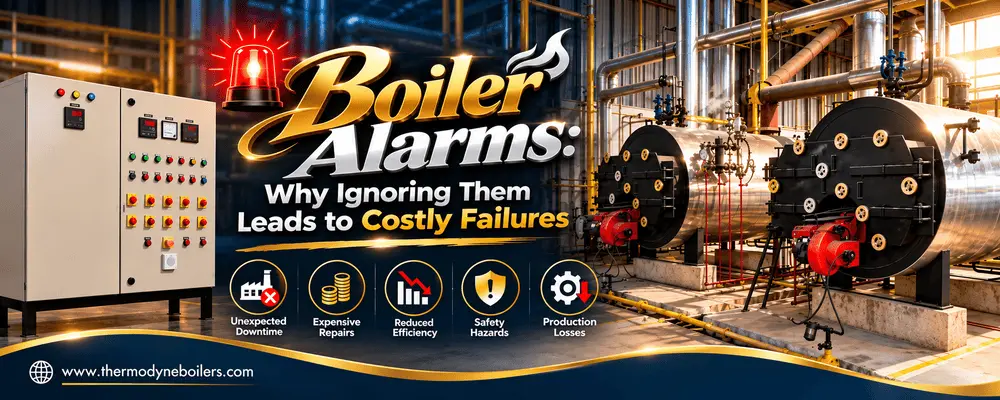
Industrial boilers play an essential role in industries such as food processing, pharmaceuticals, textiles, chemicals, and manufacturing. They provide steam for heating, processing, cleaning, and other industrial applications. However, operating a boiler requires careful monitoring of pressure, temperature, water levels, and combustion conditions. Even a minor operational issue can affect productivity and equipment safety. This is why Boiler Alarms are an important part of industrial boiler operation.
These alarms notify operators when operating conditions move outside predefined limits. Ignoring such warnings can lead to equipment damage, unexpected shutdowns, expensive repairs, and potential safety hazards. Understanding these warnings and responding promptly helps industries maintain reliable operations.
What Are Boiler Alarms and Why Are They Important?
Boiler Alarms are warning signals generated by a boiler’s monitoring and control system when abnormal operating conditions occur. Depending on the boiler design, these alarms may indicate low water levels, excessive pressure, high temperatures, or burner-related problems.
An effective alarm system helps operators identify potential problems before they develop into serious failures. It also supports Boiler Safety by providing timely information about abnormal operating conditions.
However, alarms alone cannot prevent every failure. Operators must understand what each warning means, follow the manufacturer’s instructions, and investigate the underlying cause rather than repeatedly resetting the alarm.
Common Boiler Alarms Operators Should Never Ignore
Understanding common warning signals is essential for effective Boiler Troubleshooting. The alarms available depend on the boiler model, burner configuration, instrumentation, and control system.
1. Low Water Level Alarm
Water is essential for safe steam generation. If the water level falls below the permitted operating range, boiler heating surfaces may overheat, potentially causing severe damage.
A low-water alarm requires immediate attention according to the manufacturer’s operating procedures. Operators should never bypass low-water protection devices to maintain production.
2. High Pressure Alarm
A high-pressure alarm indicates that steam pressure has exceeded a predefined operating limit. Possible causes include pressure-control problems, sudden changes in steam demand, or control system malfunctions.
Excessive pressure can place additional stress on boiler components and connected piping. Operators must follow approved corrective or shutdown procedures when necessary.
3. High Temperature Alarm
Unusual temperature readings may indicate abnormal combustion, insufficient heat transfer, restricted flow, or instrumentation problems.
Investigating these warnings promptly helps identify the cause and reduces the risk of overheating and component deterioration.
4. Flame Failure Alarm
Flame failure occurs when the burner flame is lost or cannot be established as expected. The burner management system may shut down fuel supply to prevent unsafe conditions.
Operators should follow the prescribed inspection and restart procedures instead of repeatedly attempting to restart the burner without identifying the underlying problem.
What Happens When You Ignore Boiler Alarms?
Ignoring Boiler Alarms can create several operational and financial problems for industrial facilities.
- Unexpected downtime: Equipment shutdowns can interrupt production schedules and delay deliveries.
- Expensive repairs: Minor faults can develop into major component failures when left unresolved.
- Reduced efficiency: Abnormal operating conditions may increase fuel consumption and reduce overall performance.
- Safety hazards: Failure to respond to critical warnings can expose personnel and equipment to dangerous conditions.
- Production losses: Unplanned interruptions can affect order fulfilment, operating costs, and customer commitments.
For example, a recurring burner alarm might indicate an ignition problem or faulty instrumentation. If operators repeatedly reset the alarm without investigation, the underlying fault may remain unresolved.
Prompt action and effective Boiler Maintenance help reduce these risks. Alarms should complement, rather than replace, scheduled inspections and preventive maintenance.
Real-World Case Study: France Sugar Refinery Boiler Failure
On 14 April 2021, a boiler failure at a sugar refinery in Grand-Bourg, France, caused severe boiler tube damage, with estimated repair costs of €4 million. The incident highlights the importance of reliable Boiler Alarms, water-level monitoring, and regular safety-system maintenance.
Source: ARIA – Official Incident Report
How to Respond to Boiler Alarms Effectively
A structured response process helps operators manage abnormal conditions safely and efficiently.
- Identify the alarm: Read the control panel message and understand which operating parameter has moved outside its permitted range.
- Follow safety procedures: Refer to the operating manual and refer to the established emergency procedures. Critical alarms may require a protective shutdown.
- Investigate the root cause: Qualified personnel should examine relevant sensors, controls, combustion equipment, water systems, or other components.
- Record recurring issues: Maintain records of alarm events, operating conditions, inspections, and corrective actions to identify recurring problems.
- Verify safe operation: Before restarting equipment, ensure the underlying issue has been addressed and all required safety checks have been completed.
Effective Boiler Troubleshooting depends on trained personnel, reliable instrumentation, and clear operating procedures. Safety interlocks should never be bypassed to keep production running.
Best Practices for Preventing Costly Boiler Failures
Preventive measures can improve reliability and reduce avoidable maintenance expenses. Industries should schedule inspections according to manufacturer recommendations and applicable regulations.
Regularly testing relevant sensors, pressure controls, low-water protection devices, and burner safety systems helps identify problems before they affect operations. Operators should also receive training on alarm meanings, escalation procedures, and safe shutdown requirements.
Selecting a suitable Industrial Boiler is equally important. Capacity, operating pressure, steam demand, fuel type, process requirements, and available safety controls should be evaluated before choosing equipment.
When faults require component replacement or specialist attention, timely Boiler Repair helps restore reliable operation. Maintenance teams should also review repeated alarm events to determine whether adjustments, component replacement, or changes to maintenance practices are necessary.
How Thermodyne Supports Reliable Boiler Operations
Thermodyne Engineering Systems provides industrial boiler solutions for different steam generation and process heating requirements. Selecting appropriate equipment and maintaining it correctly can help industries achieve dependable performance.
Businesses evaluating boiler solutions should consider process requirements, suitable safety controls, maintenance accessibility, and technical support. Combining appropriate equipment with trained operators and a structured maintenance program helps improve operational reliability.
Conclusion
Boiler Alarms provide important warnings about abnormal operating conditions that may threaten equipment reliability, production continuity, and workplace safety. Ignoring these signals can turn minor operational issues into expensive failures.
Industries can reduce avoidable risks by responding promptly, investigating root causes, maintaining safety devices, and training operators. A proactive approach to Boiler Safety, regular inspections, and timely corrective action helps protect equipment and support efficient industrial operations.
For reliable steam generation, businesses should combine suitable boiler selection with responsible operation and preventive maintenance.