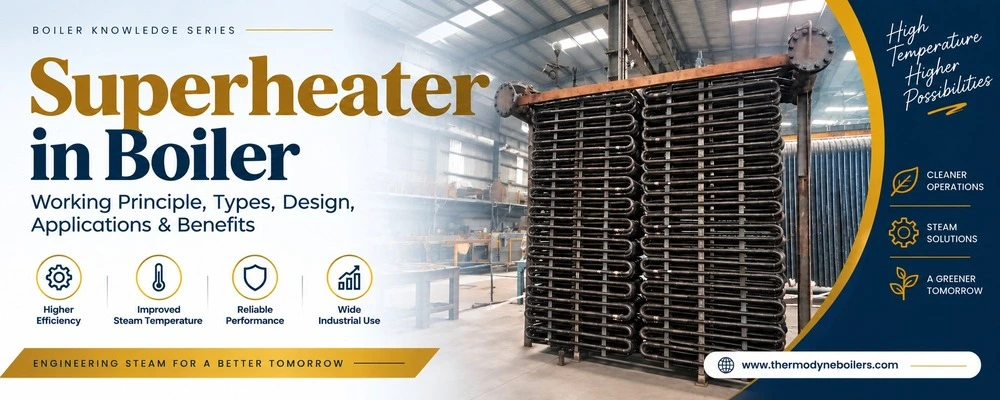
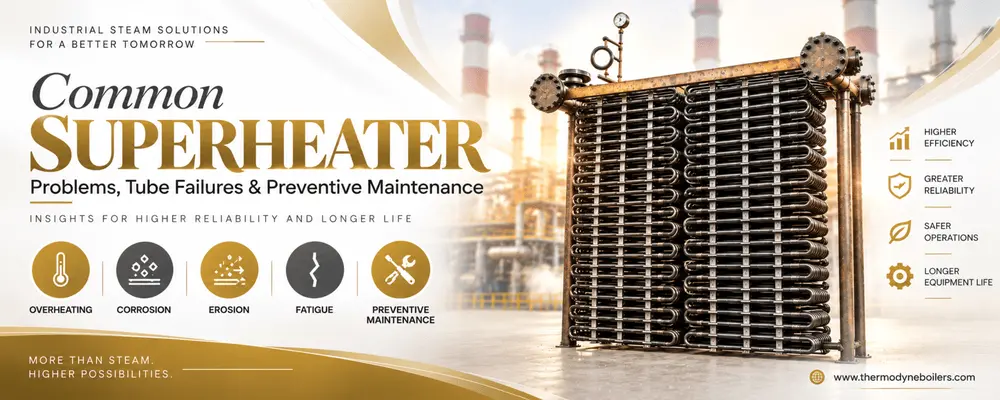
A superheater is one of the most critical components of a boiler system, responsible for converting saturated steam into superheated steam before it enters the turbine. Because this unit operates continuously under extreme temperature and pressure, it is highly prone to wear, corrosion, and failure over time. In this blog, we will explore the most common problems it faces, the leading causes of tube failure, and the preventive maintenance practices that keep it running reliably.
Common Superheater Problems
Superheater problems in power plants can arise from several operational and design factors. The most frequent issues affecting its performance include:
- Overheating: When steam flow inside the tube is not properly maintained, metal temperature rises above the design limit, gradually weakening the tube material.
- Uneven Flue Gas Distribution: If flue gas flow across the unit is not uniform, some tubes overheat while others remain relatively cool, creating long-term stress imbalances.
- Obstruction in Steam Flow: Scaling, internal deposits, or blockages restrict proper steam flow through the tubes, reducing the cooling effect and triggering localized overheating.
- Inadequate Soot Blowing: When soot blowers fail to clean the surfaces effectively, ash and soot accumulation reduces heat transfer efficiency.
Main Causes of Superheater Tube Failure
Superheater tube failure remains one of the leading causes of forced outages in thermal power plants. The key causes behind it are as follows:
1. Overheating Failures
- Short-term overheating: A sudden temperature spike causes tube bulging and rupture.
- Long-term overheating: Sustained operation above design temperature reduces the creep strength of the tube material, eventually causing failure.
2. Superheater Tube Corrosion
Superheater tube corrosion is a slow but serious threat to boiler reliability. Its main forms include:
- Fire-side corrosion: Sulfur, vanadium, and sodium compounds in the fuel attack the tube surface at high temperatures.
- Oxidation: Continuous exposure to high-temperature steam forms an oxide layer inside the tube, which thickens over time, obstructs heat transfer, and raises metal temperature further.
3. Erosion
The high velocity and abrasive nature of fly ash particles gradually erode the outer surface of the tube, particularly at locations where flue gas flow direction changes.
4. Fatigue and Thermal Stress
Frequent start-stop cycles and rapid temperature swings create thermal fatigue cracks in the tube, which propagate over time and eventually lead to failure.
5. Weld Joint Failure
Poor-quality welding, incorrect heat treatment, or material mismatch weaken weld joints in the superheater, making them a common source of tube leakage.
Signs of Superheater Tube Leakage
Detecting superheater tube leakage early is essential to avoid unplanned shutdowns. Common warning signs include:
- Unusual hissing noise near the tube section
- A sudden drop in drum level
- Imbalance between feedwater flow and steam flow
- Irregular fluctuations in flue gas temperature
- Visible steam escaping from the stack
If it is not identified in time, even a minor leak can quickly escalate into a major failure, forcing an extended plant outage.
Preventive Measures for Superheater Maintenance
A disciplined maintenance program can significantly reduce the risk of tube failure and unplanned downtime. Key preventive practices include:
- Regular Thickness Measurement (UT Testing): Ultrasonic testing of the tube helps detect corrosion and erosion at an early stage.
- Temperature Monitoring: Installing thermocouples at each outlet section helps identify temperature imbalances before they cause damage.
- Proper Steam Flow Balancing: Regularly inspecting orifices and flow paths ensures steam flow remains balanced across every tube.
- Water Chemistry Control: Maintaining feedwater quality reduces internal scaling and deposit-related problems inside the unit.
- Soot Blowing Schedule: A consistent and effective soot blowing routine keeps ash deposits under control and protects overall efficiency.
- Proper Start-up and Shutdown Procedures: Gradually raising and lowering temperature as per manufacturer guidelines minimizes thermal stress on the tubes.
- Material Upgradation: Using high-grade alloy materials in critical zones extends tube life and reduces failure risk.
- Root Cause Analysis: A thorough investigation after every failure helps prevent recurrence and improves long-term reliability.
Conclusion
The superheater is a sensitive yet essential part of any power plant, and its reliable operation directly impacts overall plant efficiency. Timely monitoring, disciplined maintenance practices, and modern inspection techniques can significantly reduce the frequency of tube failure, leakage, and corrosion-related issues. By investing in a well-structured maintenance program, plant operators can extend equipment life, cut unplanned outages, and ensure smooth, efficient power generation for years to come.