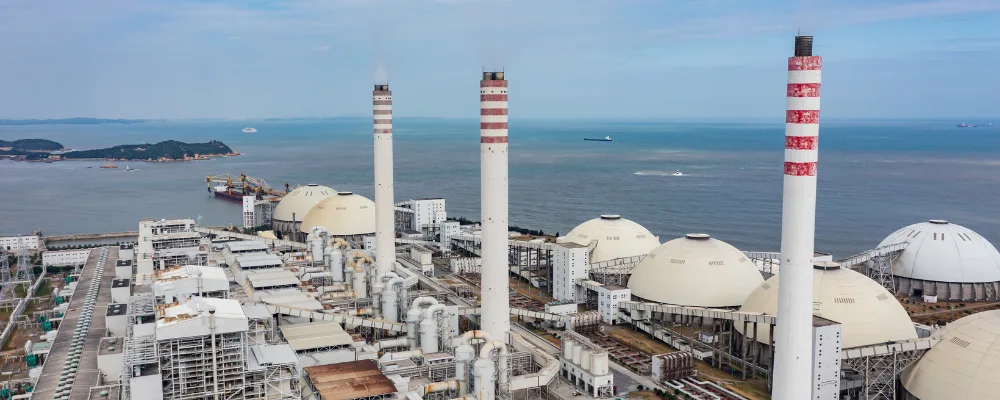
Thermal power plant are among the most significant contributors to global electricity generation. Even in the era of renewable energy expansion, thermal stations continue to provide base-load power required for industrial growth, urban development, and infrastructure stability. Their ability to generate large quantities of electricity continuously makes them essential for grid reliability.
Unlike intermittent energy sources such as solar or wind, thermal power plants operate independently of weather conditions and can run for extended durations with stable output. For heavy industries such as steel, cement, refineries, chemical plants, textiles, food processing, and manufacturing sectors, uninterrupted power supply is critical — and thermal plants fulfill this requirement effectively.
At the heart of these plants lies an engineered steam generation system driven by high-performance boilers. The entire operation revolves around converting heat energy into mechanical energy and finally into electrical energy with maximum efficiency and minimum losses.
Thermodynamic Principle Behind a Thermal Power Plant
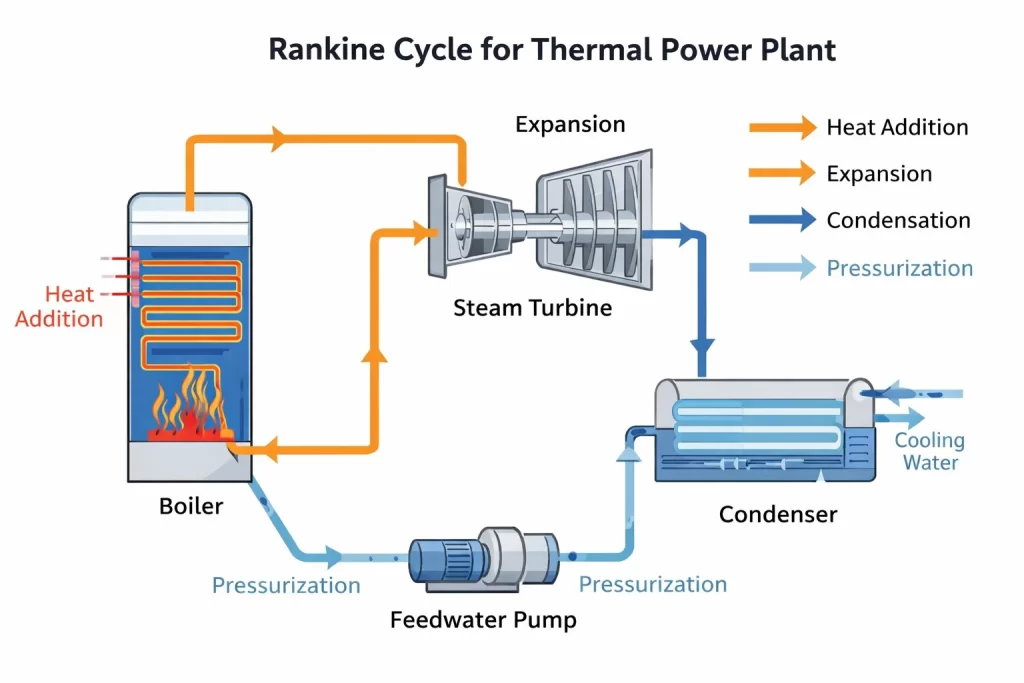
The fundamental principle governing thermal power plants is the Rankine Cycle, a closed-loop thermodynamic cycle designed for efficient heat-to-power conversion.
The cycle operates in four main stages:
Heat Addition – Water is heated in the boiler to produce high-pressure steam.
Expansion – Steam expands in the turbine, producing mechanical work.
Condensation – Exhaust steam is condensed back into water.
Pressurization – The condensate is pumped back to boiler pressure.
This cyclic process ensures that water is reused continuously, reducing operational losses and enhancing system sustainability. The efficiency of the entire plant largely depends on steam pressure, temperature, and effective heat recovery mechanisms.
Detailed Fuel Handling and Combustion System
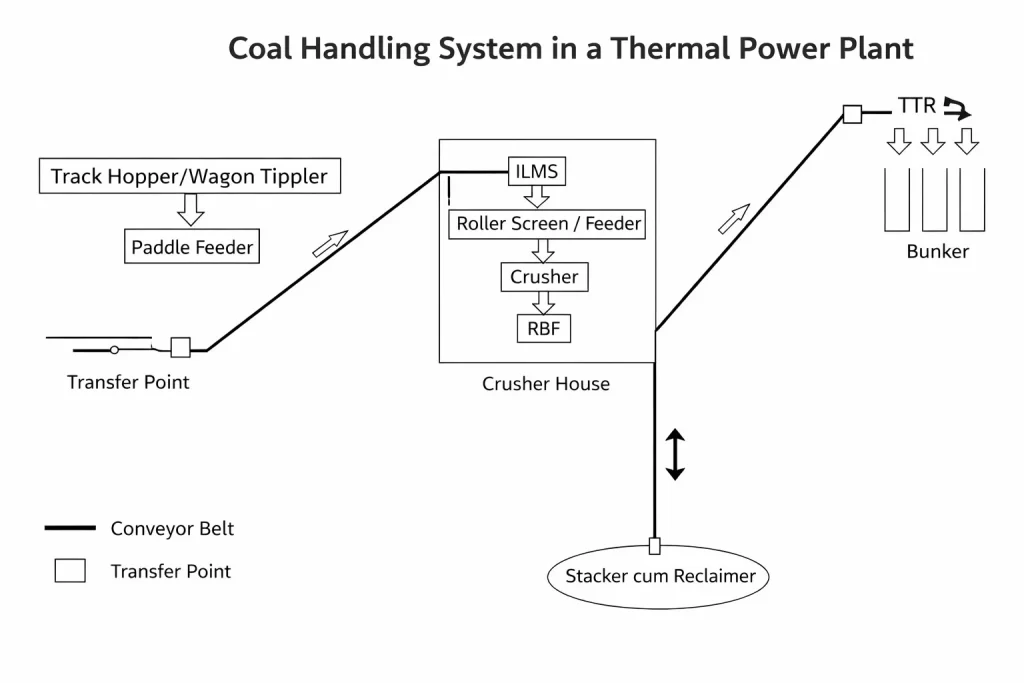
The process begins with fuel handling and preparation. In coal-fired plants, coal is transported from mines via railways or conveyors to the plant storage yard. It is then crushed into fine particles using pulverizers. Pulverized coal improves combustion efficiency by increasing surface area exposure to oxygen.
The pulverized fuel is fed into the boiler furnace where it mixes with preheated air supplied by the Forced Draft (FD) fan. Proper air-fuel ratio control ensures complete combustion and minimizes unburned carbon losses.
During combustion, chemical energy stored in the fuel is converted into thermal energy. The furnace temperature may reach extremely high levels, enabling rapid heat transfer to boiler tubes.
Efficient combustion is critical not only for energy optimization but also for emission control. Modern systems use low-NOx burners and staged combustion techniques to reduce harmful gas formation.
Boiler System: Engineering Core of the Thermal Power Plant
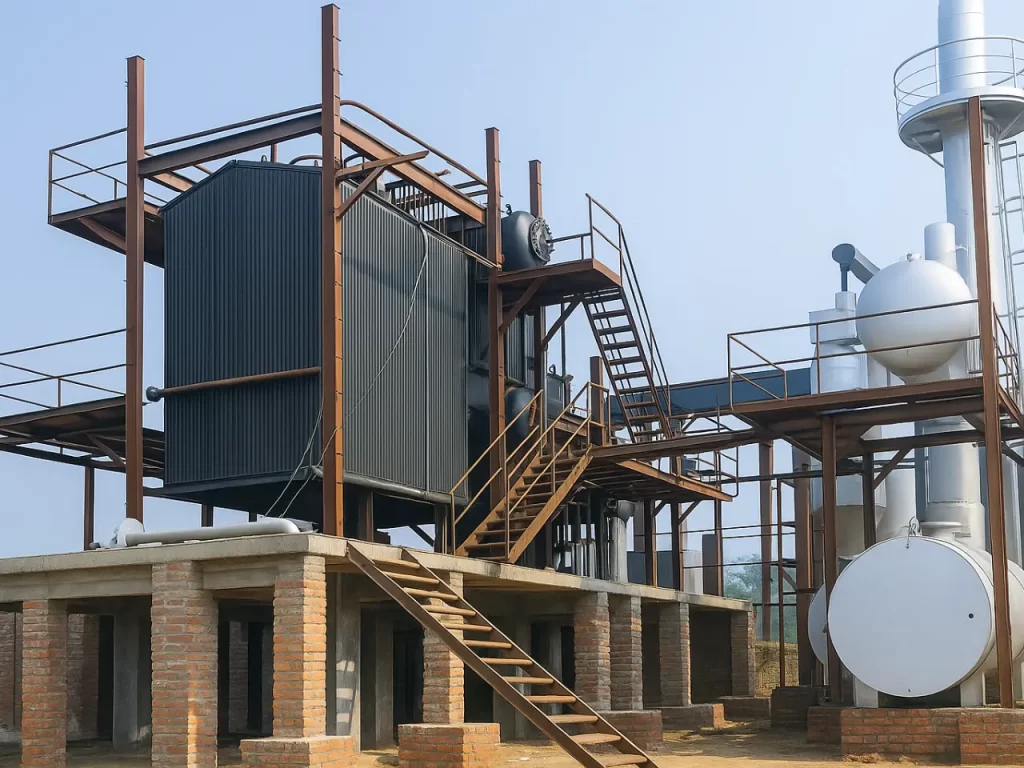
The boiler is the most vital component of a thermal power station. It is designed as a high-pressure vessel that safely converts water into steam at elevated temperatures and pressures.
Large-scale thermal plants predominantly use water tube boilers due to their ability to handle high steam pressures and capacities. In this design, water flows inside tubes while hot flue gases circulate around them. This configuration allows faster heat transfer and enhanced operational safety.
The boiler system consists of several integrated parts:
Furnace
Water wall tubes
Steam drum
Mud drum
Superheater
The furnace acts as the combustion chamber. Water wall tubes absorb radiant heat directly from combustion. Steam drum separates steam from water. Mud drum collects impurities and sludge.
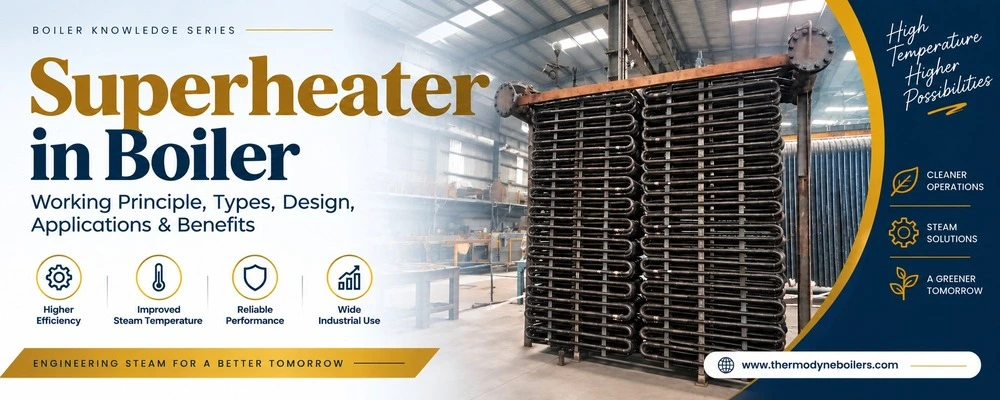
High-temperature steam leaving the drum is passed through a superheater, which increases steam temperature without increasing pressure. Superheated steam improves turbine efficiency and reduces moisture-related blade erosion.
The efficiency of the boiler determines the overall efficiency of the power plant. Heat losses through flue gases, radiation, blowdown, and incomplete combustion must be minimized to achieve optimal performance.
| Component | Function |
|---|---|
Furnace |
Combustion chamber where fuel burns to release heat energy |
Water Wall Tubes |
Absorb radiant heat from furnace; convert water to steam |
Steam Drum |
Separates dry steam from water; maintains water level |
Superheater |
Raises steam temperature beyond saturation point (no pressure increase) |
Preheats incoming feedwater using waste flue gas heat | |
Preheats combustion air using outgoing flue gas heat | |
Safety Valves |
Release excess pressure automatically to prevent explosions |
Technical Insight
Large-scale thermal plants use Water Tube Boilers instead of fire tube boilers because they can safely handle extremely high pressures
(up to 300+ bar in supercritical designs) while delivering high-capacity steam output. In water tube boilers, water flows inside the tubes and hot gases circulate outside — enabling faster heat transfer, improved thermal efficiency, and enhanced operational safety.
Heat Recovery Systems and Efficiency Improvement
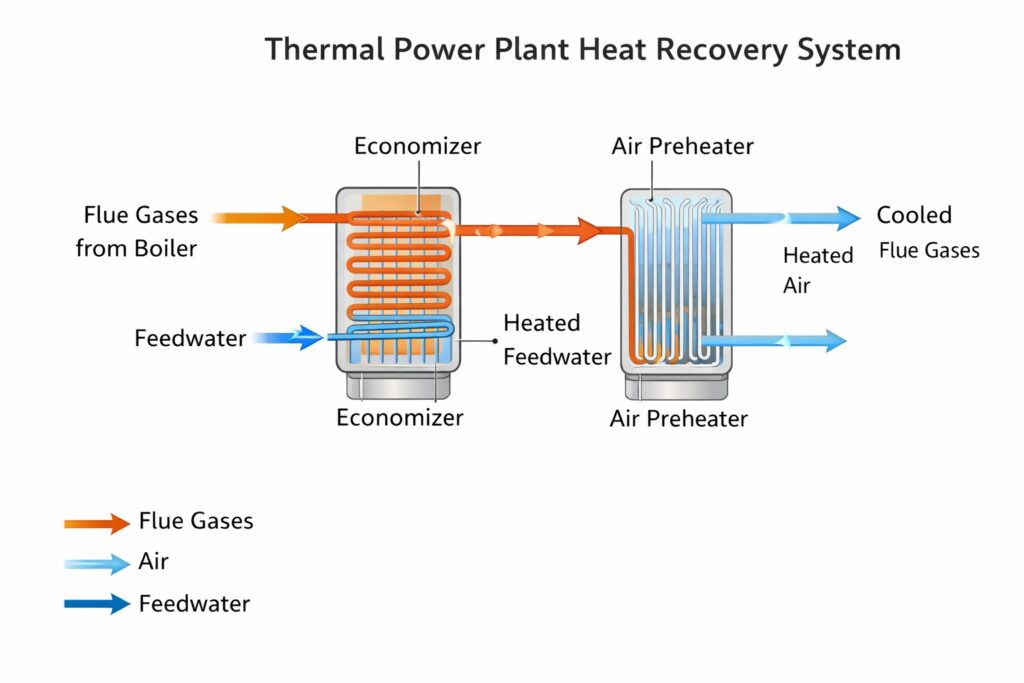
Flue gases leaving the furnace carry substantial residual heat. If this heat is released directly into the atmosphere, it results in energy wastage and reduced boiler efficiency.
To prevent this, heat recovery devices are installed:
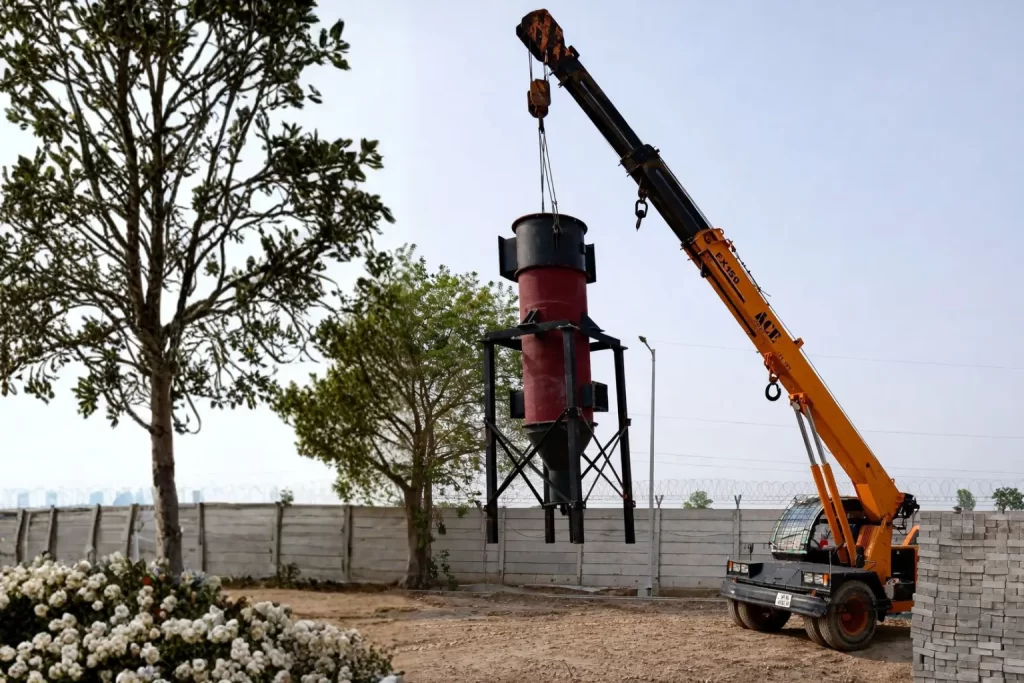
Air Preheater : Preheats combustion air before it enters the furnace. Warmer air improves combustion quality and flame stability.
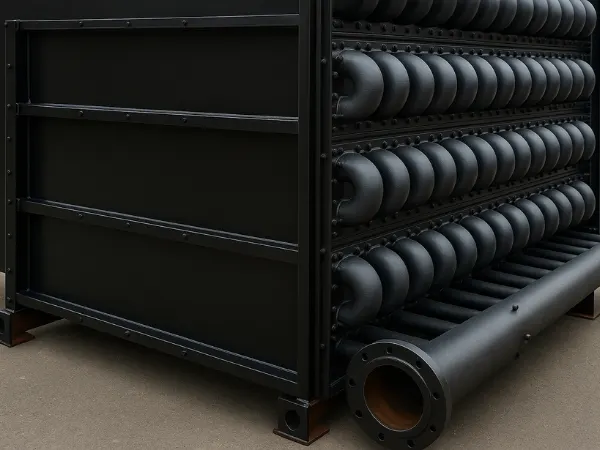
Economizer : Preheats boiler feedwater using waste heat from flue gases. This reduces the fuel required for steam generation.
By incorporating these systems, plants significantly improve thermal efficiency and reduce operational costs.
Efficiency Impact
By combining an Economizer and Air Preheater, overall boiler efficiency improves from approximately 82–84% to 88–92%, resulting in significant annual fuel cost savings and improved thermal performance in large industrial plants.
Steam Turbine: Converting Thermal Energy to Mechanical Power
The high-pressure superheated steam produced in the boiler is directed toward the steam turbine. The turbine consists of multiple stages of stationary and rotating blades mounted on a shaft.
As steam expands through successive turbine stages, its pressure and temperature drop while transferring energy to the blades. The turbine shaft rotates at high speed, converting steam energy into mechanical rotational energy.
Modern steam turbines are precision-engineered to operate at extremely high speeds with minimal vibration and mechanical losses. Their efficiency directly impacts power output.
Key Performance Parameters of Steam Turbines
| Plant Type | Fuel Used | Efficiency | Best Use Case |
|---|---|---|---|
Conventional Steam |
Coal / Oil / Gas |
32–38% |
Base-load, industrial |
Combined Cycle (CCPP) |
Natural Gas |
55–62% |
High efficiency grids |
Nuclear Thermal |
Uranium |
33–37% |
Long-duration base-load |
Biomass Thermal |
Agricultural waste |
25–35% |
Green / renewable base |
Geothermal |
Earth’s heat |
10–23% |
Regions with geothermal activity |
Waste-to-Energy |
Municipal Solid Waste |
20–30% |
Urban waste management |
Generator: Producing Electrical Energy
The turbine shaft is coupled to an electrical generator. When the shaft rotates, the generator rotor spins within a magnetic field.
According to the principle of electromagnetic induction, mechanical rotation induces electric current in the stator windings. This produces alternating current (AC) electricity.
The generated electricity is stepped up in voltage using transformers for efficient long-distance transmission through the power grid.
Condenser and Cooling Tower System
After passing through the turbine, the exhaust steam must be converted back into water. This occurs in the condenser.
The condenser uses circulating cooling water to absorb heat from exhaust steam, converting it into liquid condensate. Maintaining a vacuum inside the condenser improves turbine efficiency by increasing pressure difference across turbine stages.
Cooling towers help dissipate absorbed heat into the atmosphere. The condensed water is then pumped back to the boiler via feedwater pumps, completing the cycle.
Water Treatment and Feedwater Management
High-quality, ultra-pure water is absolutely essential for the safe and efficient operation of a thermal power plant boiler. Raw water — whether sourced from rivers, lakes, or groundwater — contains dissolved salts (hardness), suspended solids, silica, dissolved gases (oxygen, CO2), and organic matter. Using untreated water directly in boilers leads to severe operational problems.
Problems Caused by Untreated Water
- Scale formation on boiler tubes → Reduces heat transfer → Increases fuel consumption
- Corrosion of metal surfaces → Tube thinning → Risk of tube failure and explosion
- Silica deposits on turbine blades → Reduced turbine efficiency
- Dissolved oxygen attack → Pitting corrosion in boiler drums and feedwater lines
Water Treatment Process
- Clarification — Removes suspended solids and turbidity using coagulants
- Softening — Removes calcium and magnesium hardness using lime or ion exchange
- Demineralization (DM Plant) — Removes all dissolved salts via cation/anion exchange resins
- Deaeration — Removes dissolved oxygen and CO2 using steam stripping in a deaerator vessel
- Chemical Dosing — Adds oxygen scavengers (hydrazine/morpholine) and pH correctors to the feedwater system
Draft System and Flue Gas Management
Proper air and gas flow control is necessary for stable combustion.
Forced Draft (FD) Fan supplies fresh air into the furnace.
Induced Draft (ID) Fan removes flue gases and maintains negative pressure.
After passing through heat recovery systems, flue gases are directed to pollution control equipment such as dust collectors, electrostatic precipitators, and wet scrubbers.
Finally, cleaned gases are discharged through a chimney, ensuring environmental compliance.
Types of Thermal Power Plants — All 6 Major Types
Thermal power plants are classified based on fuel type, thermodynamic cycle, and configuration. Here is a complete overview of all major types:
| Plant Type | Fuel Used | Efficiency | Best Use Case |
|---|---|---|---|
Conventional Steam |
Coal / Oil / Gas |
32–38% |
Base-load, industrial |
Combined Cycle (CCPP) |
Natural Gas |
55–62% |
High efficiency grids |
Nuclear Thermal |
Uranium |
33–37% |
Long-duration base-load |
Biomass Thermal |
Agricultural waste |
25–35% |
Green / renewable base |
Geothermal |
Earth’s heat |
10–23% |
Regions with geothermal activity |
Waste-to-Energy |
Municipal Solid Waste |
20–30% |
Urban waste management |
Most Efficient Power Generation Technology
Combined Cycle Power Plants (CCPP) achieve the highest efficiency (55–62%) by utilizing waste heat from the gas turbine exhaust to generate additional steam for a steam turbine — effectively operating two power cycles in series for maximum energy utilization and reduced fuel consumption.
Advantages of Thermal Power Plants
Thermal power plants provide dependable electricity generation. They can operate continuously, handle high loads, and adapt to demand variations. Their technology is mature, widely available, and scalable.
They are capable of producing large-scale base-load power essential for industrial economies.
Environmental Challenges and Modern Solutions
While thermal power plants are essential for energy security and industrial development, they are also significant contributors to air pollution, water consumption, and greenhouse gas emissions. The industry has responded with a range of advanced technological solutions:
Modern Emission Control Technologies
- Supercritical & Ultra-Supercritical Boiler Technology — Higher steam pressures and temperatures reduce coal consumption per unit of electricity generated, cutting CO2 emissions by 15–25% compared to subcritical plants
- Carbon Capture, Utilization, and Storage (CCUS) — Captures CO2 from flue gas before atmospheric release; stores it underground or converts it into useful products
- Biomass Co-firing — Replacing 5–20% of coal with biomass (agricultural residues, wood pellets) reduces net CO2 emissions significantly
- Integrated Gasification Combined Cycle (IGCC) — Converts coal to synthetic gas (syngas) before combustion, enabling cleaner, more efficient burning with easier CO2 capture
- Fly Ash Utilization — Captured fly ash is used in cement manufacturing and road construction, eliminating solid waste disposal problems
- Zero Liquid Discharge (ZLD) Systems — Treats and recycles all plant wastewater, minimizing freshwater consumption and preventing water body pollution
Conclusion: The Backbone of Industrial Power Generation
Thermal power plants remain a cornerstone of global energy infrastructure. Their structured engineering design, continuous operational capability, and high-capacity output make them indispensable for industrial and economic development.
The efficiency of a thermal power plant largely depends on its boiler system, heat recovery mechanisms, turbine performance, and water treatment management. Continuous technological advancement is improving sustainability and reducing emissions.
As energy demand continues to rise, optimizing thermal plant efficiency, reducing fuel consumption, and integrating cleaner technologies will define the future of power generation.
Thermal power plants are not merely electricity producers; they are complex engineered systems where precision, thermodynamics, and advanced boiler technology work together to power the modern world.
FAQs related to Thermal Power Plant-
A thermal power plant is a power generation facility that converts heat energy into electrical energy using steam turbines and generators. Heat produced from fuel combustion is used to generate high-pressure steam, which drives the turbine to produce electricity.
A thermal power plant works on the Rankine Cycle principle. In this process, water is converted into steam in the boiler, the steam rotates the turbine, electricity is generated through the generator, and the steam is then condensed back into water for reuse.
Most thermal power plants use high-pressure water tube boilers because they can handle large steam capacities and high operating pressures efficiently and safely.
Coal is the most commonly used fuel in thermal power plants. However, natural gas, diesel, biomass, furnace oil, and waste heat can also be used depending on plant design and energy requirements.
The major components include:
- Boiler
- Steam turbine
- Generator
- Condenser
- Cooling tower
- Economizer
- Air preheater
- Feedwater pump
- Draft fans
The efficiency of a conventional thermal power plant generally ranges between 30% and 40%. Modern supercritical and combined cycle thermal power plants can achieve much higher efficiency levels.
A condenser converts exhaust steam from the turbine back into water. It also helps maintain vacuum pressure, which improves turbine efficiency and overall plant performance.
An economizer recovers waste heat from flue gases and uses it to preheat boiler feedwater. This improves boiler efficiency and reduces fuel consumption.
Thermal power plants provide:
- Continuous electricity generation
- High power output
- Reliable base-load operation
- Stable performance independent of weather conditions
- Large-scale industrial power supply
Thermal power plants can produce emissions such as carbon dioxide (CO₂), sulfur oxides (SOx), nitrogen oxides (NOx), and particulate matter. Modern plants use pollution control systems, low-NOx burners, and cleaner technologies to reduce environmental impact.