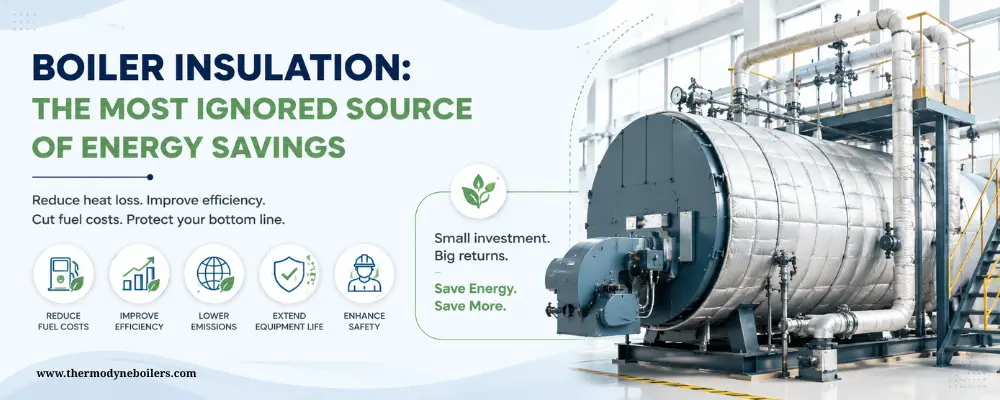
Energy costs are rising steadily across industrial sectors, yet most plant managers continue to overlook one of the most accessible and impactful solutions available: boiler insulation. While industries invest in advanced automation, upgraded burners, and digital monitoring systems, the basic thermal protection around their steam systems quietly deteriorates — costing thousands in unnecessary fuel consumption every single year.
Inadequate boiler insulation is not a minor inefficiency. It is a systemic problem that directly inflates fuel consumption, reduces boiler efficiency, and accelerates equipment wear. For any facility operating an industrial steam boiler, ignoring insulation is essentially leaving money to evaporate — quite literally as heat loss into the surrounding environment.
This blog breaks down why boiler insulation deserves far more attention than it typically receives, and how addressing it can deliver substantial industrial energy savings with minimal capital investment.
What Is Boiler Insulation and Why Does It Matter?
Boiler insulation refers to the application of thermal insulation materials around a boiler shell, steam pipelines, fittings, valves, and other hot surfaces within a steam system. Its primary function is to minimize radiant and convective heat loss to the surrounding atmosphere.
In an industrial setting, a well-insulated steam boiler retains heat energy within the system where it belongs — driving production processes efficiently. Without it, that energy dissipates into the plant environment, forcing the boiler to work harder, burn more fuel, and generate more emissions just to maintain the required steam pressure.
How Heat Loss Occurs in Steam Systems
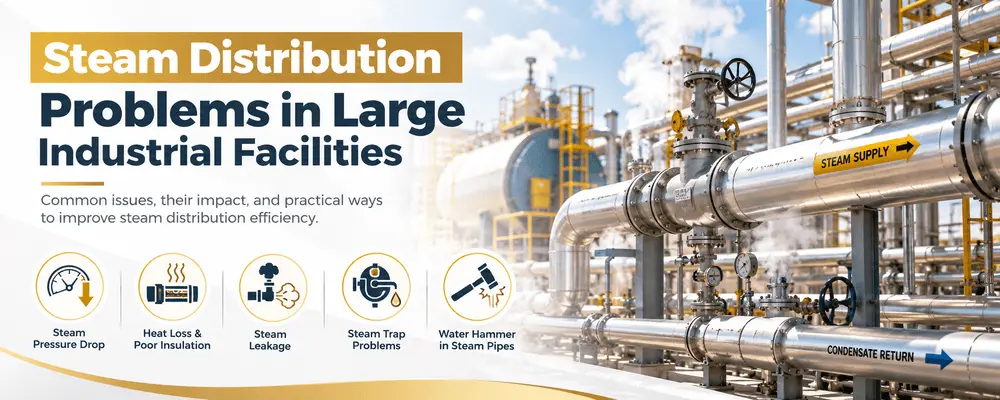
Heat loss in a steam system happens across multiple points, not just the boiler itself. Every uninsulated or poorly insulated surface — whether a steam pipeline, valve, flange, or condensate system component — acts as a heat sink, continuously drawing thermal energy away from the working fluid.
Common Heat Loss Pathways
- Bare or degraded steam pipelines radiating heat into the air
- Uninsulated valves and flanges along the steam distribution system
- Poorly sealed joints in the condensate system
- Exposed hot surfaces on older boiler shells
According to industry benchmarks, an uninsulated steam boiler valve in a high-pressure system can lose as much heat as 10 to 20 metres of bare pipe. Multiply that across a typical plant, and the aggregate heat loss becomes staggering.
The Direct Impact of Poor Boiler Insulation on Boiler Efficiency
This is where the numbers matter. Boiler insulation degradation directly undermines boiler efficiency — and the relationship is not subtle. Studies from industrial energy audits consistently show that inadequate thermal insulation can account for 10% to 20% of total fuel consumption in large steam operations.
For an industrial steam boiler running 8,000 hours per year on natural gas or furnace oil, that translates to a significant recurring cost — one that compounds annually as insulation continues to deteriorate without proper boiler maintenance.
Poor insulation also forces the steam system to operate at higher firing rates to compensate for losses, which increases thermal cycling stress on boiler components and shortens service intervals. The operational consequences extend well beyond the energy bill.
Insulating Steam Pipelines and Hot Surfaces: Where to Focus First
In most industrial facilities, steam pipelines and hot surfaces outside the boiler itself account for a disproportionate share of total heat loss. A steam distribution system that runs across long distances — as is common in large processing plants, refineries, and textile mills — offers significant opportunities for recovery.
Properly specified thermal insulation materials (such as mineral wool, calcium silicate, or aerogel blankets for high-temperature applications) applied to steam pipelines can reduce surface heat loss by 85% or more. For facilities that have not updated their pipeline insulation in over five years, a systematic inspection and re-insulation project typically delivers a payback period of less than 18 months.
Insulating hot surfaces around economisers, headers, and distribution manifolds further compounds the benefit, contributing directly to improved waste heat recovery across the entire steam circuit.
Benefits of Effective Boiler Insulation for Industrial Steam Boiler Operations
The business case for boiler insulation is straightforward and multi-dimensional:
Reduced Fuel Consumption: Less heat loss means the energy efficient boiler operates at lower firing rates to achieve the same output — directly cutting fuel consumption.
Improved Thermal Efficiency: Maintaining steam temperature and steam pressure throughout the distribution system reduces process variability and improves product consistency.
Lower Carbon Footprint: Reduced fuel consumption translates directly into lower CO₂ and NOₓ emissions — increasingly critical for compliance and sustainability reporting.
Extended Equipment Life: Reduced thermal cycling stress on the boiler and steam distribution system components leads to fewer breakdowns and longer service intervals.
Enhanced Worker Safety: Properly insulated hot surfaces reduce burn risks for maintenance and operations personnel working in proximity to the steam system.
Common Areas Where Boiler Insulation Fails
Even facilities that invested in insulation at the time of installation often find their systems in poor condition within a few years. The most common failure points include:
- Damaged or missing insulation jackets on steam pipelines following maintenance access
- Moisture ingress into thermal insulation blankets, which drastically reduces thermal resistance
- Valve and flange covers that are removed and never replaced
- Gaps at joints and elbows in the steam distribution system
- Deteriorated boiler casing insulation on older units
Each of these failures may appear minor in isolation. Cumulatively, they create a system with far higher heat loss than design specifications anticipated.
Industrial Energy Savings Through Systematic Insulation Management
Achieving sustained industrial energy savings from boiler insulation requires more than a one-time fix. It demands a structured approach integrated into routine boiler maintenance programmes.
Facilities should conduct thermal imaging surveys at least annually to identify hot spots and locate failing thermal insulation sections that are not visible to the naked eye. These surveys, combined with a clear re-insulation protocol, form the foundation of a credible energy management strategy.
In facilities where waste heat recovery systems are installed, maintaining boiler insulation integrity is equally critical — heat that escapes the primary system is heat unavailable for recovery through heat exchangers or economisers downstream.
Best Practices for Boiler Maintenance and Insulation Inspection
Integrating boiler insulation checks into standard boiler maintenance schedules is the most cost-effective way to sustain energy performance over time.
Recommended Practices
- Quarterly visual inspections of all insulated surfaces for physical damage, moisture, and gaps
- Annual infrared thermography surveys to detect hidden heat loss across the steam system
- Post-maintenance checklists to ensure all insulation covers are reinstated after valve or flange work
- Insulation condition records maintained as part of the facility’s energy management system
- Scheduled replacement cycles for high-wear thermal insulation sections, particularly those on the condensate system and high-pressure steam distribution system lines
Conclusion
Boiler insulation may lack the technological appeal of smart controls or next-generation burners, but its impact on boiler efficiency and operating costs is undeniable. For any facility running an industrial steam boiler, it remains one of the simplest, most proven, and most cost-effective interventions available.
Restoring and maintaining effective boiler insulation across steam pipelines, hot surfaces, and distribution components directly reduces heat loss, lowers fuel consumption, and supports broader industrial energy savings goals. The technology is proven, the payback is fast, and the results are measurable.
In an era of rising energy costs and tightening emissions regulations, no industrial facility can afford to leave this lever unpulled. Start with an insulation audit — and let the savings speak for themselves.
Frequently Asked Questions (FAQs) About Boiler Insulation
Boiler insulation is the process of covering boilers, steam pipes, valves, and other hot surfaces with thermal insulation materials to reduce heat loss. It helps improve boiler efficiency, lower fuel consumption, reduce operating costs, and enhance workplace safety.
Proper boiler insulation minimizes heat loss from the boiler and steam distribution system. By retaining more heat within the system, the boiler requires less fuel to maintain the desired steam pressure and temperature, resulting in higher efficiency.
The amount of energy saved depends on the condition of the existing insulation and system design. In many industrial facilities, effective boiler insulation can reduce heat loss significantly and contribute to energy savings of 10% to 20%.
Key components that should be insulated include boiler shells, steam pipelines, valves, flanges, fittings, condensate lines, steam headers, economisers, and other exposed hot surfaces throughout the steam system.
Common thermal insulation materials include mineral wool, glass wool, calcium silicate, ceramic fiber, and aerogel insulation. The choice depends on operating temperature, environmental conditions, and application requirements.
Regular visual inspections and infrared thermography surveys can help identify damaged insulation, exposed hot spots, moisture ingress, and areas where excessive heat is escaping from the steam system.
Boiler insulation should be visually inspected at least quarterly and evaluated annually using thermal imaging or energy audits. Inspections should also be conducted after maintenance activities involving valves, flanges, or steam lines.
Yes. Damaged, wet, or missing insulation allows heat to escape into the surrounding environment, forcing the boiler to consume more fuel to maintain the required steam output and operating pressure.
Absolutely. Proper insulation reduces the surface temperature of boilers, pipes, and equipment, helping prevent accidental burns and creating a safer working environment for plant personnel.
In many industrial applications, insulation upgrades offer a payback period of less than 12 to 18 months due to reduced fuel consumption, improved boiler efficiency, and lower maintenance costs.
Yes. By lowering fuel consumption and improving energy efficiency, boiler insulation helps reduce CO₂ emissions and supports industrial sustainability and environmental compliance goals.
Yes. While new boilers are typically supplied with insulation, regular inspections and maintenance are essential. Older boilers often benefit significantly from insulation upgrades, repairs, or replacement of deteriorated insulation materials.