In the world of modern manufacturing, a steam boiler is more than just a piece of machinery; it is the vital organ that keeps production alive. From textile mills to food processing plants, the reliance on a high-performing industrial boiler is absolute. However, due to extreme pressure and constant thermal cycling, technical hitches are inevitable.
If you are a plant manager or a lead technician, identifying every potential boiler problem and knowing how to resolve it quickly is your top priority. This guide delves deep into industrial boiler troubleshooting to ensure your system remains safe, efficient, and cost-effective
Understanding the Heart of the System
Before diving into repairs, we must understand how an industrial boiler functions. Its primary job is to convert fuel (gas, oil, or biomass) into thermal energy to produce steam. When this cycle is interrupted, a boiler problem emerges.
Mathematically, perfect combustion follows this chemical path:
CH₄ + 2O₂ → CO₂ + 2H₂O + Heat
If the balance between fuel and oxygen is lost, the system becomes inefficient, producing dangerous carbon monoxide (CO) and soot.
1. Priming and Foaming: The Crisis of Steam Quality
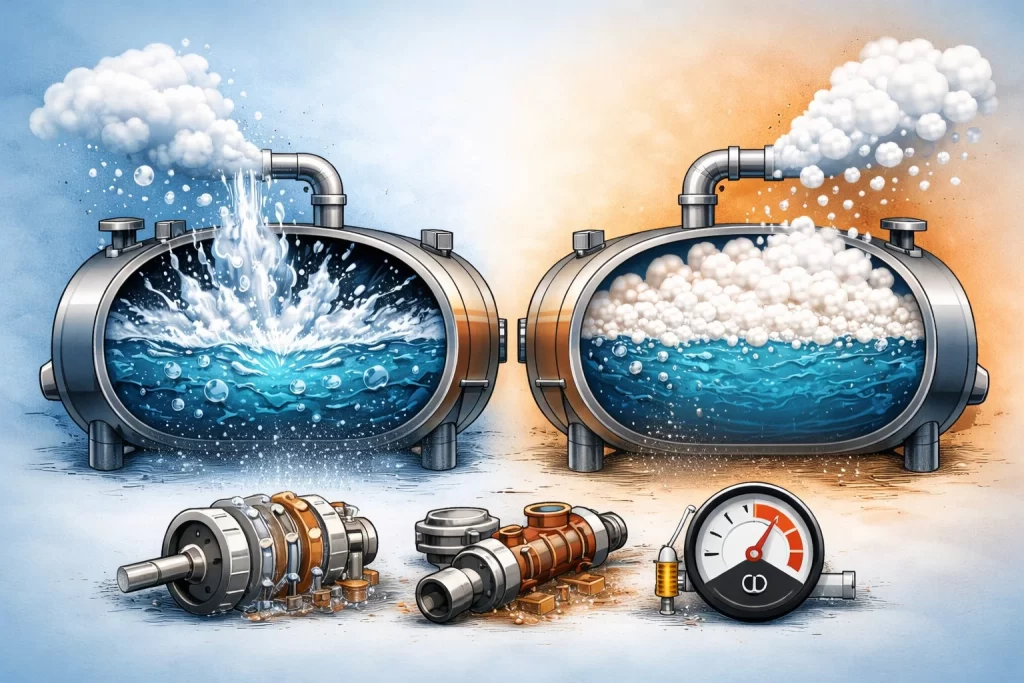
Perhaps the most common boiler problem affecting steam quality is Priming and Foaming. When the water level inside the drum becomes unstable and water droplets are carried over into the steam lines, it is known as “carryover.”
The Causes:
- High TDS: A high concentration of Total Dissolved Solids in the water.
- Contamination: Oil or organic matter leaking into the feedwater.
- Surge Loads: Sudden, massive demands for steam that “suck” water out of the drum.
The Solutions:
- Surface Blowdown: Utilize the surface blowdown valve to eject impurities floating at the water line.
- Water Analysis: Regularly test your water chemistry. This is a critical step in industrial boiler troubleshooting to determine if you need anti-foaming agents.
Gradual Valve Operation: Always open steam valves slowly to prevent a sudden pressure drop that triggers a boiler problem.
2. Low Water Level: The Most Dangerous Boiler Problem
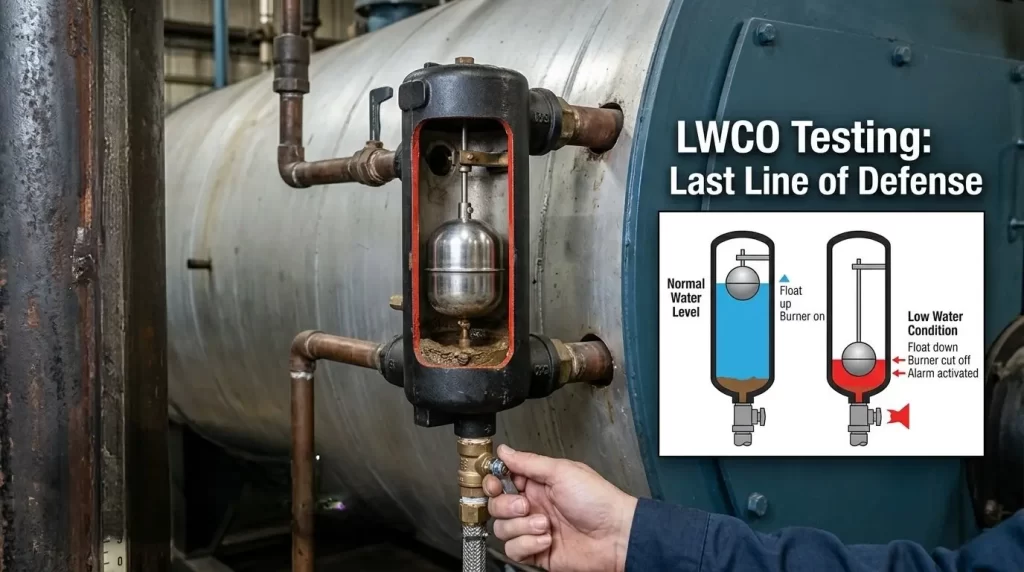
In the history of industrial accidents, nearly 90% of catastrophic explosions are linked to “Low Water Conditions.” If a steam boiler continues to fire when the water level drops below the tubes, the metal weakens and melts. This is called “Dry Firing.”
Critical Troubleshooting Steps:
- Gauge Glass Observation: If the glass is empty, do not add water. Adding cold water to a scorching hot, dry boiler causes a thermal shock explosion.
LWCO Testing: The Low Water Cut-Off (LWCO) is your last line of defense. During your daily industrial boiler troubleshooting routine, blow down the float chamber to ensure sludge hasn’t jammed the mechanism. If the float is stuck, it won’t signal the burner to shut off, creating a life-threatening boiler problem.
3. Water Hammer: The "Banging" in the Pipes
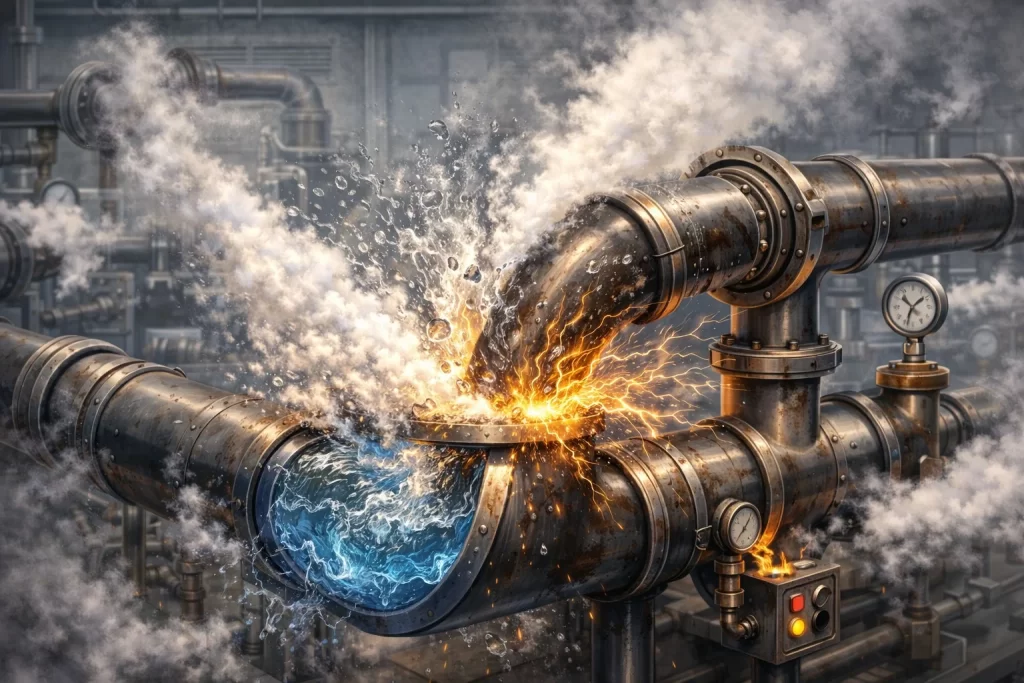
If your facility echoes with loud “banging” or “clanging” noises, you are witnessing a boiler problem known as Water Hammer. This occurs when high-velocity steam collides with a pocket of cool condensate (liquid water).
Why it Happens:
When steam traps fail or pipes are improperly installed, water collects in the lines. As steam rushes through, it picks up this water and slams it into elbows or valves at high speeds, creating massive shockwaves.
How to Fix:
- Steam Trap Maintenance: Audit every steam trap. A trap stuck in the “closed” position is a primary cause of this boiler problem.
- Verify Pitch: Ensure all steam piping is sloped (pitched) toward the traps so gravity can assist in removing condensate from the system.
4. Scale Formation and High Stack Temperatures
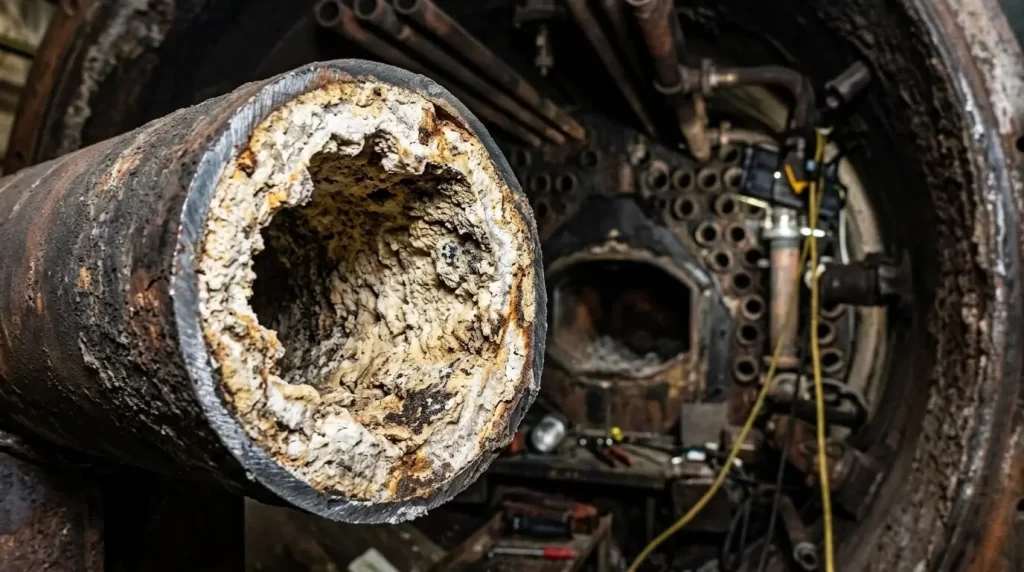
Efficiency loss is a silent boiler problem. If your exhaust stack thermometer shows a rise in temperature (e.g., jumping from 176°C to 232°C), it means the heat is going out the chimney instead of into the water.
The Impact of Scale:
Minerals like Calcium and Magnesium form a stone-like layer on the tubes.
Even a fraction of an inch of scale can significantly reduce fuel efficiency.
The Solution:
- Bottom Blowdown: Perform a bottom blowdown at regular intervals to remove the “sludge” that settles at the base.
- Softener Check: Ensure your water softener is producing “zero hardness” water. Scale is a preventable boiler problem that starts with poor water treatment.
5. Corrosion: The Slow Killer of Industrial Boilers
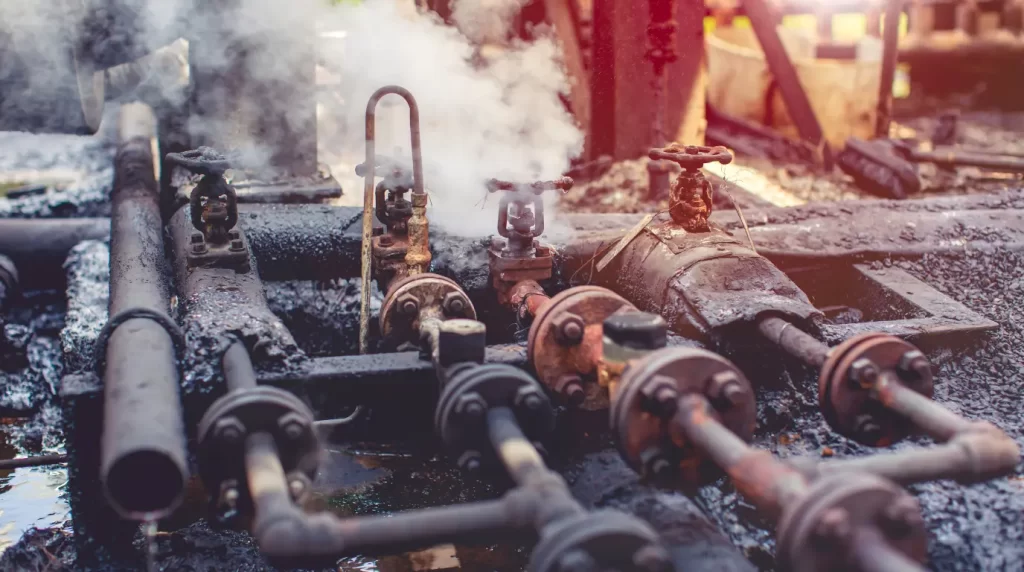
Corrosion is a boiler problem that eats away at the metal from the inside out. The main culprit is dissolved Oxygen (O_2) in the feedwater.
- Pitting: Oxygen causes localized “pits” or holes in the tubes.
- The Fix: Use a Deaerator tank to pre-heat the water and strip away oxygen. Additionally, use chemical oxygen scavengers like Sodium Sulfite to neutralize any remaining O_2.
Quick Reference: Boiler Problems and Solutions
| Boiler Problem | Primary Cause | Recommended Fix |
|---|---|---|
No Ignition |
Dirty Flame Scanner |
Clean the photocell lens carefully |
Leaking Safety Valve |
Grit on the Valve Seat |
Manually “pop” the valve to clear debris |
Pulsating Flame |
Incorrect Air-Fuel Ratio |
Adjust the burner air dampers |
Short Cycling |
Pressuretrol Range too narrow |
Adjust the “cut-in” and “cut-out” settings |
Whistling Sounds |
Gasket Failure |
Replace the manhole or handhole gasket |
6. Combustion Failures and Burner Issues
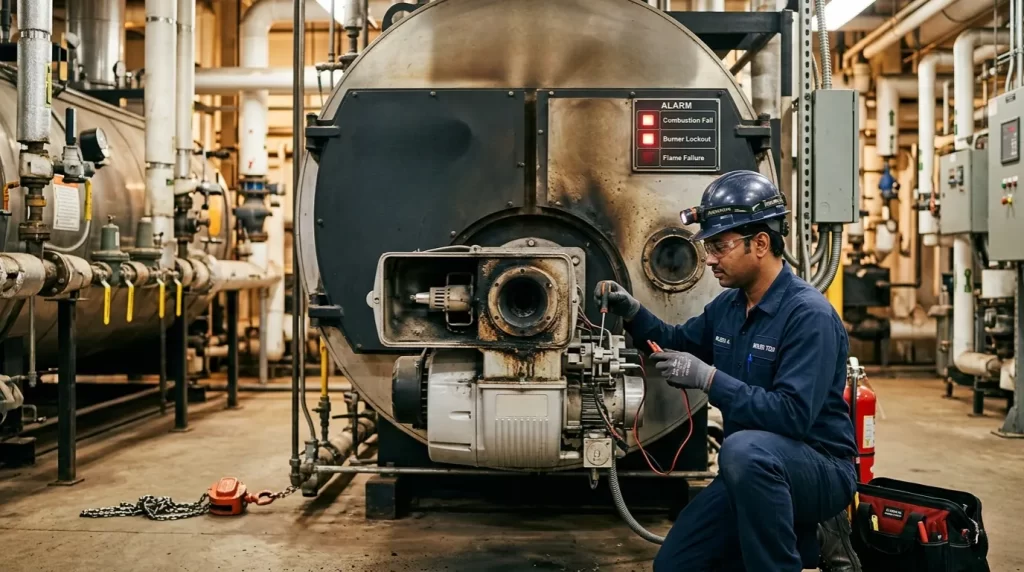
The burner of your industrial boiler must operate with precision. If the flame appears yellow and smoky instead of a steady blue or crisp orange, you are dealing with incomplete combustion. This leads to soot buildup, which acts as an insulator and creates a persistent boiler problem.
When performing industrial boiler troubleshooting, always inspect the flame scanner. If the lens is clouded with dust or oil, it won’t “see” the flame. The system will then initiate a safety lockout. Frequent lockouts lead to “short-cycling,” a boiler problem that puts immense strain on the fuel pump and motor.
7. The Importance of Daily Logs
You cannot solve a boiler problem you haven’t tracked. Keeping a daily log of pressures, temperatures, and water chemistry is the backbone of industrial boiler troubleshooting. If you notice a slow upward trend in stack temperature or a slow decrease in steam output, you can intervene before a total breakdown occurs.
Summary: A Safety-First Approach
Consistent maintenance is the only way to avoid a serious boiler problem. In an industrial environment, neglecting these signs is not just expensive—it’s dangerous. Remember:
- Daily: Blowdown the boiler and check water levels.
- Monthly: Test safety valves and high-limit controls.
- Annually: Perform a full internal inspection and “washout” of the steam boiler.
Managing a steam boiler successfully requires a blend of mechanical skill and chemical knowledge. This boiler problems and solutions guide serves as a roadmap to keep your facility running at peak performance.
Conclusion
We hope this guide to industrial boiler troubleshooting helps you maintain a safer workplace. If you encounter a boiler problem that seems beyond the scope of basic maintenance, always consult a certified boiler engineer. A small oversight today can lead to a massive failure tomorrow.
If you are facing any type of boiler problem in your steam boiler, connect with our experts at +91-9990226006 via call or message—we are here to provide you with the right solution and free consultation, not just sell a boiler.
Frequently Asked Questions (FAQs)
The most common industrial boiler problems include low water level (dry firing), scale formation, corrosion, priming and foaming, water hammer, and combustion inefficiencies. These issues directly impact steam boiler efficiency, safety, and operational costs. Regular monitoring and preventive maintenance are essential to avoid these failures.
Industrial boiler troubleshooting helps identify inefficiencies such as heat loss, improper combustion, and scaling. By resolving these issues—like cleaning heat transfer surfaces, optimizing air-fuel ratio, and maintaining water quality—you can significantly improve boiler efficiency and reduce fuel consumption.
Low water level occurs due to faulty feedwater systems, leaks, or operator negligence. It is extremely dangerous because it leads to dry firing, where boiler tubes overheat and may rupture or explode. This is one of the leading causes of catastrophic boiler failures.
Scale formation is caused by hard water containing calcium and magnesium salts. It can be prevented by:
- Installing a water softener
- Maintaining proper boiler water treatment
- Performing regular blowdown operations
Preventing scale improves heat transfer and enhances steam boiler efficiency.
Water hammer is a boiler problem characterized by loud banging noises caused by steam colliding with condensate in pipes. It can be fixed by:
- Ensuring proper steam trap functioning
- Maintaining correct pipe slope
- Removing condensate buildup
This prevents mechanical damage and improves system reliability.
Priming and foaming occur when water droplets mix with steam, reducing steam quality.
- Priming is caused by high water levels or sudden load changes
- Foaming is caused by oil or chemical contamination
Both can be controlled through proper water treatment and controlled boiler operation.
Corrosion weakens boiler metal due to chemical reactions, mainly caused by dissolved oxygen in feedwater. It leads to:
- Tube failures
- Leakages
- Reduced boiler lifespan
Using deaerators and oxygen scavengers like sodium sulfite helps prevent corrosion.
Boiler blowdown removes sludge, dissolved solids, and impurities from the system. Regular blowdown:
- Prevents scaling and corrosion
- Maintains water chemistry balance
- Improves overall boiler efficiency
Signs of poor combustion include:
- Yellow or smoky flame
- Soot deposits
- High fuel consumption
- Frequent burner trips
Proper air-fuel ratio adjustment and burner maintenance are key to solving this issue.
Water treatment is critical in preventing scale, corrosion, and carryover. Proper treatment ensures:
- Longer equipment life
- Improved heat transfer
- Reduced maintenance costs
It is one of the most important aspects of industrial boiler troubleshooting.
High stack temperature indicates heat loss through flue gases instead of being utilized for steam generation. This reduces boiler efficiency and increases fuel consumption. Installing economizers and cleaning heat surfaces can resolve this issue.
Carryover refers to the transfer of water droplets and impurities along with steam. It affects steam quality and damages downstream equipment like turbines and valves. Proper water level control and chemical treatment help prevent carryover.
The ideal flame color is blue or clear orange, indicating complete combustion. A yellow or smoky flame suggests incomplete combustion, leading to soot formation and energy losses.
Steam traps remove condensate without allowing steam to escape. Faulty traps can cause:
- Water hammer
- Energy losses
- Reduced heat transfer efficiency
Regular inspection is essential for optimal performance.
Key safety devices include:
- Low Water Cut-Off (LWCO)
- Safety relief valves
- Pressure gauges
- Flame scanners
These devices prevent accidents and ensure safe boiler operation.