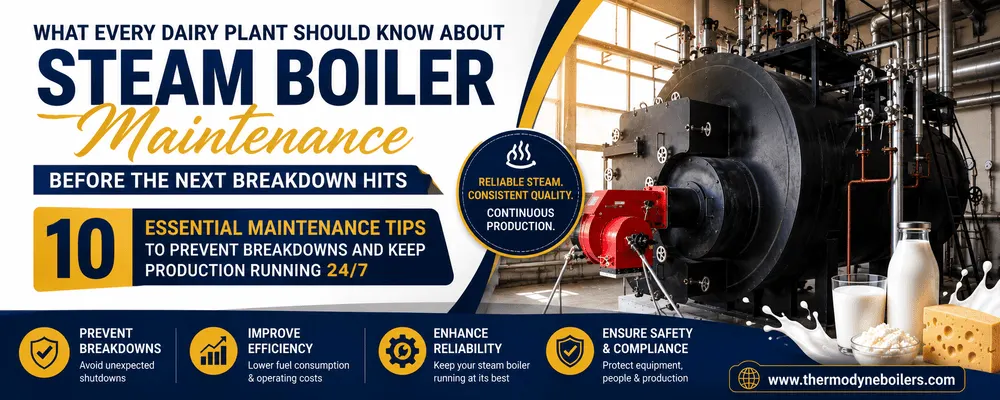
In a dairy plant, steam never stops working. The moment it does, everything behind it stops too. A reliable Steam Boiler for Dairy is what keeps pasteurizers running, CIP cycles cleaning, and packaging lines moving without interruption. Most plant managers only realize how central the boiler is to their operation when it goes down — and by then, the cost is already being counted in spoiled batches and idle staff.
A single unplanned shutdown can halt milk pasteurization mid-cycle, interrupt CIP cleaning before sanitation is complete, stop sterilization of packaging lines, and bring ghee, cheese, paneer, and yogurt processing to a standstill. In a product category where hygiene windows and shelf life are non-negotiable, that kind of interruption isn’t just inconvenient — it’s expensive. This is why a well-maintained Steam Boiler for Milk processing isn’t “nice to have”. It’s the backbone of continuous, safe, and profitable production.
Why Boiler Maintenance Matters in Dairy Plants
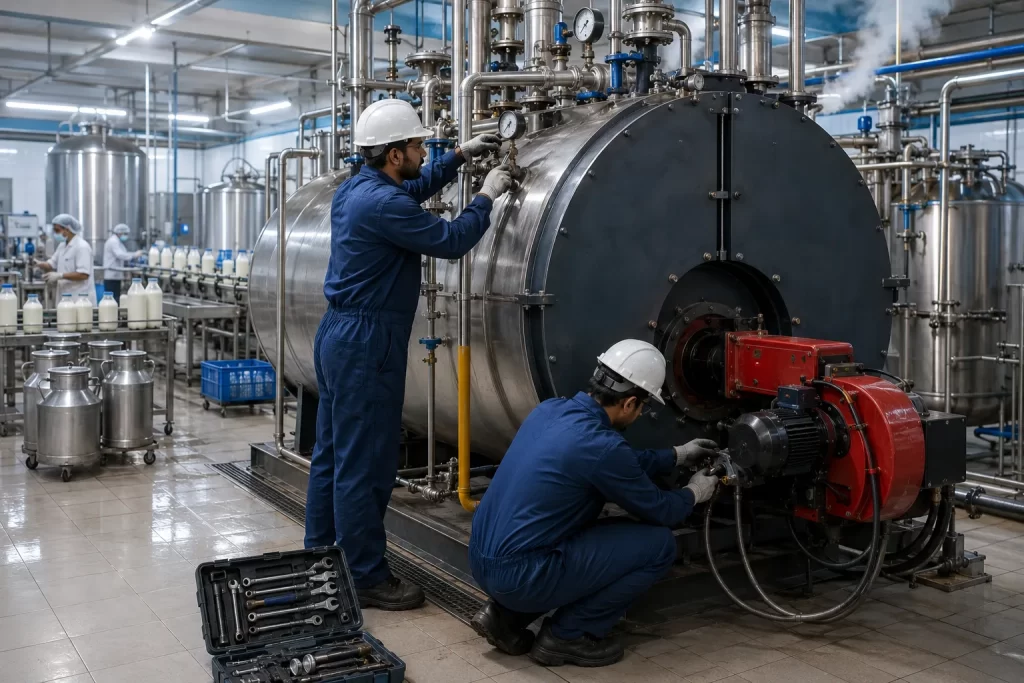
Skipping or delaying boiler maintenance rarely saves money — it just moves the cost downstream, usually to a worse place.
- Production downtime: A boiler trip during a pasteurization run can force plants to discard partially processed milk and restart the batch.
- Product wastage: Inconsistent steam pressure affects temperature control, which can compromise product quality in cheese, paneer, and yogurt processing.
- Energy losses: A poorly maintained boiler burns more fuel to deliver the same steam output, quietly inflating operating costs every month.
- Maintenance costs: Reactive repairs after a failure almost always cost more than a scheduled service would have.
- Safety risks: Neglected safety valves, scaled tubes, and worn burners increase the risk of serious incidents on the plant floor.
None of these are hypothetical. They are the day-to-day reality for plants that treat boiler upkeep as an afterthought instead of a routine, which is exactly why a well-run Steam Boiler for Dairy program should sit high on every plant manager’s checklist
Need a Steam Boiler for Your Dairy Plant?
Whether you operate a milk processing unit, cheese plant, paneer factory, yogurt facility, or dairy processing plant, Thermodyne offers high-efficiency steam boiler solutions designed for reliable steam generation, lower fuel consumption, and continuous production.
Explore Steam Boiler Solutions for Dairy Industry →10 Essential Maintenance Tips
1. Check Feed Water Quality
Poor feed water quality is the single biggest cause of scale buildup and corrosion inside a boiler. Scale acts as an insulator on heat transfer surfaces, forcing the burner to work harder for the same steam output. Left unchecked, it leads to tube overheating and premature failure. Best practice: test feed water hardness, pH, and dissolved oxygen levels daily, and maintain a properly dosed water treatment program.
2. Monitor Steam Pressure Daily
Steam pressure is the pulse of your boiler system. Sudden fluctuations often signal burner issues, fouled tubes, or control malfunctions before they become full breakdowns. Ignoring these signs means the first real warning you get may be a shutdown mid-shift. Best practice: log pressure readings at fixed intervals and investigate any deviation from the normal operating band immediately.
3. Inspect Burners Regularly
A burner running slightly out of tune wastes fuel and produces uneven combustion, which stresses the furnace and reduces efficiency over time. If ignored, this gradually turns into flame instability, higher emissions, and eventually burner failure. Best practice: schedule burner inspection and tuning as part of your monthly maintenance checklist, not just when problems appear.
4. Check Fuel Supply System
Whether you’re running an Oil & Gas Fired Boiler on furnace oil, diesel, or natural gas, any inconsistency in fuel supply pressure or contamination directly affects combustion quality. Ignored fuel filters and strainers eventually cause burner shutdowns at the worst possible time. Best practice: inspect fuel lines, filters, and pressure regulators on a fixed weekly schedule.
5. Clean Boiler Tubes
Soot on the fire side and scale on the water side both reduce heat transfer efficiency. Over time, this forces the boiler to burn more fuel to maintain the same output, and in severe cases, causes localized overheating. Best practice: follow a defined tube-cleaning schedule based on water quality and operating hours, not guesswork.
6. Perform Proper Blowdown
Blowdown removes accumulated sludge and dissolved solids from the boiler water. Skipping it, or doing it inconsistently, allows solids to concentrate and settle, accelerating scale formation and reducing boiler life. Best practice: follow a documented blowdown routine, both bottom and continuous, based on your feed water TDS levels.
7. Inspect Safety Valves
Safety valves are your last line of defense against overpressure. A valve that’s stuck, corroded, or improperly set defeats the entire purpose of having one. Best practice: test safety valve operation on a defined schedule and never bypass this check to save time.
8. Maintain Pumps and Valves
Feed water pumps and control valves that aren’t maintained tend to fail without much warning, and a feed pump failure can starve the boiler of water in minutes. Best practice: include pump seals, bearings, and valve actuators in your routine maintenance rounds.
9. Monitor Flue Gas Temperature
Rising flue gas temperature is one of the earliest indicators of fouling inside the boiler, well before it shows up as a pressure or output problem. Ignoring it means efficiency losses go unnoticed for weeks or months. Best practice: track flue gas temperature trends weekly and treat any upward drift as a signal to inspect tubes.
10. Schedule Preventive Maintenance
Reactive maintenance only kicks in after something has already gone wrong. Preventive maintenance catches wear and degradation while it’s still cheap to fix. Best practice: work with your boiler manufacturer or service partner to build an annual preventive maintenance calendar, not a reactive call list.
Common Warning Signs Your Steam Boiler for Dairy Needs Immediate Attention
Experienced operators learn to recognize trouble before it becomes a breakdown. Watch for:
- Steam pressure fluctuations that don’t match load changes
- Excess fuel consumption relative to steam output
- Burner flame instability or irregular flame color
- Visible smoke from the stack
- Water leakage around fittings, gauges, or the boiler shell
- Abnormal noises such as knocking, rumbling, or hissing
- Slow steam generation during startup or peak load
Any one of these on its own may seem minor. Together, or repeated over several shifts, they usually point to a developing issue that deserves immediate inspection.
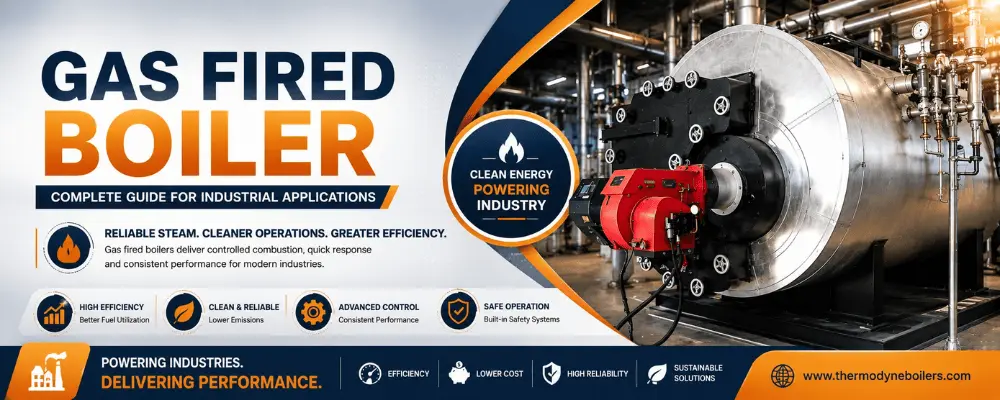
Why Oil & Gas Fired Boilers are Ideal for Dairy Plants
Dairy processing demands consistent, hygienic, and fast steam generation, and this is exactly the kind of demand a well-designed Steam Boiler for Dairy is built to handle.
- Clean combustion: Oil and gas fuels burn more consistently than solid fuels, reducing particulate contamination risk in food-grade environments.
- Fast steam generation: Quick startup and load response matter when pasteurization and CIP schedules are tightly timed.
- High thermal efficiency: Modern designs extract more usable heat per unit of fuel, directly reducing operating costs.
- Lower emissions: Cleaner fuel and better combustion control help plants meet environmental compliance more easily.
- Reliable automation: Automated combustion controls reduce dependence on manual intervention and human error.
Thermodyne’s Savemax Oil & Gas Fired Boiler is built around this exact need, with a three-pass smoke tube design and an internal water-cooled furnace that together deliver high efficiency and low fuel consumption for continuous dairy operations.
Conclusion
A dairy plant runs on steam, and steam runs on a boiler that’s properly maintained. From feed water quality to preventive maintenance scheduling, every one of the ten practices covered here plays a direct role in preventing downtime, protecting product quality, and controlling operating costs. A dependable Steam Boiler for Dairy isn’t just equipment sitting in the utility room — it’s the foundation your entire production schedule is built on. Treat its maintenance with the same seriousness you give to food safety and production planning, and it will reliably return the favor, shift after shift.
Looking for a Reliable Steam Boiler for Dairy?
Explore Thermodyne’s Savemax Oil & Gas Fired Boiler for continuous steam generation, high fuel efficiency, dependable performance, and lower operating costs for dairy processing plants.
Explore Savemax Boiler →Frequently Asked Questions (FAQs)
Regular maintenance ensures uninterrupted steam supply for pasteurization, CIP cleaning, sterilization, and packaging. It also improves fuel efficiency, minimizes downtime, extends boiler life, and reduces the risk of costly breakdowns.
Daily operational checks should be performed by plant operators, while weekly, monthly, and annual preventive maintenance should be scheduled according to the boiler manufacturer’s recommendations and operating hours.
The most common causes include poor feed water quality, scale buildup, burner malfunction, inadequate blowdown, dirty boiler tubes, fuel supply issues, neglected safety devices, and lack of preventive maintenance.
Fuel efficiency can be improved by maintaining proper burner combustion, cleaning boiler tubes regularly, monitoring flue gas temperature, using treated feed water, maintaining the correct steam pressure, and scheduling periodic boiler tuning.
Common warning signs include:
- Steam pressure fluctuations
- Increased fuel consumption
- Burner flame instability
- Visible smoke from the stack
- Water leakage
- Unusual knocking or hissing sounds
- Slow steam generation during startup or production peaks
Proper feed water treatment prevents scale formation, corrosion, and tube failure. It improves heat transfer efficiency, lowers fuel consumption, and significantly extends the life of the boiler.
Oil and gas fired boilers provide clean combustion, fast steam generation, high thermal efficiency, lower emissions, precise temperature control, and reliable automation, making them ideal for food-grade dairy applications.
Steam is essential for:
- Milk pasteurization
- CIP (Clean-in-Place) systems
- Sterilization
- Cheese production
- Paneer manufacturing
- Yogurt processing
- Ghee production
- Packaging line sterilization
Reliable steam ensures consistent product quality and food safety.
Preventive maintenance detects issues before they become major failures. It reduces emergency repairs, improves fuel efficiency, prevents production losses, lowers maintenance expenses, and increases equipment lifespan.
For continuous and energy-efficient dairy processing, Thermodyne’s Savemax Oil & Gas Fired Boiler is an excellent choice. Its three-pass smoke tube design, internal water-cooled furnace, high thermal efficiency, and reliable steam generation make it ideal for demanding dairy applications while helping reduce fuel consumption and operating costs.