In industrial operations, the performance and reliability of a hot water generator directly impact production efficiency, energy consumption, and operational stability. Across various industrial applications, hot water generation systems play a critical role in process heating, cleaning, and temperature control.
However, issues such as noise, vibration, and leakage in HWG systems are common and can lead to serious consequences if ignored. These problems are not just operational disturbances—they are early warning signs of inefficiencies, mechanical stress, and potential system failure.
This troubleshooting guide provides a structured and practical approach to identifying, analyzing, and resolving these issues in a hot water generator, ensuring long-term performance and reliability.
Common Problems in Hot Water Generator Systems
A hot water generator may appear to function normally during operation, but underlying issues often develop gradually and manifest through visible and audible signs. These warning signals should never be ignored, as they indicate internal inefficiencies within the hot water generator system.
The most common problems observed in a hot water generator include:
- Unusual noise during operation
- Excessive vibration in pipelines or equipment
- Visible leakage from joints, valves, or connections
These issues can significantly reduce the efficiency of the hot water generator, increase maintenance costs, and shorten the overall lifespan of the system. Early identification and troubleshooting of hot water generator problems are essential to ensure reliable and efficient operation.
Noise Issues in Hot Water Generator
Why Noise Should Not Be Ignored ?
Noise in a hot water generator is often the first and most important indicator of internal imbalance. Abnormal sounds in a hot water generator system typically result from hydraulic disturbances, improper heat transfer, or mechanical faults. Ignoring these noises can lead to severe equipment damage, reduced thermal efficiency, and higher fuel consumption in the hot water generator.
Common Types of Noise
- Banging or Hammering: Caused by sudden pressure changes or water hammer in the hot water generator pipelines
- Hissing or Whistling: Indicates high-velocity flow or possible leakage within the system
- Rumbling or Kettling: Occurs due to localized overheating inside the hot water generator
- Pump-Related Noise: Often linked to cavitation or mechanical issues
Causes and Solutions
1. Air Entrapment in the System
Problem: Air pockets can enter the hot water generator system during initial filling, maintenance activities, or due to improper sealing. These trapped air pockets disturb smooth water circulation and create gurgling or knocking sounds inside the hot water generator.
Impact:
- Uneven heat distribution
- Reduced efficiency of the hot water generator
- Increased corrosion risk due to oxygen presence
Solution:
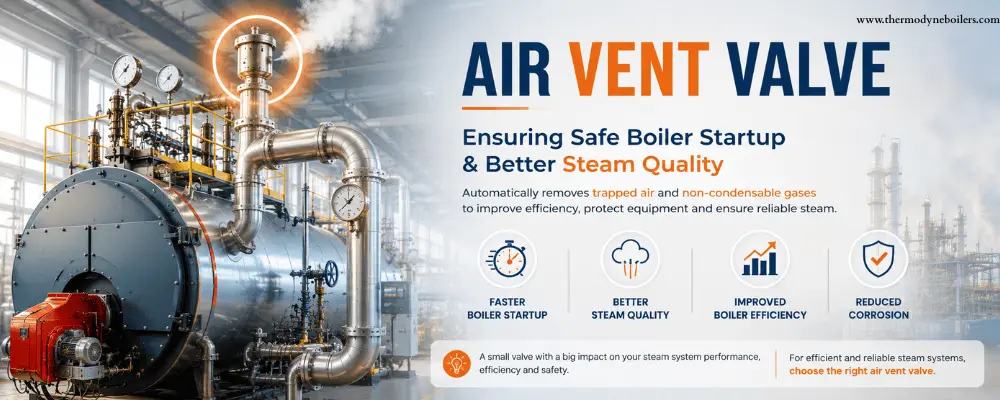
- Install automatic air vents at strategic points
- Perform regular system bleeding
- Maintain proper pressure in the hot water generator system
2. Scaling and Deposits
Problem: Mineral deposits such as calcium and magnesium accumulate on heat transfer surfaces inside the hot water generator, forming an insulating layer that restricts heat transfer and causes overheating.
Impact:
- Risk of tube/ shell damage and failure
- Reduced heat transfer efficiency
- Increased fuel consumption in the hot water generator
Solution:
- Check for thinning of tubes/ shell of pressure part
- Maintain proper water treatment and softening
- Use chemical dosing systems
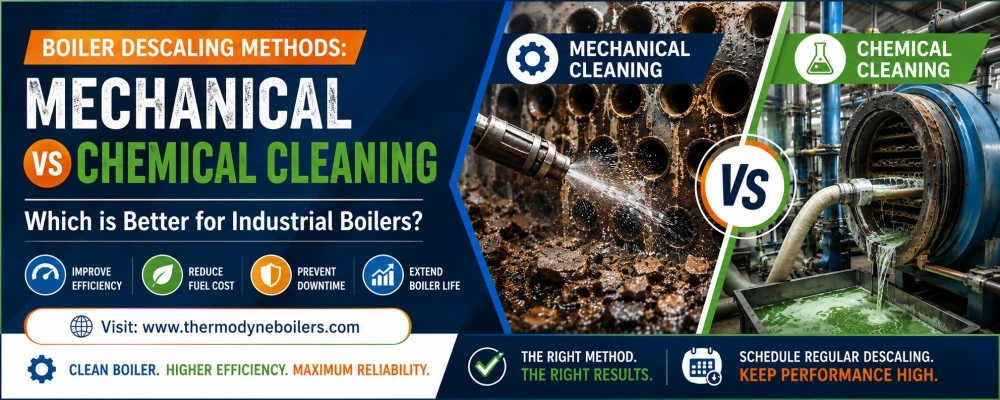
- Schedule periodic descaling of the hot water generator
3. Pump Cavitation
Problem: Cavitation occurs when the pressure at the pump suction side drops below the vapor pressure of water, forming vapor bubbles that collapse violently inside the pump connected to the hot water generator.
Impact:
- Loud noise and vibration
- Damage to pump impellers
- Reduced efficiency of the hot water generator system
Solution:
- Ensure proper pump selection
- Maintain adequate suction pressure
- Avoid undersized suction pipelines in the hot water generator system
4. Flow Disturbances
Problem: Irregular flow rates or partially closed valves in the hot water generator system create turbulence, leading to whistling or vibrating noise.
Impact:
- Energy losses
- Uneven heating
- Increased wear on system components
Solution:
- Maintain uniform flow distribution
- Inspect and maintain valves regularly
- Optimize pipeline design for the hot water generator
Vibration Issues in HWG Systems
Impact of Vibration
Excessive vibration in a hot water generator system indicates mechanical or hydraulic instability. Continuous vibration can damage system components, weaken structural integrity, and reduce the overall lifespan of the hot water generator.
Causes and Solutions
1. Pump Misalignment
Problem: Improper alignment between the motor and pump shafts leads to uneven load distribution, causing vibration in the hot water generator system.
Impact:
- Bearing failure
- Shaft damage
- Reduced operational efficiency
Solution:
- Conduct regular alignment checks
- Use precision alignment tools
- Replace worn-out bearings in the hot water generator system
2. High Flow Velocity
Problem: Improper pipe sizing or excessive flow velocity in the hot water generator system leads to turbulence and vibration.
Impact:
- Pipeline stress
- Increased friction losses
- Reduced efficiency
Solution:
- Optimize pipeline diameter
- Control flow rates
- Ensure proper hydraulic design of the hot water generator
3. Weak Structural Support
Problem: Loose or inadequate supports allow movement in pipelines and equipment connected to the hot water generator, amplifying vibration.
Impact:
- Joint failures
- Misalignment
- Increased maintenance
Solution:
- Tighten supports and clamps
- Install vibration isolators
- Regularly inspect the hot water generator structure
4. Resonance Conditions
Problem: When the operating frequency of the hot water generator matches the natural frequency of system components, resonance occurs, leading to severe vibration.
Impact:
- Structural damage
- Rapid equipment failure
Solution:
- Modify operating conditions
- Install dampeners
- Redesign supports if required
Leakage Problems in Hot Water Generation Systems
Why Leakage is Critical
Leakage in a hot water generator is a serious issue that leads to energy loss, reduced efficiency, and safety risks. Even minor leaks in a hot water generator can escalate into major operational failures if not addressed promptly.
Common Leakage Areas
- Pipe joints and flanges
- Valves and fittings
- Heat exchangers
- Tanks and pipelines connected to the hot water generator
Causes and Solutions
1. Corrosion and Material Degradation
Problem: Continuous exposure to hot water and oxygen leads to corrosion in the hot water generator system.
Impact:
- Reduced equipment lifespan
- Increased maintenance costs
- Risk of sudden failure
Solution:
- Use corrosion-resistant materials
- Maintain proper water chemistry
- Apply protective coatings in the hot water generator
2. Thermal Expansion Stress
Problem: Frequent heating and cooling cycles in the hot water generator cause expansion and contraction, leading to stress on joints.
Impact:
- Joint failure
- Pipeline cracks
- Misalignment
Solution:
- Install expansion joints
- Allow flexibility in system design
- Monitor temperature variations
3. Poor Installation Practices
Problem: Improper installation or sealing leads to leakage in the hot water generator system.
Impact:
- Frequent maintenance issues
- Reduced efficiency
Solution:
- Ensure proper sealing and torque
- Follow installation standards
- Use high-quality materials
4. High Pressure Conditions
Problem: Operating beyond design pressure limits damages components of the hot water generator.
Impact:
- Safety hazards
- Equipment failure
- System downtime
Solution:
- Maintain pressure within safe limits
- Install pressure control systems
- Regularly monitor the hot water generator
Preventive Maintenance for Hot Water Generator
To ensure consistent performance of a hot water generator, industries must adopt a proactive maintenance strategy.
Key Practices
- Regular inspection of noise, vibration, and leakage indicators
- Effective water treatment to prevent scaling and corrosion
- Use of predictive maintenance tools such as vibration analysis and thermal imaging
- Proper insulation and system optimization
A well-maintained system reduces operational risks and improves efficiency.
Role of Hot Water Generator Manufacturer
The performance of a hot water generator is highly dependent on the expertise of the hot water generator manufacturer.
A reliable manufacturer ensures:
- Proper system design and engineering
- High-quality components
- Efficient and durable hot water generation systems
- Strong after-sales support
Choosing the right partner minimizes operational issues and ensures long-term reliability.
Conclusion
Noise, vibration, and leakage in a hot water generator are critical indicators of underlying system inefficiencies. Ignoring these issues can lead to higher energy consumption, increased downtime, and costly repairs.
By following a structured troubleshooting approach and implementing preventive maintenance practices, industries can:
- Improve system efficiency
- Reduce operational costs
- Extend equipment lifespan
- Ensure reliable performance
Investing in high-quality systems and working with an experienced hot water generator manufacturer ensures long-term operational excellence.
If your plant is facing challenges with a hot water generator, it is essential to take proactive steps. Addressing noise, vibration, and leakage issues early can significantly improve system performance and reduce operational costs.
Connect with industry experts to optimize your hot water generation systems and achieve efficient, reliable, and sustainable industrial operations.