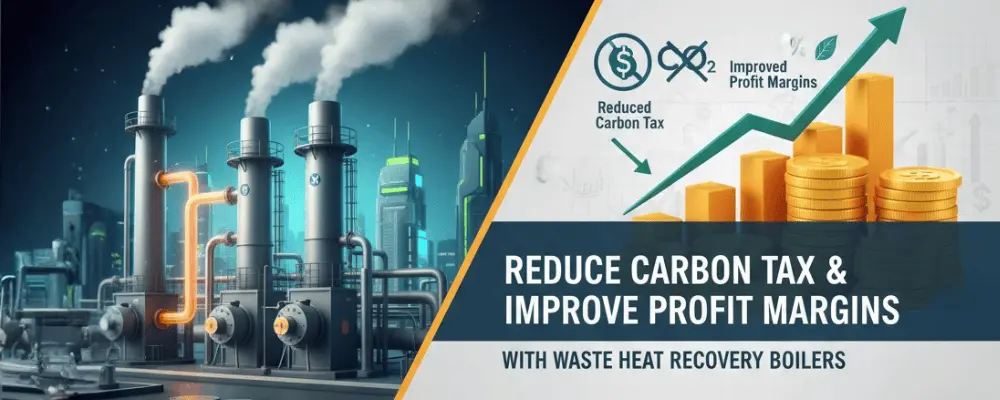
In today’s competitive industrial environment, energy efficiency is not just a technical choice—it’s a financial strategy. As governments across the world tighten carbon emission norms and introduce carbon tax policies, industries are under pressure to reduce their carbon footprint while maintaining profitability. One of the most efficient and proven solutions to achieve both goals is the installation of a Waste Heat Recovery Boiler(WHRB).
By capturing and utilizing the unused heat from exhaust gases, waste heat recovery boilers help industries cut fuel costs, lower carbon emissions, and significantly enhance profit margins.
Understanding Waste Heat and Its Industrial Impact
Every industrial process—whether it’s in steel, cement, glass, chemical, or power generation—releases large volumes of hot exhaust gases. This waste heat often escapes into the atmosphere, leading to two major problems:
- Loss of valuable thermal energy that could have been reused.
- Increased carbon emissions, as the plant burns more fuel than necessary.
A Waste Heat Recovery Boiler (WHRB) or Waste Heat Boiler captures this heat and converts it into useful steam or hot water, which can then be reused in the production process. The result? Reduced energy consumption and lower operational costs.
How Waste Heat Recovery Boilers Work
A waste heat recovery system (WHRS) is designed to recover heat from exhaust streams of furnaces, kilns, incinerators, DG sets, and gas turbines. The recovered heat is transferred to water inside the waste heat recovery boiler, generating steam that can be used for:
- Process heating
- Power generation through steam turbines
- Preheating combustion air
- Drying or cleaning applications
By reusing this recovered energy, industries reduce their dependence on fossil fuels and achieve a direct cut in CO₂ emissions.
Reducing Carbon Tax Through WHRB Integration
With global sustainability goals and carbon taxation policies tightening, industries are now financially penalized for excessive emissions. Carbon tax rates vary by country, but the principle is the same — the more CO₂ you emit, the more you pay.
By installing waste heat recovery boilers, industries can drastically reduce fuel consumption, thereby lowering total carbon emissions. This not only minimizes their carbon tax liability but also improves their standing in environmental audits and certifications such as ISO 50001 (Energy Management System).
Boosting Profit Margins with Waste Heat Recovery Systems
Adopting waste heat recovery boilers (WHRBs) is not just an environmental decision; it’s a smart business move. Here’s how it directly impacts profitability:
1. Reduced Fuel Costs
By recovering and reusing waste heat, industries can reduce their fuel consumption by 10–30%, depending on the process type and exhaust conditions.
2. Lower Maintenance Costs
Modern waste heat boilers require minimal maintenance compared to conventional boilers, ensuring long-term reliability.
3. Faster ROI
A properly designed waste heat recovery system typically offers a payback period of 1.5 to 3 years through energy savings alone.
4. Government Incentives
Many countries offer tax rebates and financial incentives for industries adopting waste heat recovery systems to promote cleaner technologies.
5. Brand Reputation
Industries that embrace green solutions such as waste heat recovery boilers demonstrate their commitment to sustainability, improving their brand image and attracting eco-conscious clients.
Industries Benefiting from Waste Heat Recovery Boilers
- Cement and Steel Plants: Capture furnace exhaust to generate process steam.
- Textile and Paper Mills: Reuse dryer exhaust for hot water generation.
- Chemical and Food Processing Units: Utilize heat from reactors or dryers.
- Power Plants: Integrate WHRB boilers with gas turbines for combined cycle efficiency.
These industries often experience high carbon emissions, making waste heat recovery boilers an ideal solution to stay compliant and competitive.
The Role of Thermodyne’s WHRB in Energy Optimization
At Thermodyne Boilers, our Wastetherm Waste Heat Recovery Boilers (WHRB) are engineered to deliver maximum energy recovery with minimal maintenance. Designed for various industrial setups, these systems transform unused exhaust heat into valuable steam or hot water, reducing both fuel cost and carbon footprint.
With over two decades of experience in designing waste heat recovery systems, Thermodyne ensures that every WHRB installation is customized to match your process requirements — optimizing both performance and profitability.
Conclusion
In an age where energy efficiency equals profitability, Waste Heat Recovery Boilers stand as the perfect bridge between sustainability and savings. By reusing exhaust energy, industries can reduce carbon tax liabilities, comply with emission regulations, and strengthen their profit margins.
A waste heat recovery system is not just a compliance tool — it’s a long-term investment in industrial efficiency, financial performance, and environmental responsibility.
FAQs – Waste Heat Recovery Boilers for Carbon Tax Reduction & Profit Improvement
A Waste Heat Recovery Boiler is an energy-efficient system that captures heat from exhaust gases produced during industrial processes and converts it into usable steam or hot water. This recovered energy helps industries reduce fuel consumption, cut carbon emissions, and improve overall boiler efficiency.
By reusing waste heat instead of burning additional fuel, WHRBs lower total CO₂ emissions from your plant. This directly reduces your carbon tax liability, helping industries stay compliant with environmental regulations while improving energy efficiency.
Industries such as cement, steel, chemical, textile, paper, power generation, and food processing gain the most from waste heat recovery systems. These sectors produce high-temperature exhaust gases, making WHRBs a perfect solution to recover lost heat and improve profitability.
Installing a Waste Heat Recovery Boiler can reduce fuel costs by up to 30%, lower carbon tax payments, and offer a payback period of just 1.5 to 3 years. Additionally, it improves long-term savings, reduces maintenance costs, and enhances plant sustainability.
Thermodyne Boilers designs and manufactures Wastetherm Waste Heat Recovery Boilers engineered for maximum energy recovery and reliability. With over two decades of experience, Thermodyne provides customized WHRB solutions to optimize performance, reduce carbon emissions, and improve profit margins.
Yes, most WHRBs can be seamlessly integrated with existing furnaces, gas turbines, or diesel generators. Thermodyne’s engineers design systems tailored to your process requirements, ensuring efficient operation without disrupting production.
Using a Waste Heat Recovery System (WHRS) significantly reduces greenhouse gas emissions, minimizes thermal pollution, and supports sustainable manufacturing practices — aligning industries with global carbon reduction goals.
Thermodyne Boilers is a trusted boiler manufacturer in India, known for delivering innovative, reliable, and energy-efficient solutions. Our Wastetherm WHRBs help industries lower operational costs, improve energy efficiency, and enhance environmental compliance.