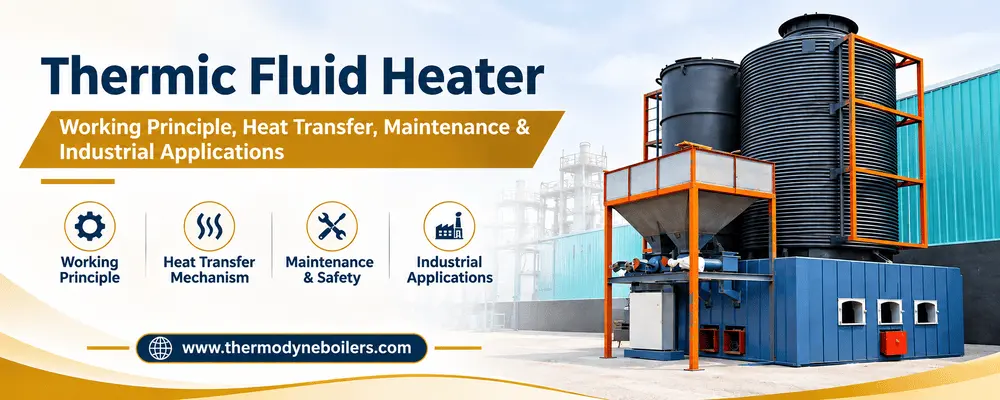
Plants that dry, cure, melt or react materials need precise, steady heat, yet many struggle with uneven temperatures, rising fuel costs and the pressure limits of steam. A Thermic Fluid Heater delivers high-temperature heat at low system pressure. To select and run one well, it helps to understand how heat actually moves through the system.
Why Heat Transfer Matters in Industrial Process Heating
Industrial process heating shapes product quality. Fabric must dry at a set temperature, reactions need stable conditions and polymer curing windows are narrow. Thermal energy transfer decides how fast, how evenly and how economically a process reaches its target. Poor transfer means longer batches, rejected product and wasted fuel.
What Is a Thermic Fluid Heater and How Does It Work?
A thermic fluid heater, also called a thermal oil heater, heats a special oil in a closed loop and delivers it to process equipment. It is an indirect heating system, so flame and flue gases never touch the product.
Thermic Fluid Heater Working Principle
The thermic fluid heater working principle is a continuous cycle:
- Fuel burns in the combustion chamber.
- Hot gases pass over the thermic fluid heating coil, and the oil inside absorbs the heat.
- A thermal oil circulation pump carries the hot oil to the process equipment.
- Cooled oil returns to be reheated.
Together, these form a complete thermal oil heating system.
Looking for a Reliable Thermic Fluid Heater?
Explore Thermodyne’s advanced Thermic Fluid Heater solutions for efficient industrial heating.
VISIT THERMODYNE THERMIC FLUID HEATER →Heat Transfer Mechanism: Conduction, Convection and Radiation
The heat transfer mechanism inside the heater combines three modes:
- Radiation: The flame and hot refractory radiate energy onto the coil heating up the thermic fluid, dominating the zone nearest the flame.
- Convection: Flue gases sweep across the outer coil surface, while flowing oil carries heat away from the inner wall.
- Conduction: Heat passes through the solid coil wall from the hot outer surface to the oil-wetted inner surface.
From Combustion Chamber to Thermic Fluid
Radiant heat strikes the inner coils first. Flue gases then pass through convective sections, giving up more heat to the outer coil. Heat conduction and convection work together at every point, so soot outside or carbon deposits inside add resistance. Keeping surfaces clean improves industrial thermal efficiency.
Role of Heat Transfer Fluid
A heat transfer fluid, usually mineral or synthetic thermal oil, is chosen for thermal stability, a high boiling point and low vapour pressure. This lets the system reach temperatures well above the boiling point of water without high pressure. Viscosity and specific heat govern how easily the oil flows and how much energy it carries. With age, oxidation and cracking form carbon deposits that insulate the coil.
Thermic Fluid Circulation and Pumps
wall. A high-temperature thermal oil circulation pump maintains turbulent flow, improving convection and limiting oil film temperature. Low flow can overheat the film, causing cracking and coking.
Closed-loop circulation also keeps process temperatures consistent, and a properly designed expansion tank limits oxygen contact, slowing oil degradation.
Want to Know More About Thermic Fluid Heater?
Explore its working principle, industrial applications and key advantages for efficient process heating.
READ MORE ABOUT THERMIC FLUID HEATER →Delivering Heat to the Process
Hot oil passes through a heat exchanger, jacketed vessel, dryer coil or platen press, and heat conducts through the equipment wall into the product. The delivered duty follows Q = m × Cp × ΔT, where m is mass flow, Cp is specific heat and ΔT is the temperature drop across the equipment.
Factors Affecting Thermic Fluid Heater Efficiency
- Fluid flow rate: High enough for turbulence, within pump and pressure-drop limits.
- Temperature difference: A larger gap between flue gas and oil speeds transfer.
- Coil design: Tube diameter, pitch and layout set gas contact and oil velocity.
- Fluid properties: Viscosity and specific heat change as the oil ages.
- Surface area: More clean surface absorbs more heat.
Minimising Thermal Losses
A poorly maintained thermic fluid heater loses energy in predictable ways:
- Soot on coils: Regular cleaning restores gas-side transfer.
- Internal carbon deposits: Good oil quality and adequate flow prevent them.
- Excess air: Correct air-fuel ratios cut flue gas losses.
- Hot exhaust: Air preheaters or economisers reclaim energy.
- Bare pipes and flanges: Insulation limits radiation losses.
Maintaining a Thermic Fluid Heater Safely
- Test the oil periodically for viscosity, flash point, carbon residue and acidity.
- Inspect pump seals, filters and the expansion tank.
- Keep flow, temperature and low-level interlocks working.
- Heat up gradually after shutdown so trapped moisture escapes safely.
- Respect the fluid manufacturer’s temperature limits.
Industrial Applications of Thermic Fluid Heating
A thermic fluid heater suits many sectors because it gives stable, controllable temperatures:
- Textile and fabric processing: Hot oil from a thermic fluid heater feeds stenters, dryers and heat-setting chambers for even drying across the fabric width.
- Food processing and Namkeen manufacturing: Indirect heating keeps oil in jacketed kadhais and fryers at steady temperatures without direct flame contact.
- Chemical and pharmaceutical industries: Reactor jackets and heat exchangers hold the stable temperatures that reactions and distillation need.
- Rubber and polymer manufacturing: Hot oil heats platens, moulds and calendars for controlled curing.
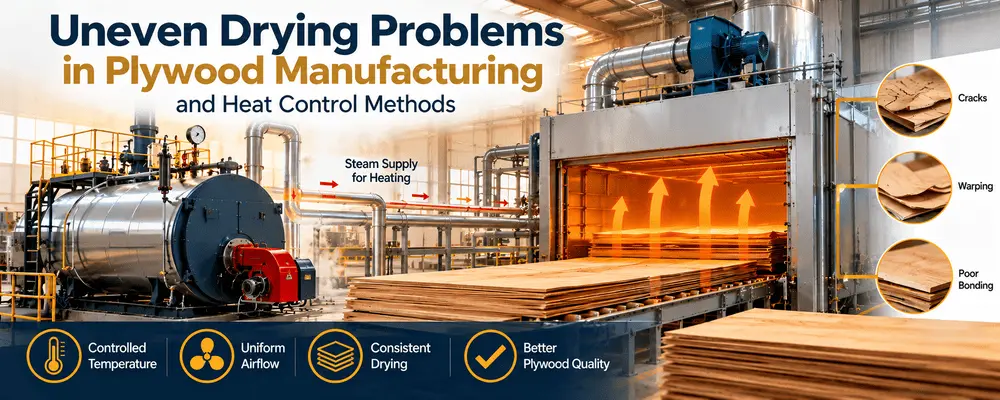
- Plywood and wood processing: Hot-press platens and veneer dryers use uniform heat for strong bonding and consistent moisture removal.
Fluidtherm: Industrial Thermic Fluid Heater by Thermodyne
Thermodyne Engineering Systems’ Fluidtherm is an industrial thermic fluid heater built for reliable, controlled and continuous indirect heating, with capacities from 1 Lac Kcal/hr to 60 Lac Kcal/hr.
Fuel options include biomass, rice husk, briquettes, coal, agro-waste, wood, wood chips, light oil, heavy oil, PNG, LPG and biogas. Configurations cover oil-fired, gas-fired, dual-fuel-fired, manual, fluidised bed combustion and automatic fuel feeding, so each plant can match the heater to its fuel supply and process load.
Robust construction and dependable safety instruments support industrial process heating across the sectors above. Explore the Fluidtherm Thermic Fluid Heater range.
Conclusion
Heat transfer determines how efficiently any industrial heating system turns fuel into useful process heat. Understanding radiation, convection and conduction, why circulation matters and what degrades the oil helps engineers choose, operate and maintain a thermic fluid heater with confidence. With the right fuel, configuration and upkeep, a Fluidtherm Thermic Fluid Heater can deliver the stable, indirect heat your processes demand.
Looking for a reliable industrial thermic fluid heating solution? Connect with Thermodyne Engineering Systems to explore Fluidtherm configurations for your process heating requirements.
Looking for a reliable industrial thermic fluid heating solution? Connect with Thermodyne Engineering Systems to explore Fluidtherm configurations for your process heating requirements.
CONTACT US →Frequently Asked Questions (FAQs)
A thermic fluid heater is an industrial heating system that uses thermal oil or a specialised heat transfer fluid to transfer heat to process equipment through a closed-loop circulation system. It provides high-temperature heating at relatively low operating pressure.
A thermic fluid heater works by burning fuel in a combustion chamber to heat the thermal oil flowing through heating coils. A circulation pump then transfers the hot oil to process equipment, where it releases heat before returning to the heater for reheating.
The thermic fluid heater working principle is based on indirect heat transfer. Fuel combustion generates heat, which transfers to the thermal oil through radiation, convection and conduction. The heated oil circulates continuously to deliver controlled thermal energy to industrial processes.
The three primary modes of heat transfer are:
Radiation: Transfers heat from the flame to the heating coils.
Convection: Transfers heat between flowing flue gases, coil surfaces and thermal oil.
Conduction: Transfers heat through the metal walls of the heating coils.
Thermic fluid heaters generally use specialised mineral-based or synthetic thermal oils. These fluids are selected for their thermal stability, viscosity, specific heat capacity, high boiling point and ability to operate at elevated temperatures.
Proper thermic fluid circulation ensures consistent heat transfer, maintains uniform process temperatures and prevents excessive heating of the oil inside the coils. Adequate circulation also helps minimise carbon deposits and thermal fluid degradation.
Thermic fluid heater efficiency depends on several factors, including fuel quality, fluid circulation rate, coil design, heat transfer surface area, combustion efficiency, insulation quality and regular maintenance of heating surfaces.
Heat losses can be reduced by cleaning heating coils, maintaining proper air-fuel ratios, insulating hot oil pipelines, preventing internal carbon deposits and recovering waste heat from exhaust gases through suitable heat recovery equipment.
Regular maintenance includes thermal oil testing, pump inspection, filter cleaning, checking expansion tank conditions, inspecting heating coils, verifying safety interlocks and monitoring operating temperatures and fluid circulation.
Thermic fluid oil should be tested periodically according to operating conditions and the fluid manufacturer’s recommendations. Important parameters include viscosity, flash point, acidity, carbon residue and thermal degradation indicators.
Thermic fluid heaters are widely used in textile processing, food manufacturing, chemical and pharmaceutical production, rubber and polymer manufacturing, plywood processing, wood treatment and other industries requiring controlled indirect heating.