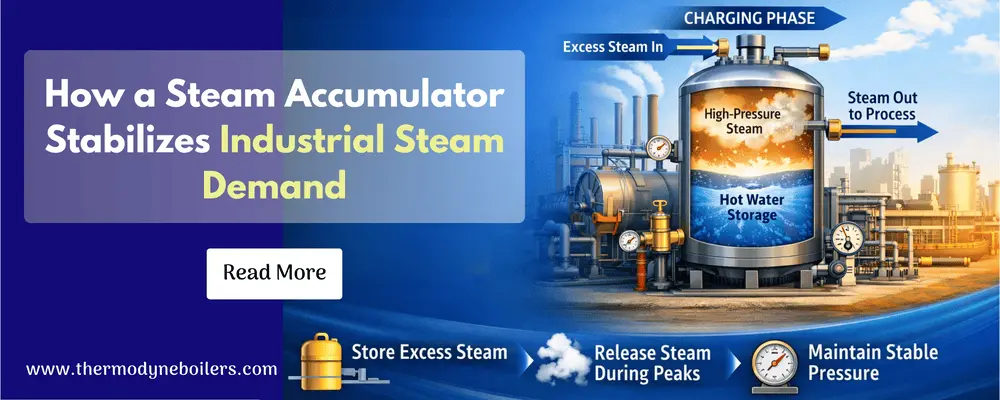
In industrial manufacturing environments, maintaining a reliable steam supply is essential for stable production and process efficiency. A steam accumulator plays a crucial role in supporting this reliability by acting as a buffer between steam generation and consumption. Steam is widely used as a heat transfer medium because of its ability to deliver large amounts of thermal energy quickly and uniformly. However, one common challenge in many facilities is fluctuating steam demand during production cycles.
Many processes require steam in bursts rather than continuously. When demand suddenly rises, a Steam Boiler may not instantly generate additional steam. This can cause pressure drops, process instability, and energy inefficiencies.
To manage this challenge, industries install a steam accumulator. It functions as a thermal energy storage system that stores excess steam energy and releases it during peak demand. By balancing supply and consumption, a steam accumulator helps maintain stable pressure and supports efficient industrial operations.
Understanding Fluctuating Steam Demand
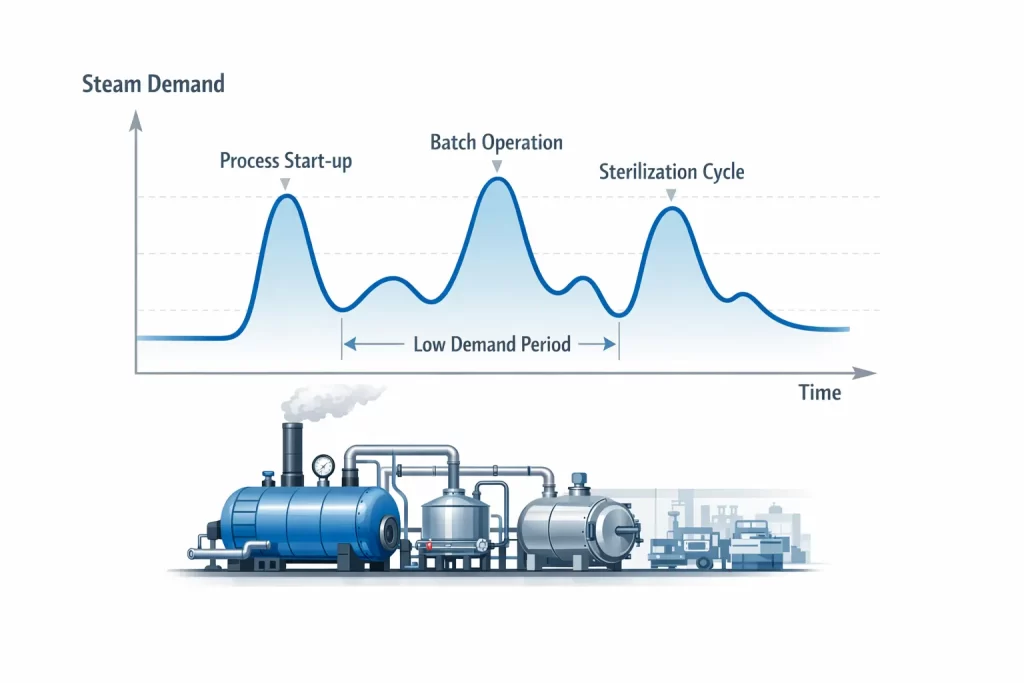
Industrial processes rarely consume steam at a constant rate. Instead, production cycles often create sudden increases in steam demand. These fluctuations can disrupt the stability of the steam network and affect equipment performance.
Typical causes of fluctuating steam demand include:
- Batch processing operations
- Equipment start-up cycles
- Sterilization processes
- Process heating variations
- Multiple production lines operating simultaneously
When these fluctuations occur, the boiler must rapidly increase output to meet the demand. Without a steam accumulator, the system may experience unstable pressure and inconsistent steam supply.
What is a Steam Accumulator?
A steam accumulator is a pressurized vessel designed to store thermal energy in the form of high-temperature water. The system acts as a buffer between steam generation and steam consumption.
When excess steam is available, it stores the energy by heating the water inside the vessel. When the production process suddenly requires additional steam, the stored energy is converted into steam and delivered to the process.
Because of this capability, it is often described as a thermal battery for industrial steam systems.
Working Principle of a Steam Accumulator in Industrial Steam Systems
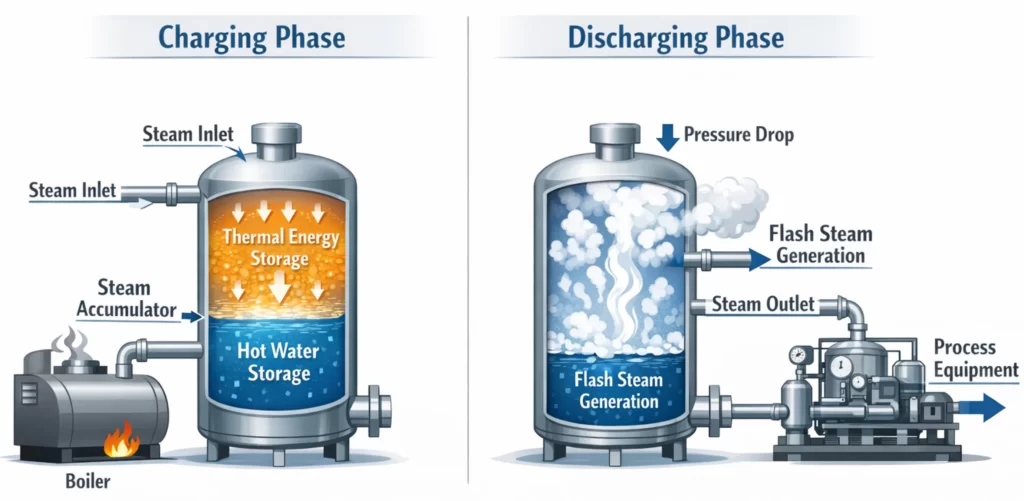
The operation of a steam accumulator involves two primary phases: energy storage and steam release.
Charging Phase
During periods of low steam demand, excess steam from the boiler enters the vessel. Inside, the steam condenses and transfers its heat to the stored water. This process increases the temperature of the water and stores thermal energy within the system.
Discharging Phase
When steam demand increases, the system pressure drops. This pressure reduction causes the high-temperature water inside to flash into steam. The newly generated steam is immediately supplied to the process line, allowing the system to meet peak demand without placing sudden load on the boiler.
Components of a Steam Accumulator System
A steam accumulator system includes several components that ensure reliable operation and safe energy storage.
Pressure Vessel
The pressure vessel is the main storage tank and is designed to handle high pressure and temperature conditions.
Steam Inlet
The inlet line allows excess steam from the boiler to enter the system during the charging phase.
Steam Outlet
The outlet line supplies stored steam to the industrial process when demand increases.
Water Level Control
Maintaining the correct water level inside the vessel is essential for effective thermal energy storage.
Safety and Control Valves
Safety valves protect the steam accumulator from excessive pressure and ensure safe operation.
How a Steam Accumulator Stabilizes Industrial Steam Demand
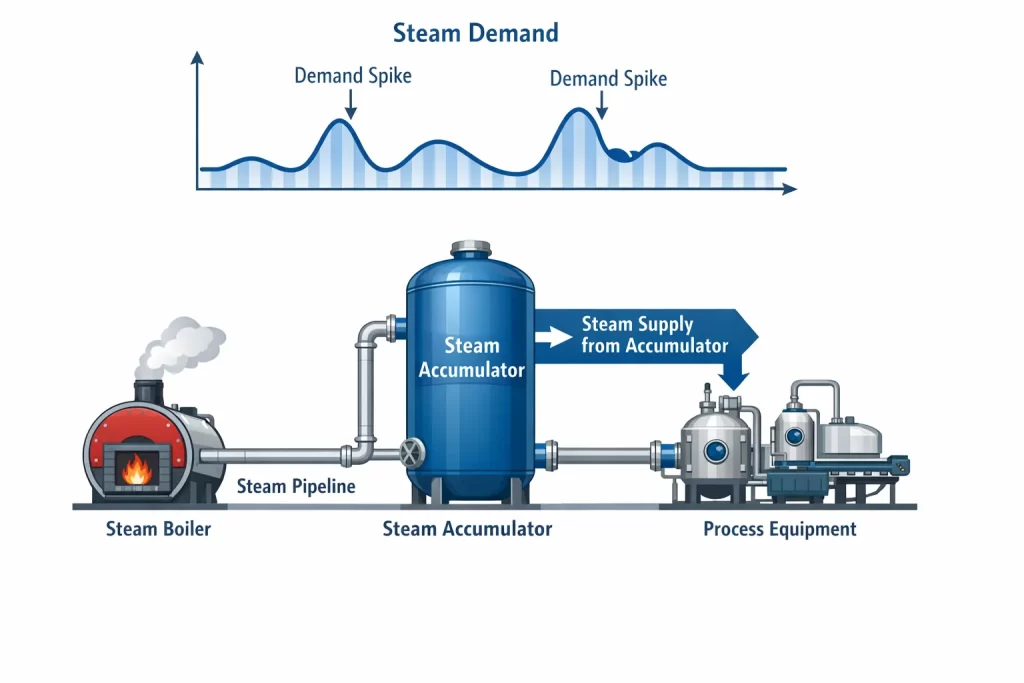
A steam accumulator stabilizes steam demand by storing excess energy and supplying steam during peak consumption periods.
Absorbing Excess Steam
When steam production exceeds demand, the system stores the excess energy instead of allowing it to be wasted.
Delivering Steam During Peak Demand
When demand rises suddenly, the steam accumulator releases stored energy as steam, ensuring continuous supply to the process.
Maintaining System Pressure
Because it acts as a buffer between the boiler and the process, it helps maintain stable pressure within the steam system.
Supporting Boiler Performance
The presence of a steam accumulator allows boilers to operate at steady loads rather than constantly adjusting output.
Advantages of Using a Steam Accumulator
- A steam accumulator saves energy by storing extra steam and using it when needed.
- Maintains smooth operations with a steady steam supply.
- Cuts fuel costs by using stored steam instead of generating new steam.
- Reduces stress on the boiler by handling sudden demand changes.
- Provides instant steam during peak demand without waiting.
Industrial Applications of Steam Accumulator
A Steam Accumulator is used in industries where steam demand changes suddenly during production. It stores excess steam energy and releases it during peak demand, helping maintain stable steam pressure and efficient operation of the Steam Boiler system.
Major Industrial Applications
- Food Processing Industry- Used in cooking, sterilization, pasteurization, and drying processes where steam demand occurs in batch cycles.
- Pharmaceutical Industry- Supports autoclave sterilization and reactor heating by providing stable steam during sudden demand spikes.
- Textile Industry- Used in dyeing, bleaching, washing, and finishing processes that require intermittent steam supply.
- Chemical Industry- Helps maintain stable heating for reactors and distillation processes where steam demand fluctuates.
- Rice Mills and Agro Processing- Provides steam for parboiling, drying, and grain processing where high steam demand occurs for short periods.
- Power and Utility Systems- Used to balance steam load in energy systems and maintain stable pressure in industrial steam networks.
Design Considerations for a Steam Accumulator
Proper sizing of a steam accumulator is critical for achieving optimal performance.
Engineers evaluate several parameters when designing a steam accumulator system:
- Maximum peak steam demand
- Boiler steam generation capacity
- Operating steam pressure
- Required discharge duration
- Volume of stored water
- Pressure vessel safety standards
A well-designed steam accumulator ensures that sufficient energy is stored to support peak production loads.
Role of Steam Accumulators in Energy Efficient Steam Plants
Modern industrial plants are increasingly focusing on energy optimization and sustainable operations. A steam accumulator plays a key role in improving steam system performance by balancing steam production and consumption. It helps industries reduce energy losses, stabilize steam pressure, and optimize overall boiler efficiency. As a result, many energy-efficient steam plants integrate this system as an important part of their steam distribution network.
Proven Expertise in Steam Accumulator Solutions
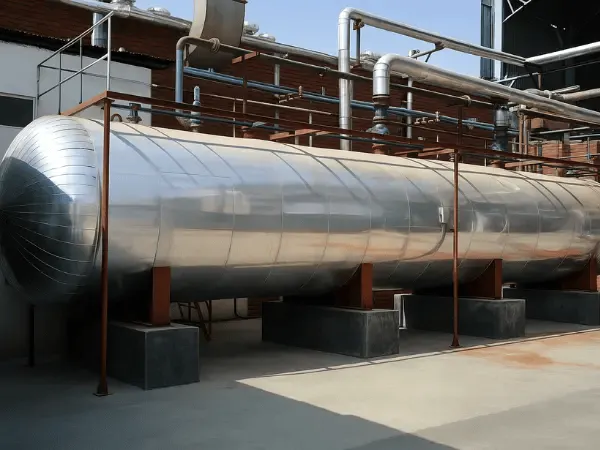
With over 26 years of experience in the boiler and steam engineering industry, Thermodyne Engineering Systems has successfully supplied and installed steam accumulators across a wide range of industries including food processing, pharmaceuticals, textiles, chemicals, and agro-processing. Our extensive field experience enables us to design steam accumulator systems that effectively stabilize steam demand and improve overall steam plant efficiency.
If your facility is experiencing steam demand fluctuations or pressure instability, our engineering experts can help you select the right steam accumulator solution for your process requirements.
For consultation or system integration support, you can connect with the Thermodyne steam system experts to optimize your industrial steam operations.
Conclusion
Fluctuating steam demand can create pressure instability and operational inefficiencies in industrial plants. A steam accumulator provides an effective solution by storing excess steam energy and releasing it during peak demand.
By stabilizing pressure, improving boiler performance, and supporting consistent steam supply, this system becomes an essential component in modern industrial steam plants. For facilities seeking greater efficiency and reliability, integrating such a solution is a strategic step toward optimized energy management.
FAQs related to Steam Accumulator
A steam accumulator is a pressurized vessel used to store thermal energy in the form of hot water and steam. It stores excess steam energy during low demand periods and releases steam during peak demand to maintain stable pressure in industrial steam systems.
A steam accumulator is used to balance fluctuations in steam demand. It helps maintain stable steam pressure, reduces boiler load variations, and ensures a continuous steam supply during sudden demand spikes in industrial processes.
A steam accumulator improves boiler efficiency by storing excess steam energy when demand is low and supplying it during peak demand. This reduces sudden load changes on the boiler and allows it to operate more efficiently.
Steam accumulators are widely used in industries such as food processing, pharmaceuticals, textiles, chemicals, paper, and agro-processing where steam demand fluctuates during production cycles.
A steam boiler generates steam by heating water using fuel or electricity, while a steam accumulator stores excess steam energy and releases it when required to stabilize steam demand in the system.
A steam accumulator stabilizes steam pressure by storing excess steam energy during low demand and releasing it during peak demand. This buffering effect helps maintain consistent pressure in the steam distribution system.
The sizing of a steam accumulator depends on factors such as peak steam demand, boiler steam generation capacity, operating pressure, discharge duration, and the required volume of stored water.
Yes, a steam accumulator can help reduce fuel consumption by storing unused steam energy instead of wasting it. This stored energy is later used during high demand, improving overall energy efficiency.
Yes, steam accumulators are particularly useful in batch processing industries where steam demand changes suddenly during operations such as sterilization, heating, drying, and processing cycles.
A steam accumulator supports energy-efficient steam plants by balancing steam supply and demand, minimizing pressure fluctuations, and allowing boilers to operate at a steady load, which improves overall system efficiency.
Thermodyne Engineering Systems is a trusted steam accumulator manufacturer with over 26 years of experience in industrial boiler and steam system solutions. The company provides high-quality steam accumulators designed to stabilize steam pressure, manage demand fluctuations, and improve overall steam plant efficiency across various industries.