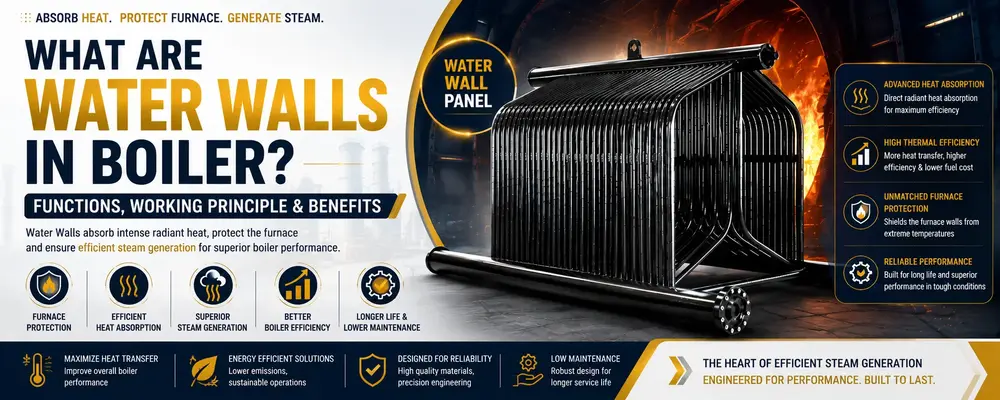
Every industrial boiler depends on one critical design element to survive its own furnace: Water Walls in Boiler construction. Positioned around the combustion chamber, these tube arrangements absorb intense radiant heat, protect furnace surfaces, and drive continuous steam generation. A Waterwall directly affects boiler heat transfer, furnace protection, and overall boiler efficiency. Rather than relying on thick refractory lining, modern water tube boiler designs use circulating water inside furnace-wall tubes to capture heat productively. Understanding how Water Walls in Boiler systems work helps engineers make smarter decisions about performance, safety, and long-term operating costs.
What are Water Walls in a Boiler?
A boiler water wall is a network of vertical tubes lining the inner surface of the furnace chamber, forming a continuous barrier between the combustion zone and the outer boiler casing. Water enters these water wall tubes from a downcomer and flows upward as it heats up, eventually connecting to the shell in a smoke with water tube boiler.
In most modern designs, individual tubes are welded together with steel fins, creating a single water wall panel known as a membrane water wall. This arrangement seals the furnace completely, improves structural rigidity, and eliminates air leakage points. Instead of depending heavily on a refractory wall for insulation, the furnace uses water-filled tubes as its primary heat transfer surface, making Water Walls in Boiler design both a protective shield and a functional part of the steam-generating system.
Water Tube Boiler: Working Principle, Types, Advantages & Industrial Applications
Discover how water tube boilers work, compare different types, understand their advantages, and learn why industries choose them for high-pressure steam generation.
Explore the Complete Water Tube Boiler Guide →Working Principle of Water Walls in Boiler
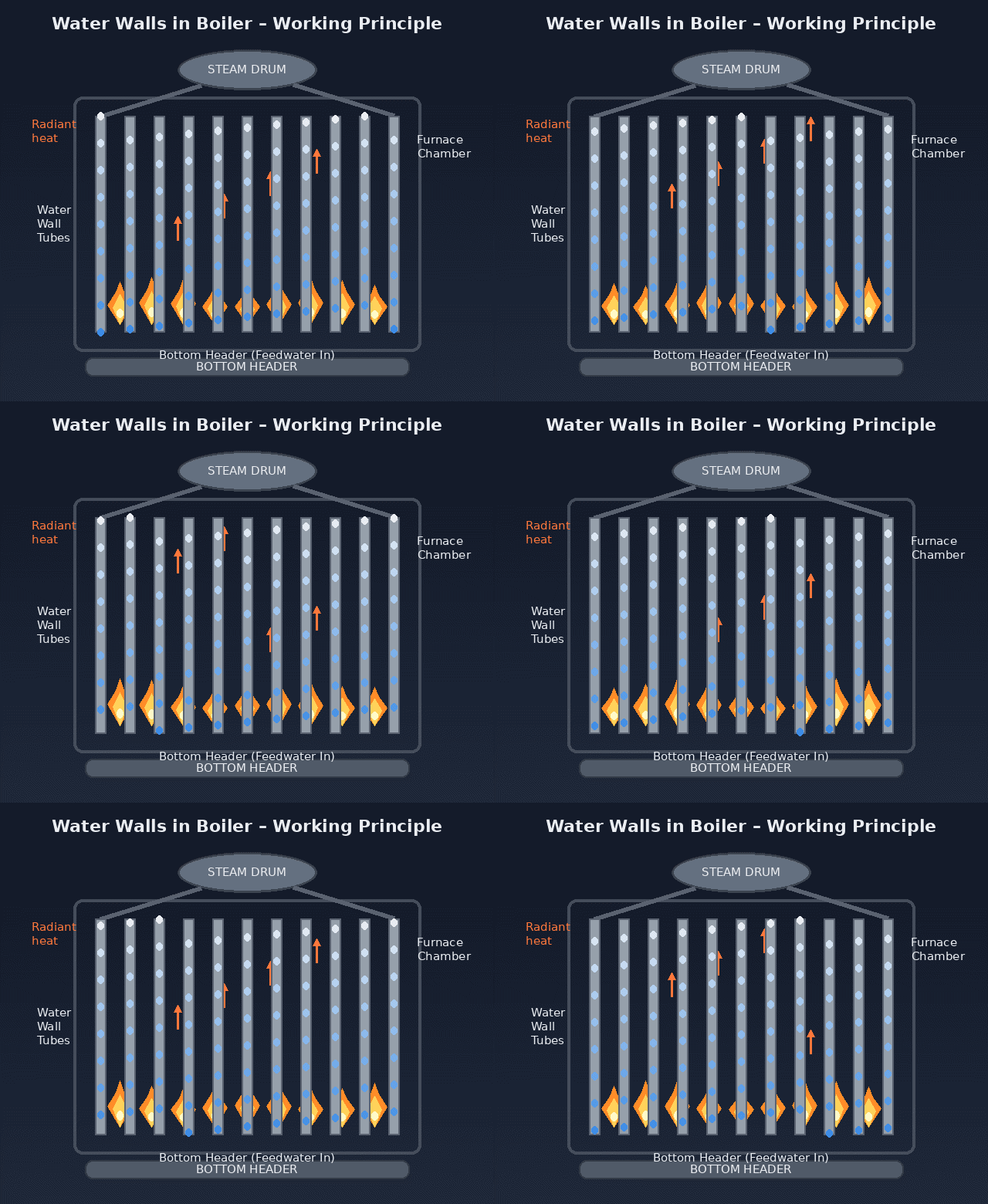
The working principle of Water Walls in Boiler systems follows a continuous, self-sustaining cycle. Water from the boiler shell travels from the downcomer and enters water wall tubes and begins circulating upward along the furnace walls. As fuel combustion occurs inside the combustion chamber, radiant heat strikes the tube surfaces directly.
This radiant heat absorption happens quickly because water in direct contact with hot metal draws heat efficiently. As the water heats up, it reaches saturation temperature and begins converting into steam. The resulting steam-water mixture rises to the top header of the waterwall and connects to the boiler shell. Steam is then stored in the top of the shell (Above Normal water level), while unconverted water recirculates back through the system.
Circulation of water inside the boiler shell and waterwall occurs naturally through density difference. This continuous water circulation supports uninterrupted steam generation in boiler operation while keeping furnace-wall metal temperatures within safe limits, day after day.
Main Functions of Water Walls in Boiler
Water Walls in Boiler tubes serve several interconnected purposes that keep the boiler running safely and efficiently.
- Furnace protection comes first — the tubes shield the outer casing from direct flame contact and extreme combustion-zone temperatures, preventing structural damage over time.
- Boiler heat transfer improves significantly, since water walls contribute a large portion of total heat transfer surface area available inside the furnace.
- Radiant heat absorption allows the boiler to capture energy that would otherwise escape through walls, converting it into usable process heat.
- Steam generation depends heavily on this component, as the evaporator tubes within the water wall network produce a steady share of total steam output.
- Cooling furnace walls keeps tube metal temperatures stable, reducing the risk of tube overheating and material fatigue under continuous operation.
- Improving boiler efficiency happens naturally when more combustion heat is captured productively instead of lost to flue gas or radiated outward.
- Protecting boiler tubes rounds out the function list, since consistent water flow prevents localized hot spots that often lead to premature tube failure.
Key Benefits of Water Walls in Industrial Steam Boilers
Facilities operating an industrial steam boiler with properly engineered Water Walls in Boiler systems see measurable, practical advantages:
- Higher thermal efficiency — more furnace heat converts into usable steam rather than escaping through the walls.
- Faster steam generation — direct radiant absorption speeds up the heating cycle compared to refractory-dependent designs.
- Reduced refractory damage — less dependency on brick lining means fewer cracks, less spalling, and fewer repairs.
- Lower fuel consumption — efficient heat capture reduces the fuel needed to maintain target boiler pressure.
- Improved safety — cooler outer wall surfaces lower the risk of structural failure during high-load operation.
- Better boiler performance — stable heat absorption supports consistent steam quality and output.
- Longer equipment life — reduced thermal stress extends the service life of furnace components.
- Lower maintenance costs — durable tube construction means fewer unplanned shutdowns and repairs.
Common Problems in Water Wall Tubes
Even well-built Water Walls in Boiler systems can develop issues without proper upkeep.
- Scale formation occurs when untreated feedwater leaves mineral deposits on tube interiors, reducing heat transfer efficiency and raising local metal temperatures.
- Corrosion from oxygen pitting or chemical attack gradually weakens tube walls, especially in poorly treated water systems.
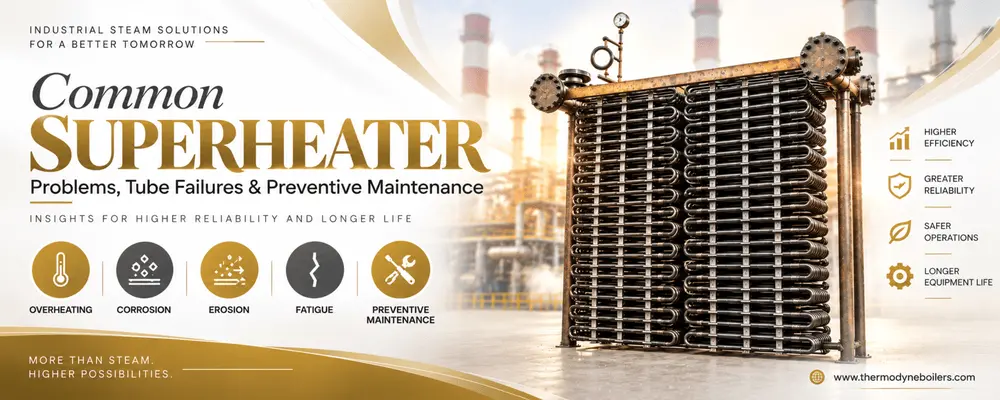
- Tube overheating typically follows either scale buildup or restricted circulation, pushing metal temperatures beyond safe design limits. Tube leakage often results from long-term thermal stress, corrosion, or fatigue cracking at weld points. Fouling on the fireside surface — soot and ash buildup — reduces radiant heat absorption over time, while repeated thermal stress from load cycling can eventually cause fatigue cracks.
Preventive maintenance practices help avoid these issues: consistent water treatment programs control scale and corrosion, routine ultrasonic thickness testing catches thinning tubes early, scheduled soot blowing manages fouling, and regular visual inspections identify warning signs before failures occur.
Applications of Water Walls
Water Walls in Boiler technology supports steam generation across numerous industries that depend on a reliable industrial heating system, including:
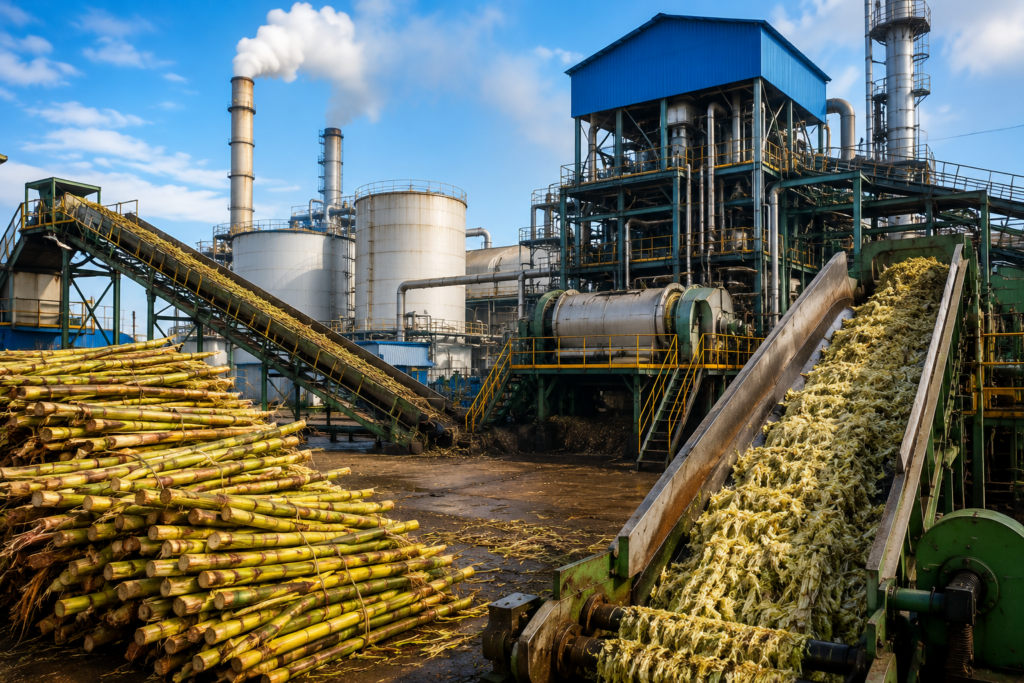
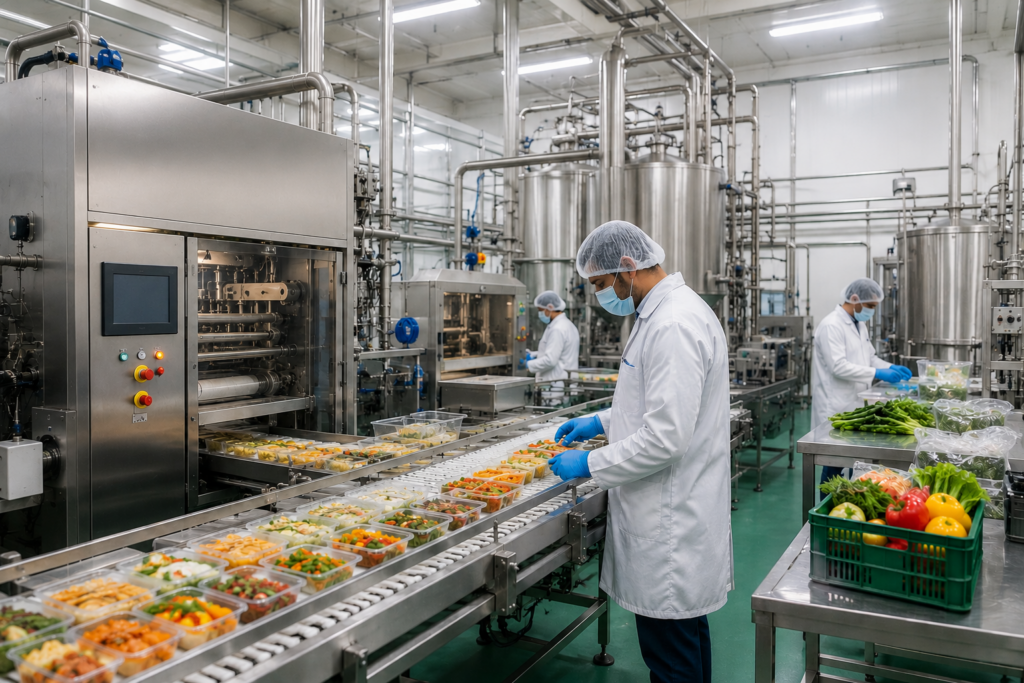
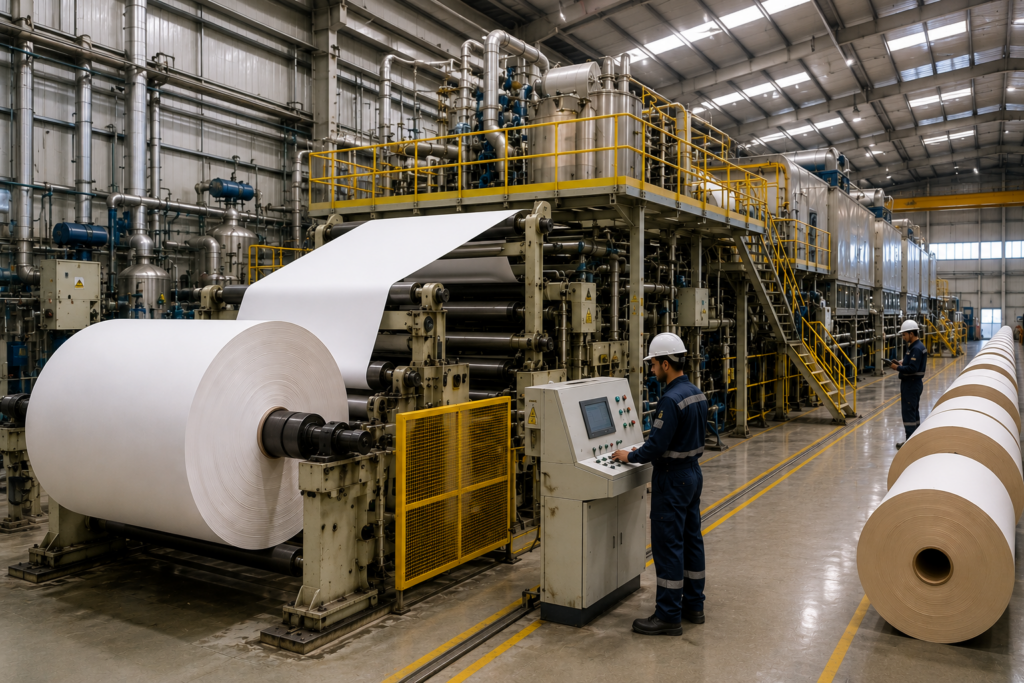
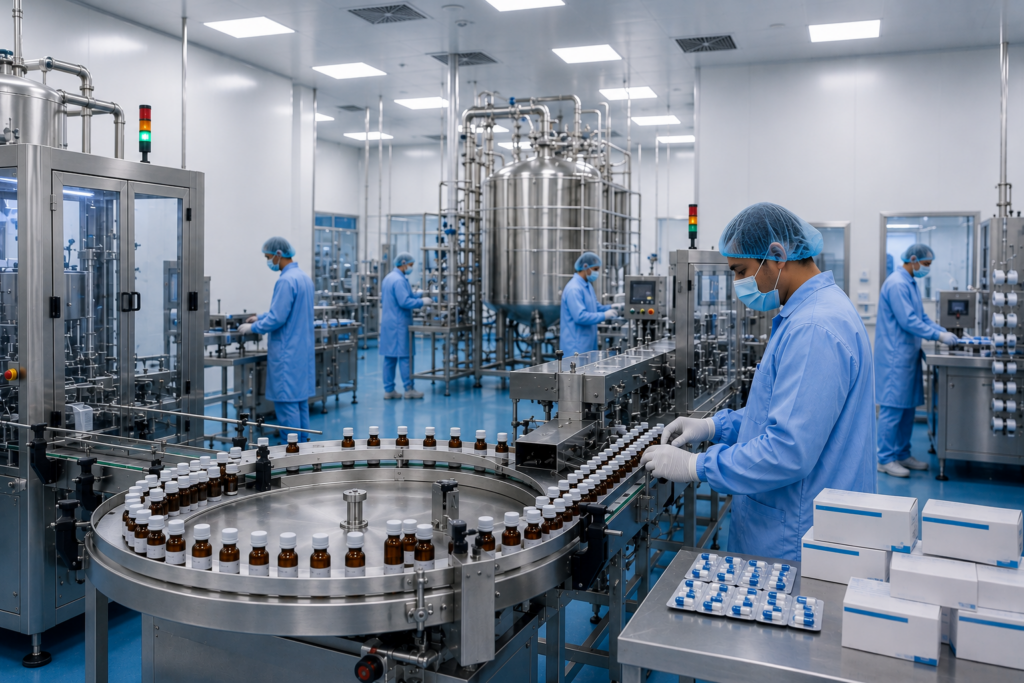
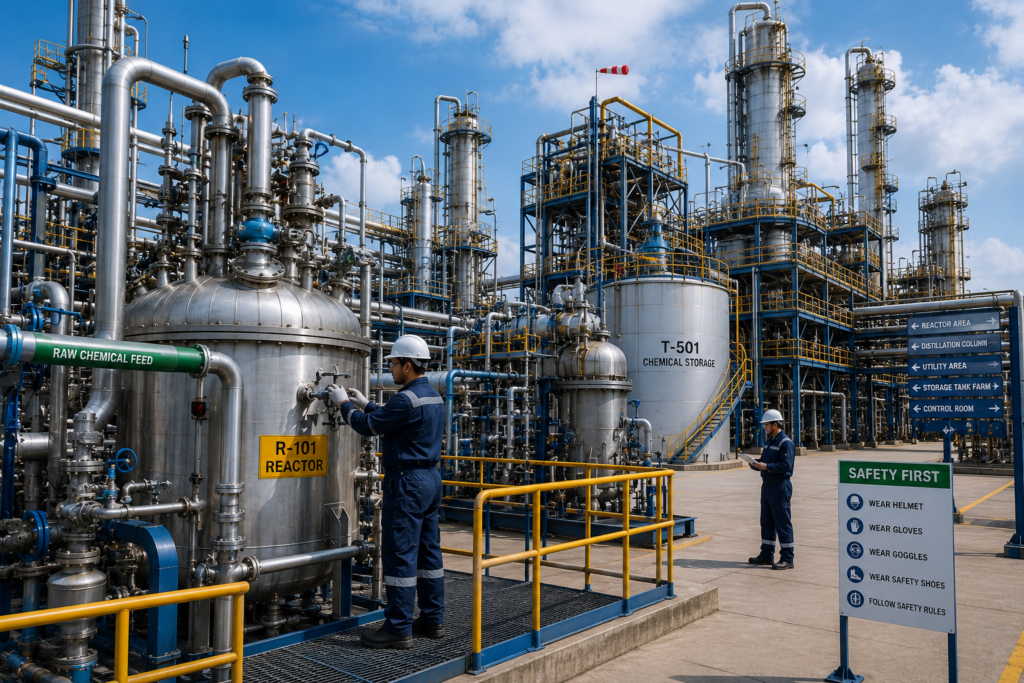
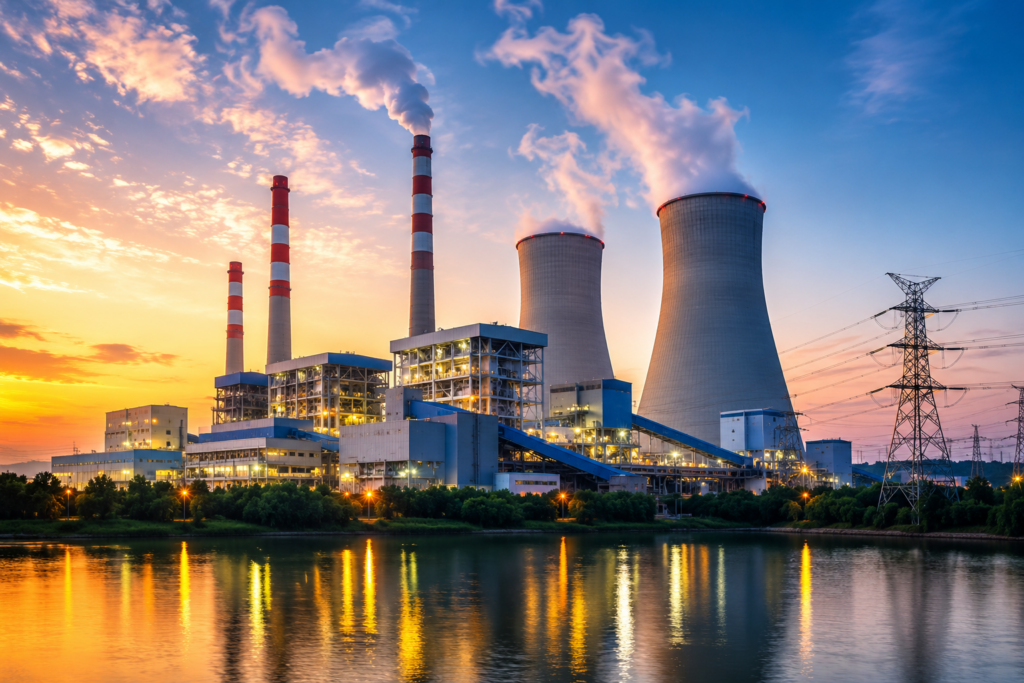
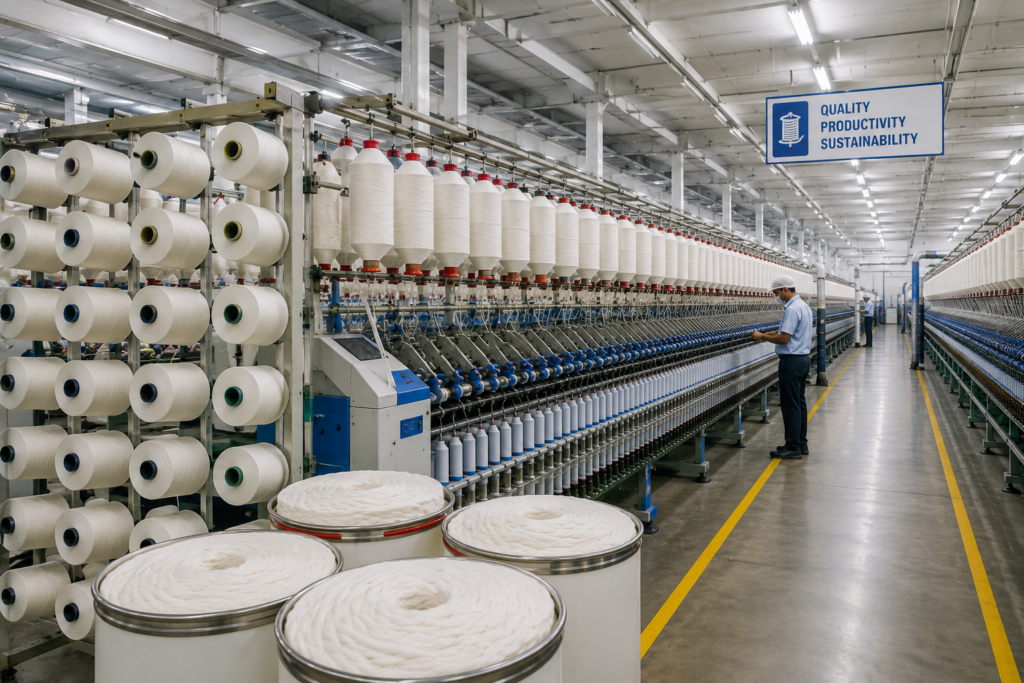
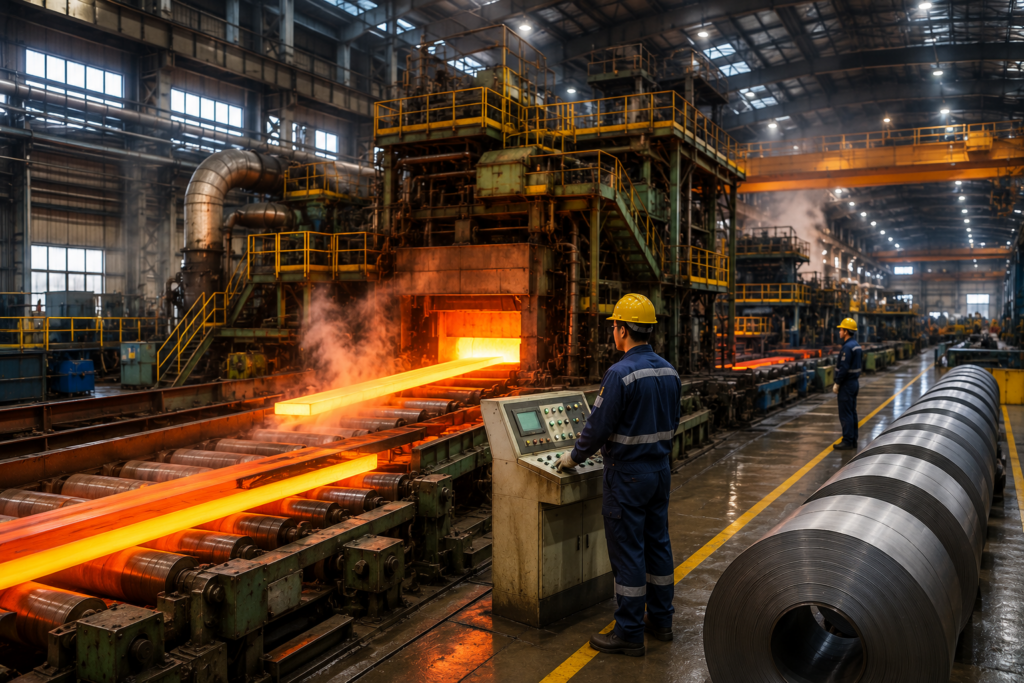
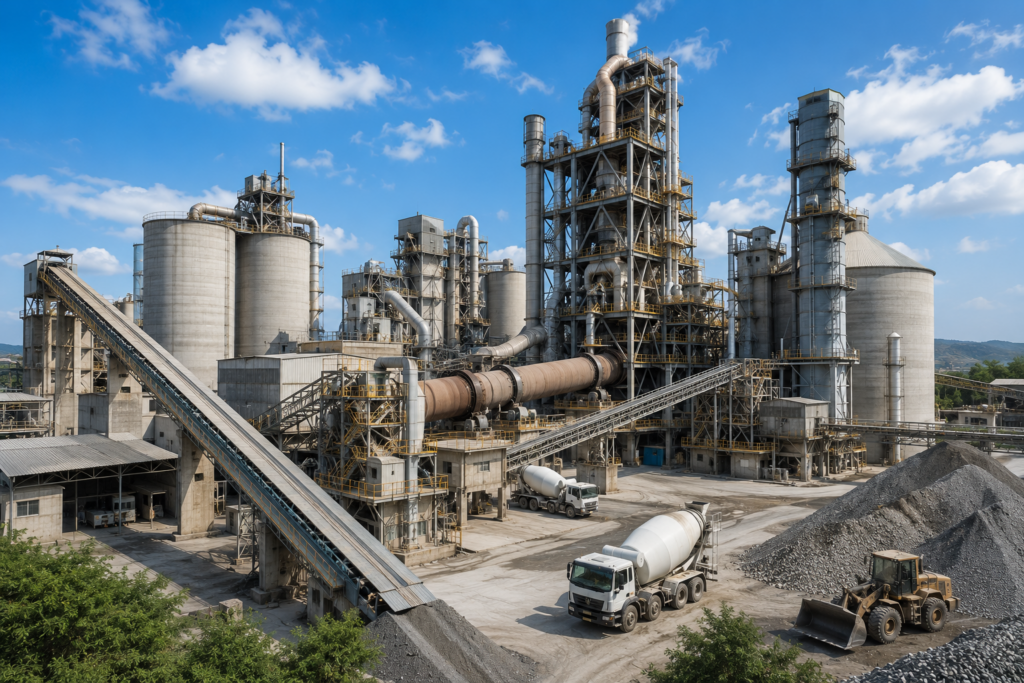
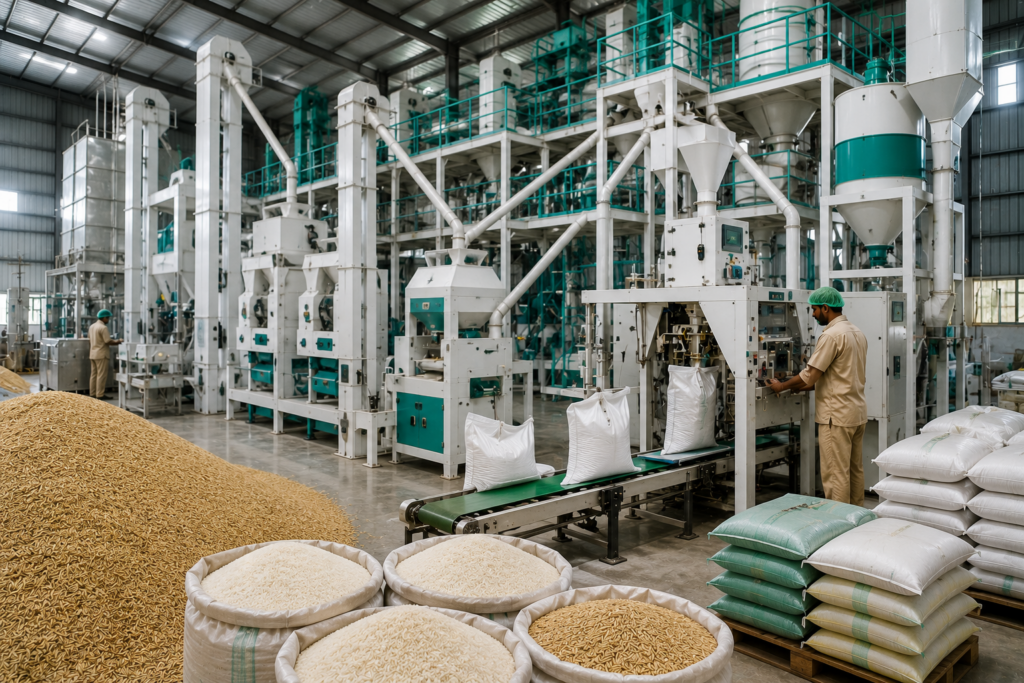
Each of these sectors relies on consistent, high-quality steam supply, which makes Water Walls in Boiler design directly relevant to production reliability and operating cost control.
Conclusion
Water Walls in Boiler systems form the backbone of efficient, safe furnace design in modern industrial equipment. By absorbing radiant heat directly into circulating water, they improve boiler heat transfer, accelerate steam generation, and reduce dependence on refractory lining. For demanding industries this component isn’t optional — it’s fundamental to safe, cost-effective, and dependable thermal performance across demanding production environments.
Ready to upgrade your steam system? Contact Thermodyne Engineering Systems today for reliable, energy-efficient industrial steam boiler solutions built around advanced Water Walls in Boiler technology.
FAQs related to Water Walls in Boiler
Water Walls in a boiler are vertical water-filled tubes installed along the inner walls of the furnace. They absorb radiant heat from combustion, protect the furnace structure from extreme temperatures, and generate steam by transferring heat to the circulating water.
The primary function of Water Walls in Boiler systems is to absorb radiant heat from the furnace, protect the boiler casing from direct flame exposure, improve heat transfer, and support continuous steam generation while maintaining safe operating temperatures.
Water flows from the boiler shell through the downcomer into the water wall tubes, where it absorbs radiant heat from the furnace. The heated water forms a steam-water mixture that returns to the boiler shell, where steam is separated for use. Natural circulation, driven by density differences, ensures continuous steam generation and keeps furnace wall temperatures safe.
Membrane water walls consist of steel tubes welded together with fins to create a gas-tight furnace enclosure. They reduce air leakage, improve structural strength, increase heat absorption, minimize refractory requirements, and enhance overall boiler efficiency.
Water Walls improve thermal efficiency, increase steam generation, reduce fuel consumption, protect furnace walls, minimize refractory maintenance, enhance boiler safety, extend equipment life, and lower operating and maintenance costs.
Common causes include scale formation, corrosion, overheating, poor water circulation, thermal fatigue, soot accumulation, erosion, and improper water treatment. Regular inspection and preventive maintenance help avoid premature tube failure.
Water Wall tube damage can be prevented through proper boiler water treatment, regular soot blowing, periodic ultrasonic thickness testing, routine inspections, maintaining correct water circulation, and operating the boiler within recommended design parameters.
Water Wall technology is widely used in power plants, food processing industries, textile manufacturing, pharmaceutical plants, chemical processing, paper mills, sugar mills, rice mills, steel plants, cement plants, and other industries requiring continuous steam generation.
Yes. Water Walls significantly improve boiler efficiency by capturing radiant heat directly from the combustion chamber and converting it into useful steam. This reduces heat loss, lowers fuel consumption, and increases overall thermal performance.
Traditional refractory walls mainly provide insulation and protect the furnace structure, whereas Water Walls actively absorb furnace heat to generate steam while also protecting the boiler. Modern water tube boilers rely primarily on Water Walls because they offer higher efficiency, better heat transfer, and lower maintenance requirements.