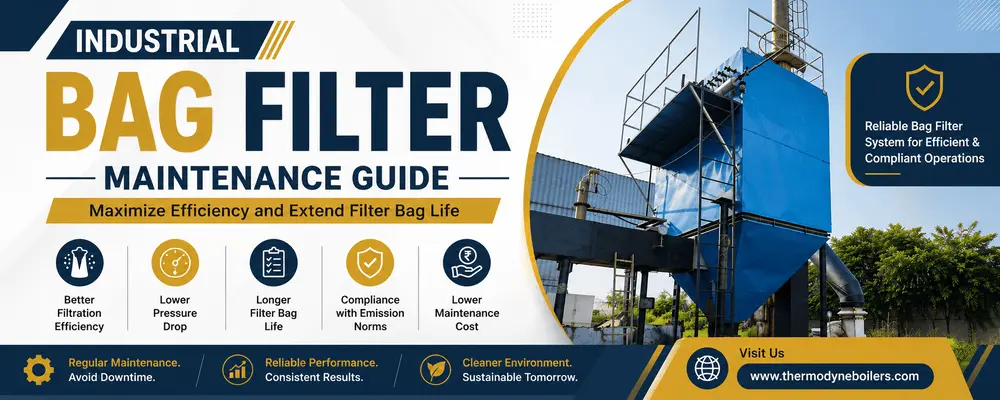
Every industrial boiler depends on clean, efficient air pollution control to run safely and stay compliant. A well-maintained bag filter is the backbone of that system. It captures fine particulate matter before it reaches the stack, protects your equipment, and keeps your plant within emission norms. Yet many facilities treat their bag filter system as a “fit and forget” asset — until pressure drop spikes, bags tear, or a compliance inspector shows up.
This guide walks plant managers, boiler operators, and maintenance engineers through everything needed to keep a bag filter for boiler applications running at peak performance, extend filter bag life, and avoid costly unplanned shutdowns. As part of a wider Air Pollution Control System, the bag filter also works alongside other Boiler Accessories to keep your plant compliant and efficient.
📖 Read More
Want to understand why bag filters are becoming essential for industries using solid fuel fired boilers? Explore our detailed guide covering environmental compliance, emission control, and operational benefits.
👉 Why Bag Filters Are Essential for Solid Fuel Fired BoilersWhy Regular Bag Filter Maintenance is Important
A neglected boiler bag filter doesn’t fail overnight — it degrades gradually until efficiency collapses. Routine maintenance delivers real, measurable benefits:
- Improved dust collection efficiency — clean bags trap particulate matter more effectively
- Lower pressure drop, which reduces strain on fans and motors
- Reduced emissions, keeping the plant within pollution control limits
- Compliance with environmental norms and audits
- Longer filter bag life, lowering replacement frequency
- Lower maintenance cost over the equipment’s lifetime
In short, a well-maintained bag filter system protects your bottom line and keeps your plant compliant with environmental norms.
📖 Read More
Looking to understand how a bag filter works in industrial boilers? Explore our complete guide covering the working principle, construction, key components, applications, and benefits of bag filters for efficient dust collection and emission control.
👉 Bag Filter in Boilers: Working Principle & ApplicationsCommon Problems in Bag Filter Systems
Even quality installations run into issues without preventive care. The most frequent problems include:
- Torn filter bags from abrasion, overheating, or age
- Dust leakage through damaged seams or improper seating
- High differential pressure caused by clogged bags or blocked ducts
- Moisture damage, which cakes dust and blinds the filter media
- Clogged bags from inadequate pulse cleaning
- Hopper blockage due to poor dust discharge
- Air leakage at flanges, doors, and tube sheets
- Damaged cages that distort bag shape and accelerate wear
- Improper pulse cleaning from worn diaphragm valves or low air pressure
Left unaddressed, these issues raise energy consumption, reduce boiler efficiency, and increase the risk of non-compliance.
Step-by-Step Industrial Bag Filter Maintenance Checklist
Why a Structured Bag Filter Checklist Matters
Following a documented checklist ensures that no critical component of your bag filter for boiler installation is overlooked between shutdowns. It also creates a reliable trail of records for compliance audits and helps maintenance teams catch small issues before they escalate into costly failures.
- Visual Inspection — Check for visible dust leaks, stack opacity, and physical damage weekly.
- Differential Pressure Monitoring — Track pressure drop daily; sudden spikes or drops both signal trouble.
- Pulse Jet Cleaning Inspection — Verify solenoid valves and timer sequences are firing correctly.
- Filter Bag Inspection — Rotate through sections to check for tears, glazing, or wear patterns.
- Hopper Cleaning — Remove accumulated dust to prevent bridging and blockage.
- Cage Inspection — Look for bent wires or corrosion that could puncture bags.
- Compressed Air System Check — Confirm air pressure, dryness, and filtration meet OEM specs.
- Fan and Duct Inspection — Check for wear, leaks, and correct airflow direction.
- Leak Testing — Use smoke or dust-lamp testing to locate hidden air leaks.
- Maintenance Record Keeping — Log every inspection, replacement, and pressure reading for trend analysis.
Following this checklist consistently is the single most effective way to extend the working life of any industrial bag filter.
How to Extend Filter Bag Life
- Avoid overheating by installing Air Dilution Damper — keep flue gas temperature within the bag’s rated limits
- Maintain proper air-to-cloth ratio to prevent premature wear
- Install a spark arrestor to protect bags from hot embers
- Prevent moisture ingress that causes caking and blinding
- Replace damaged cages promptly to avoid bag punctures
- Inspect pulse valves regularly for consistent cleaning cycles
- Use correct filter media suited to your dust and temperature profile
- Follow scheduled preventive maintenance rather than reactive repairs
Signs Your Boiler Bag Filter Needs Immediate Attention
Watch for these warning signs before minor issues become major failures:
- Visible stack emissions or smoke
- Increased pressure drop across the filter
- Poor suction at the dust collection points
- Reduced boiler efficiency or output
- Frequent bag failures across cycles
- Dust escaping around equipment joints
- Unusually high fuel consumption
Maintenance Schedule
| Frequency | Recommended Activities |
|---|---|
Daily | Monitor differential pressure, check for visible emissions |
Weekly |
Visual inspection of bags, hopper, and ducts |
Monthly |
Pulse jet cleaning check, compressed air system review |
Quarterly |
Cage inspection, leak testing, bag rotation check |
Yearly |
Full bag filter system audit and replacement planning |
Best Practices for Maximum Bag Filter Efficiency
- Train operators to interpret pressure drop trends correctly
- Standardize a preventive maintenance calendar across shifts
- Keep spare bags, cages, and pulse valves in stock
- Partner with an experienced industrial filtration system provider for periodic audits
- Document every maintenance activity for compliance and trend analysis
- Integrate bag filter checks into your overall Boiler Maintenance schedule, since a well-tuned bag filter for boiler operation directly supports stable combustion and lower fuel costs
Conclusion
A disciplined approach to bag filter maintenance directly improves equipment life, strengthens pollution control, boosts boiler efficiency, lowers operating cost, and ensures reliable production uptime. Skipping these fundamentals often costs far more in downtime and compliance penalties than the maintenance itself.
If your plant needs expert support, Thermodyne Engineering Systems offers reliable Boiler Bag Filter solutions, inspection services, preventive maintenance programs, and complete emission control equipment tailored to your operations. Contact our team today to keep your bag filter system running at peak efficiency year-round.
FAQs related to Bag Filter Maintenance Guide
Regular bag filter maintenance improves dust collection efficiency, reduces emissions, extends filter bag life, lowers energy consumption, and helps industries comply with environmental regulations.
A visual inspection should be carried out weekly, differential pressure should be monitored daily, and a complete system inspection is recommended at least once a year or as per operating conditions.
Common warning signs include increased differential pressure, visible stack emissions, dust leakage, reduced suction, frequent bag failures, and higher fuel consumption.
High operating temperatures, moisture, abrasive dust, damaged cages, improper pulse jet cleaning, and incorrect filter media selection are the most common causes of premature bag failure.
Filter bag life can be extended by maintaining proper flue gas temperature, using an air dilution damper, installing a spark arrestor, ensuring effective pulse jet cleaning, and following preventive maintenance schedules.
The ideal differential pressure varies depending on the bag filter design and operating conditions. It is best to operate within the manufacturer’s recommended pressure range for optimal performance.
Clean and dry compressed air ensures effective pulse cleaning, prevents moisture-related damage, and improves the overall efficiency and lifespan of the filter bags.
Yes. A clogged or poorly maintained bag filter increases system resistance, reduces airflow, increases fan power consumption, and can negatively impact overall boiler efficiency.
Filter bags should be replaced if they are torn, excessively worn, blinded with dust, or when cleaning no longer restores normal differential pressure and performance.
Thermodyne Engineering Systems provides industrial bag filter solutions, inspection services, preventive maintenance support, replacement components, and customized emission control systems to ensure reliable and compliant boiler operation.