
In today’s highly competitive plywood manufacturing environment, the plywood boiler is no longer just a supporting utility—it has become the core system that directly influences production efficiency, product quality, and overall plant profitability. Every stage of the process, from initial log conditioning and veneer drying to the final curing process in the hot press, depends entirely on the availability of consistent, high-pressure, and dry steam.
However, as we move through 2026, many manufacturers are beginning to recognize a critical issue: an underperforming boiler system does not fail suddenly, but instead creates a continuous and often unnoticed drain on operational efficiency. This inefficiency leads to increased fuel consumption, unstable steam generation, and frequent maintenance interruptions, all of which gradually reduce profit margins.
This is why improving boiler efficiency has become a top priority. A well-optimized steam boiler not only reduces operational costs but also ensures consistent production output and long-term reliability in demanding industrial environments.
1. Fuel Moisture and Its Impact on Plywood Boiler Performance
Understanding the Industry Scenario
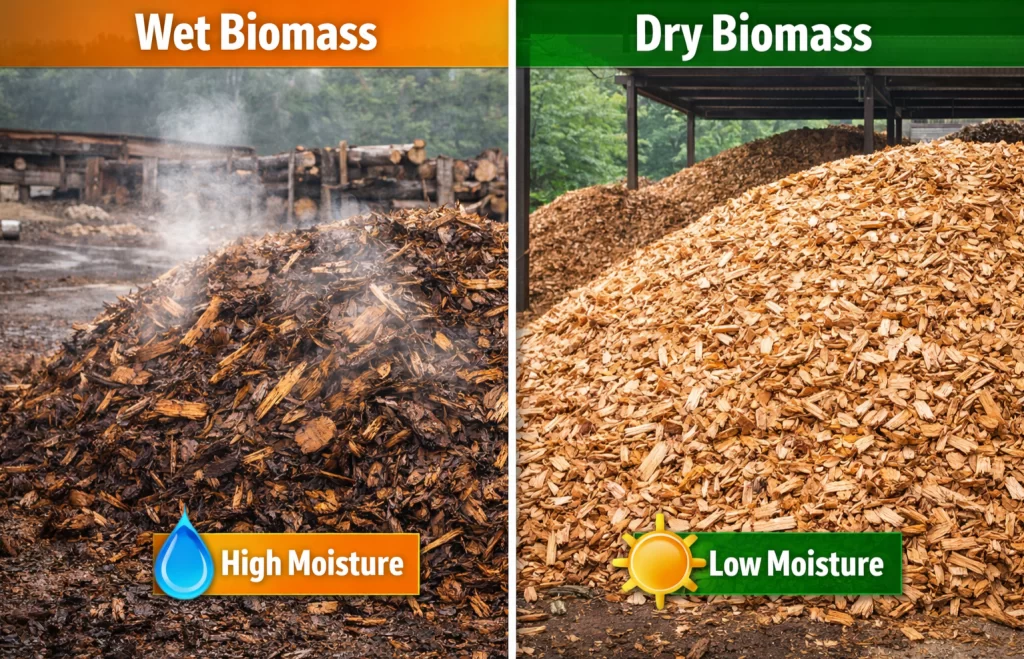
Most plywood manufacturing units depend on biomass fuel such as wood dust, bark, and trimming waste to operate their wood fired boiler systems. While this approach offers a cost advantage and promotes sustainability, it also introduces a major operational challenge—variability in fuel quality, particularly in terms of moisture content.
The Core Problem
When high-moisture biomass is fed into the plywood boiler, a significant portion of the generated heat energy is consumed in evaporating the moisture rather than producing useful steam. This reduces combustion efficiency and results in unstable furnace temperatures, which directly affects steam generation.
As a result, the wood fired boiler struggles to maintain consistent pressure, leading to increased fuel consumption, higher emissions, and reduced overall performance of the industrial boiler system.
The Solution
To enhance the performance of the plywood boiler, manufacturers should adopt:
- Covered and well-designed fuel storage systems to minimize moisture absorption
- Waste heat recovery solutions that utilize flue gases to pre-dry the biomass fuel
These measures help in stabilizing combustion, improving boiler efficiency, and ensuring reliable operation of the wood boiler under varying conditions.
2. Scaling: A Major Threat to Boiler Efficiency
Understanding the Root Cause
Water quality plays a vital role in maintaining the efficiency and longevity of a plywood boiler. In many industrial regions, groundwater contains high levels of dissolved minerals such as calcium and magnesium, which contribute to scale formation.
The Operational Impact
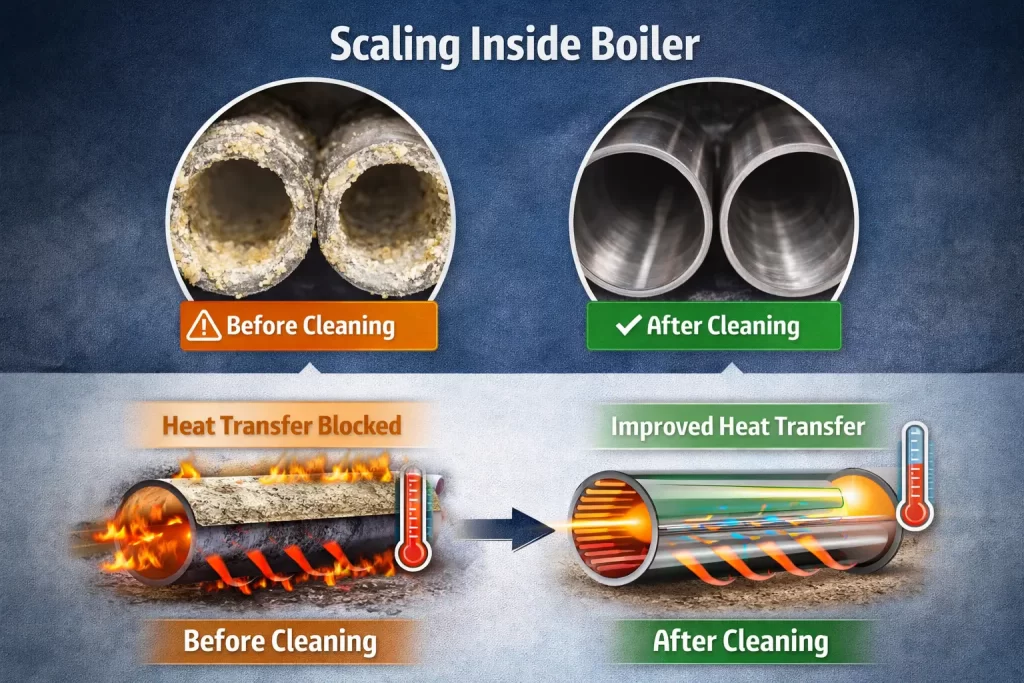
When untreated water is used in the steam boiler, these minerals deposit on the inner surfaces of boiler tubes, forming a hard insulating layer. This scale significantly reduces heat transfer efficiency, forcing the industrial boiler to consume more fuel to achieve the same level of steam generation.
Over time, this not only reduces boiler efficiency but also leads to overheating of tubes, increased maintenance costs, and unexpected breakdowns in the wood fired boiler system.
The Solution
To maintain optimal operation of the plywood boiler, it is essential to implement:
- Reverse Osmosis (RO) systems for high-quality feed water
- Automated blowdown systems for precise control of dissolved solids
These technologies ensure that the steam boiler operates efficiently, reduces scaling risks, and enhances the overall lifespan of the wood boiler.
3. Steam Quality and Product Consistency
Why Steam Quality Is Critical
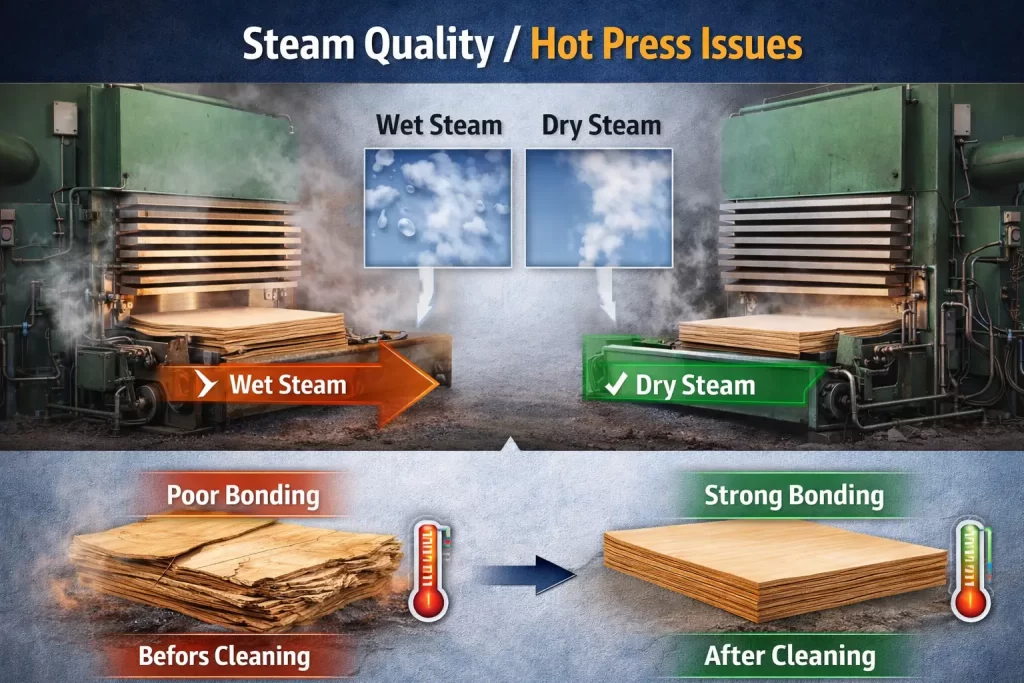
The quality of steam produced by the plywood boiler has a direct and measurable impact on the final product. Uniform heat distribution in the hot press is essential for proper bonding of veneers and achieving consistent product quality.
The Hidden Challenge
If the steam boiler produces wet steam, it introduces moisture into the press platens, leading to uneven heating. This creates cold spots that negatively affect the curing process and result in defects such as delamination, poor bonding, and surface imperfections.
Such issues not only increase rejection rates but also affect the overall reputation of the manufacturing unit.
The Solution
To ensure consistent steam quality from the plywood boiler, manufacturers should install:
- A reliable steam boiler producing dry saturated steam.
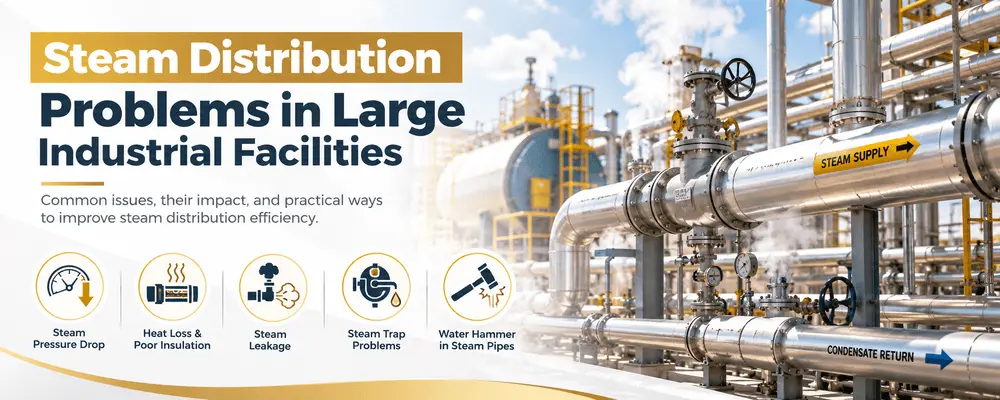
- Proper insulation of the steam pipeline between the boiler and veneer machine to avoid formation of condensate.
- High-efficiency steam traps for effective condensate removal
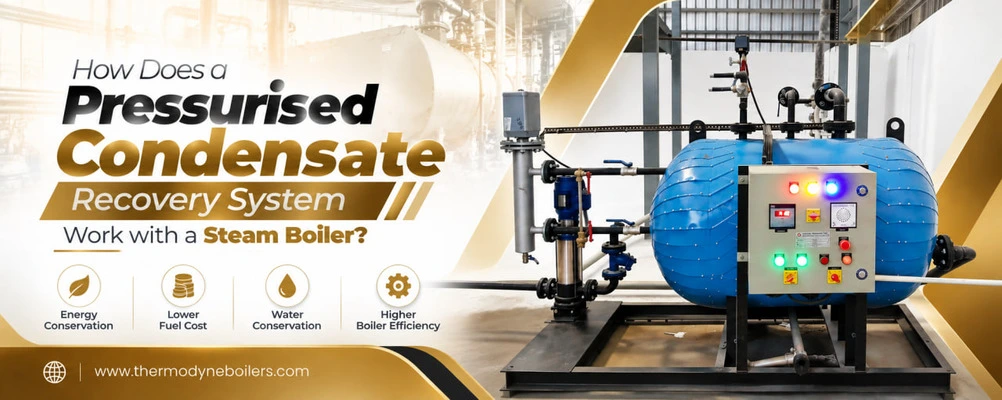
- Pressurized condensate recovery systems to reuse high-temperature water
These solutions significantly improve the resulting plywood quality.
4. Managing Load Fluctuations in Plywood Boiler Operations
Understanding Process Variability
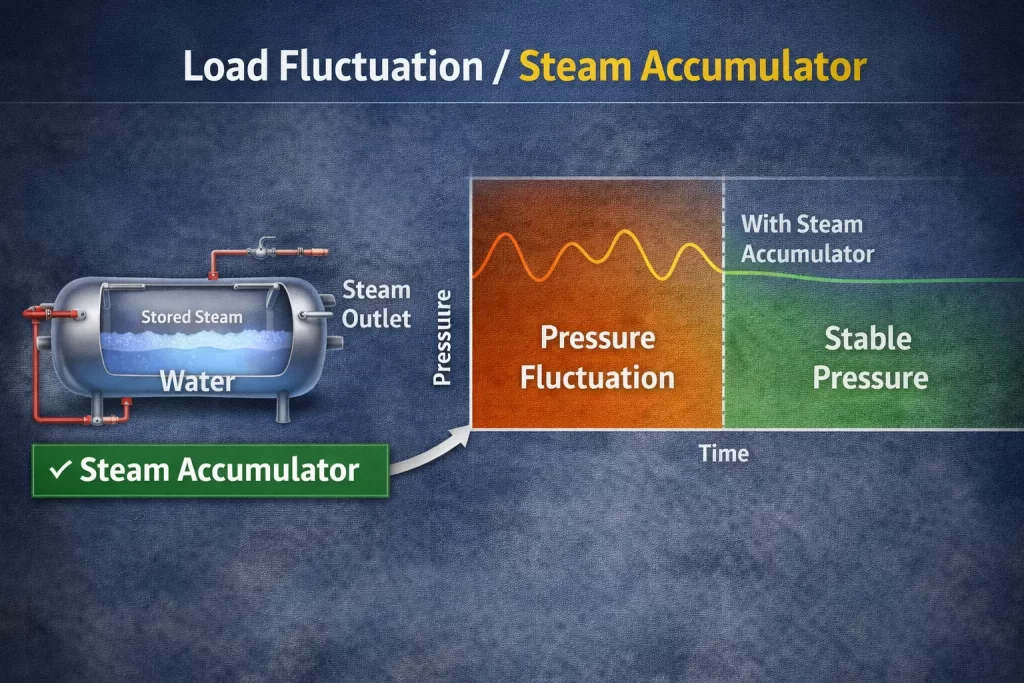
Plywood production is typically a batch-based process, which results in fluctuating steam demand throughout the production cycle. The plywood boiler must be capable of responding quickly to these variations.
The Challenge
Sudden spikes in demand during hot press operations can cause pressure drops in the steam boiler, leading to unstable steam supply. This affects both process efficiency and product quality, while also increasing stress on the wood fired boiler components.
The Solution
To manage these fluctuations effectively, manufacturers should consider:
- Installing steam accumulators to store excess thermal energy
- Using advanced combustion systems with automated controls
These technologies help maintain stable pressure, improve boiler efficiency, and ensure reliable performance of the wood boiler under dynamic operating conditions.
5. Regulatory Compliance and Modern Industrial Boiler Systems
The Changing Regulatory Landscape
With stricter environmental and safety regulations in 2026, every plywood boiler must meet higher standards of efficiency and emission control. Compliance is no longer optional—it is essential for uninterrupted operations.
The Challenge
Older systems often fail to meet these standards, resulting in penalties, operational risks, and increased scrutiny from regulatory authorities.
The Solution
Upgrading to a modern industrial boiler system offers several advantages:
- Improved emission control and environmental compliance
- Enhanced energy efficiency and reduced fuel consumption
- Better operational safety and reliability
A well-designed wood fired boiler ensures that the plant remains compliant while maintaining optimal performance.
6. The Role of Skilled Operation in Boiler Efficiency
The Human Element
Even with advanced technologies in place, the performance of a plywood steam boiler ultimately depends on how effectively it is operated and maintained.
The Challenge
Lack of skilled operators can lead to improper fuel handling, inefficient system operation, and failure to identify early warning signs, all of which reduce overall boiler efficiency.
The Solution
To maximize the performance of the steam boiler, manufacturers should focus on:
- Regular operator training and skill development
- Implementation of real-time monitoring systems
This ensures that the plywood boiler operates at its optimal capacity, minimizing losses and improving plant efficiency.
Conclusion: Turning the Plywood Boiler into a Strategic Asset
In 2026, the plywood boiler became one of the most critical components in determining the success of a plywood manufacturing unit. Its performance directly impacts fuel consumption, production efficiency, and product quality.
By focusing on key areas such as fuel management, water treatment, steam quality, and load handling, manufacturers can significantly improve boiler efficiency and reduce operational costs.
Final Insight
A modern industrial boiler, particularly a well-optimized wood fired boiler, should not be viewed as just a heat-generating system. Instead, it should be treated as a strategic asset that drives profitability, efficiency, and long-term business growth.
FAQs related to Plywood Industry-
A biomass-based plywood boiler, especially a wood fired boiler, is considered the best choice for plywood industries. It efficiently utilizes wood waste such as bark, chips, and dust, making operations cost-effective and energy-efficient.
Higher plywood boiler efficiency reduces fuel consumption, minimizes heat loss, and ensures stable steam supply. This leads to lower operating costs, improved productivity, and better quality output in plywood manufacturing.
A plywood boiler typically faces challenges such as:
- High moisture content in fuel
- Scaling due to poor water quality
- Fluctuating steam demand
- Wet steam generation
- Inefficient combustion
These issues reduce efficiency and increase operational costs.
Using dry and properly stored biomass fuel significantly improves plywood boiler combustion efficiency. Lower moisture content ensures better heat generation, stable furnace temperature, and consistent steam production.
Water treatment prevents scaling and corrosion inside the plywood boiler. Clean feed water improves heat transfer, reduces fuel consumption, and increases the lifespan of the boiler system.
A plywood boiler should produce dry saturated steam. High-quality steam ensures uniform heating in the hot press, leading to better bonding, reduced defects, and consistent product quality.
In plywood plants, steam demand varies due to batch production. Without proper control, a plywood boiler may experience pressure drops and unstable performance. Solutions like steam accumulators help maintain steady operation.
Automation systems optimize fuel feeding, combustion control, and steam pressure management. This enhances plywood boiler efficiency, reduces human error, and ensures consistent performance.
Proper insulation in steam pipelines prevents heat loss and condensate formation. This helps maintain steam quality and improves overall plywood boiler efficiency.
Scaling inside a plywood boiler reduces heat transfer efficiency, increases fuel consumption, and may lead to overheating of boiler tubes. Regular blowdown and water treatment are essential to prevent this issue.
Yes, waste heat recovery systems reuse flue gas heat to preheat water or dry fuel. This significantly enhances plywood boiler efficiency and reduces fuel costs.
Regular inspection, cleaning of tubes, monitoring water quality, checking steam traps, and ensuring proper combustion are essential to maintain plywood boiler performance and reliability.