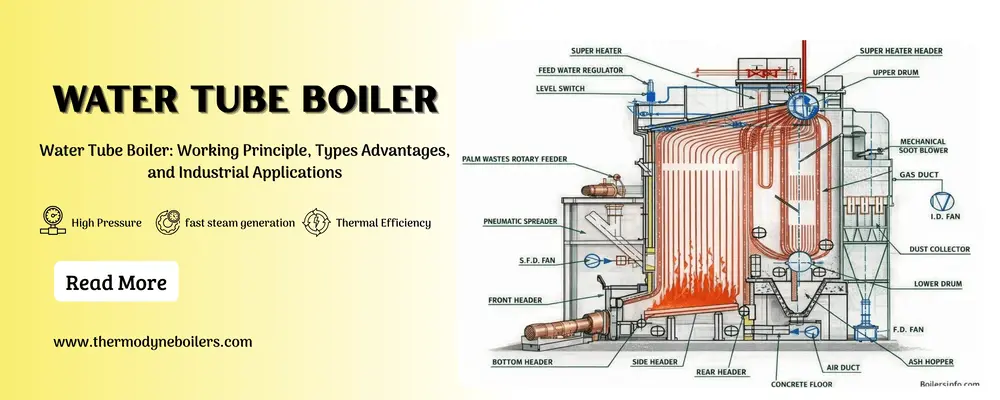
In modern industrial energy systems, the water tube boiler plays a crucial role in high-capacity steam generation. It is specifically designed to deliver reliable, efficient, and stable steam production for demanding process operations that require continuous performance and high-pressure output. With its advanced heat-transfer design—where water flows inside tubes while hot combustion gases circulate around them—the water tube boiler enables faster steam generation, improved thermal efficiency, and dependable operation under varying load conditions.
Unlike conventional systems such as a fire tube boiler, the water tube boiler is engineered to operate efficiently at much higher pressures and temperatures. This design allows rapid heat absorption and efficient steam production, making it ideal for applications where a high pressure boiler is required to meet large-scale steam demands. Because of these advantages, water tube boiler technology has become a preferred solution for modern high-performance steam generation systems where efficiency, reliability, and operational safety are critical.
What is a Water Tube Boiler?
A water tube boiler is a type of industrial steam boiler in which water flows through tubes that are externally heated by combustion gases. Heat from the furnace transfers through the tube walls and converts the circulating water into steam.
This design offers several operational advantages compared to traditional boiler systems, particularly in industries requiring high-pressure steam generation.
Key characteristics include:
High steam pressure capability
Faster steam generation
Improved heat transfer efficiency
Better operational safety
Suitable for large-scale industrial applications
Due to these features, water tube boiler systems are commonly used in power plants and heavy industrial facilities.
Construction of a Water Tube Boiler
The construction of a water tube boiler is designed to ensure efficient heat transfer, safe operation, and reliable high-pressure steam generation. Unlike a conventional fire tube boiler, where hot gases pass through tubes surrounded by water, a water tube boiler circulates water inside tubes that are heated externally by combustion gases. This design allows the boiler to operate as a high pressure boiler, making it suitable for demanding steam generation systems.
A typical water tube boiler consists of several major components that work together to produce steam efficiently.
Steam Drum
The steam drum is one of the most important components of a water tube boiler and is located at the upper section of the system. It acts as a reservoir where steam and water are separated. As the water-steam mixture rises through the tubes, it enters the steam drum where steam is separated and collected. The separated water is recirculated back into the system to continue the steam generation process.
Mud Drum
The mud drum is positioned at the bottom of the boiler and plays a crucial role in collecting sediments, impurities, and solid particles present in the feed water. These impurities settle in the mud drum and can be removed through periodic blowdown operations. This helps maintain water quality and prevents scaling or damage to the boiler tubes.
Water Tubes
The water tubes form the primary heat transfer surface of the boiler. Water flows inside these tubes while hot combustion gases pass around the outer surface. As heat is transferred from the flue gases to the water inside the tubes, the temperature of the water rises and gradually converts into steam. The arrangement of tubes is carefully designed to maximize heat absorption and ensure efficient steam generation.
Downcomer Tubes
Downcomer tubes carry relatively cooler water from the steam drum down to the mud drum. These tubes help maintain the circulation of water within the boiler system and ensure that fresh water continuously reaches the heating zone for steam generation.
Riser Tubes
Riser tubes transport the heated water and steam mixture from the lower drum back to the steam drum. As the water absorbs heat in the furnace area, it becomes lighter and rises naturally through these tubes due to density differences.
Superheater
The superheater is an important heat recovery component installed in many modern water tube boilers. It further heats the saturated steam produced in the steam drum to create superheated steam, which is required for turbines, power generation systems, and other high-temperature industrial processes.
Furnace
The furnace is the combustion chamber where fuel is burned to produce high-temperature flue gases. These gases flow across the water tubes and transfer heat to the water circulating inside them. The furnace design is optimized based on the type of fuel being used.
Economizer
Many high-performance water tube boilers also include an economizer, which recovers heat from the exhaust gases to preheat the incoming feed water. This improves overall boiler efficiency and reduces fuel consumption.
Air Preheater
An air preheater is sometimes installed to increase combustion efficiency by heating the air used for fuel combustion before it enters the furnace.
Because of this advanced construction and efficient heat transfer design, the water tube boiler is widely used as a high pressure boiler in modern steam generation systems. Its ability to handle high temperatures, high pressures, and large steam capacities makes it significantly more suitable for demanding applications compared to traditional fire tube boiler designs.
Working of a Water Tube Boiler
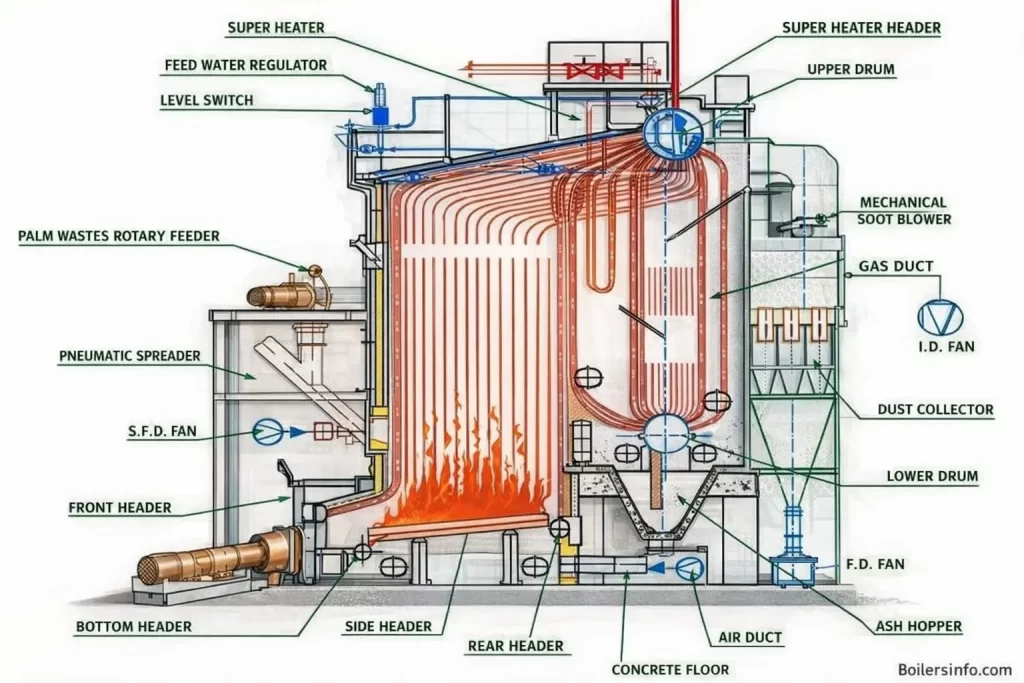
The water tube boiler working process is based on efficient heat transfer and continuous water circulation through tubes that are exposed to high-temperature combustion gases. This design enables the boiler to generate steam rapidly and operate as a high pressure boiler, making it suitable for demanding steam generation systems.
Below is the detailed step-by-step working process of a water tube boiler.
1. Feed Water Supply
The working process begins with the supply of treated feed water into the boiler system. Feed water is pumped into the steam drum (upper drum) through the feed water line and controlled by a feed water regulator and level control system.
Maintaining the correct water level in the steam drum is essential for safe and efficient boiler operation.
2. Water Circulation through Downcomers
Fuel is burned inside the boiler furnace, producing high-temperature combustion gases. These hot gases flow upward and surround the water tubes that form the heating surface of the boiler.
Heat from the combustion gases is transferred through the tube walls to the water flowing inside the tubes.
3. Heating in the Furnace
As water inside the tubes absorbs heat, its temperature increases and part of it begins to convert into steam. This creates a steam-water mixture inside the tubes.
Because steam has a lower density than water, the mixture naturally rises through riser tubes toward the steam drum.
4. Formation of Steam-Water Mixture
As water inside the tubes absorbs heat, its temperature increases and part of it begins to convert into steam. This creates a steam-water mixture inside the tubes.
Because steam has a lower density than water, the mixture naturally rises through riser tubes toward the steam drum.
5. Steam Separation in the Steam Drum
When the steam-water mixture reaches the steam drum, the steam is separated from the water.
The separated water returns to the circulation system through downcomers, while the saturated steam collects in the upper section of the drum.
This continuous circulation process ensures efficient heat absorption and stable steam generation.
6. Superheating of Steam
In many high-capacity systems, the saturated steam passes through a superheater installed in the path of hot flue gases.
The superheater increases the temperature of the steam beyond its saturation point, producing superheated steam, which is required for turbines, power generation systems, and high-temperature industrial processes.
7. Flue Gas Heat Recovery
After transferring heat to the water tubes and superheater, the flue gases move toward heat recovery components such as:
- Economizer – preheats the incoming feed water
- Air preheater – preheats the combustion air
These systems improve overall boiler efficiency and reduce fuel consumption.
8. Steam Distribution
Finally, the superheated steam generated in the boiler is delivered through steam pipelines to process equipment, turbines, or heating systems.
Because of this efficient heat transfer and circulation mechanism, the water tube boiler can produce steam quickly and operate safely at high pressures compared to a traditional fire tube boiler.
Applications of Water Tube Boilers
Water tube boilers are widely used across various industries due to their versatility:
- Power Generation: Essential for electricity production in thermal power plants.
- Chemical Industry: Used for heating reactors and distillation columns.
- Food Processing: Facilitates sterilization, cooking, and pasteurization processes.
- Textile Industry: Provides consistent steam for dyeing and finishing operations.
- Oil Refineries: Supports crude oil heating and other refinery processes.
Types of Water Tube Boilers
Different industrial requirements have led to the development of various water tube boiler designs.
D-Type Water Tube Boiler
This configuration features a D-shaped arrangement of tubes and is widely used in power plants and large industrial facilities.
O-Type Water Tube Boiler
The symmetrical design allows for uniform heat distribution and flexible installation in medium-capacity industrial plants.
A-Type Water Tube Boiler
Known for its durability, this design is often used in biomass-fired boiler systems and heavy industrial applications.
Once-Through Water Tube Boiler
Commonly used in high-pressure power plants where continuous water flow is required for efficient steam generation.
Industrial Applications of Water Tube Boilers
The versatility of water tube boilers makes them suitable for numerous industries.
Power Generation
Thermal power plants rely on high-pressure steam generated by water tube boilers to drive turbines.
Chemical Industry
Steam is used for heating reactors, distillation columns, and chemical processing equipment.
Food Processing Industry
Steam supports sterilization, cooking, drying, and pasteurization processes.
Textile Industry
Textile manufacturing uses steam for dyeing, finishing, and fabric treatment operations.
Oil Refineries
Refineries use steam for crude oil heating, distillation, and other refining processes.
Water Tube Boiler vs Fire Tube Boiler
| Feature | Water Tube Boiler | Fire Tube Boiler |
|---|---|---|
Steam Pressure | High (up to 100+ bar) |
Low to medium |
Steam Capacity |
Suitable for large industrial plants |
Suitable for small applications |
Efficiency |
Higher |
Moderate |
Safety |
Safer due to lower water volume |
Higher risk due to large water volume |
This comparison shows why water tube boilers are preferred for high-pressure industrial steam generation.
If you want to understand the detailed comparison between these two boiler technologies, read our blog “Water Tube Boiler vs. Fire Tube Boiler: Key Differences Explained” to explore their design differences, working principles, advantages, and industrial applications.
How Water Tube Boilers Improve Industrial Energy Efficiency
Modern water tube boiler systems incorporate advanced technologies that enhance energy efficiency and reduce fuel consumption.
Examples include:
- Boiler economizers for heat recovery
- Air preheaters to improve combustion efficiency
- Waste heat recovery systems
- Advanced combustion control systems
These technologies help industries significantly reduce operational costs and improve overall energy performance.
Water Tube Boiler Solutions by Thermodyne Engineering Systems
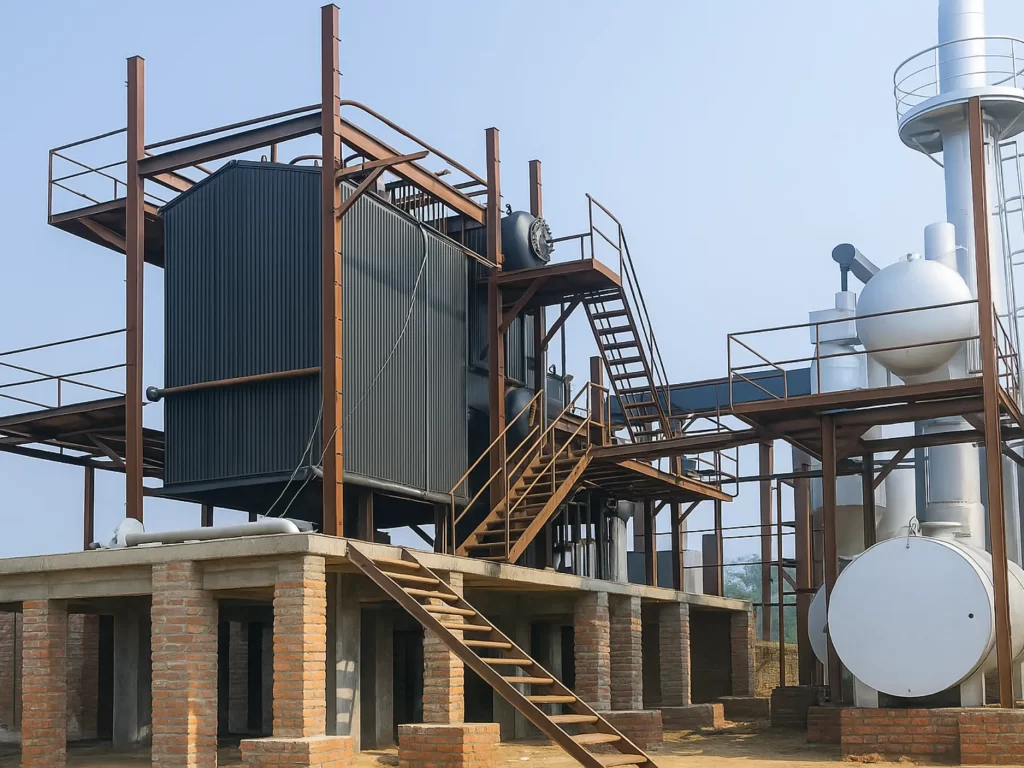
At Thermodyne Boilers, we manufacture advanced water tube boiler systems designed for reliable high-pressure steam generation. Our flagship Powertherm High Pressure Water Tube Boiler is engineered to deliver high thermal efficiency, stable steam output, and dependable performance in demanding steam generation processes.
Capacity Range :
High Pressure Water Tube Boilers Powertherm are available in capacities from 10 TPH to 25 TPH.
Fuel Options :
Coal, Lignite, Rice Husk, Wood, Bagasse, Groundnut Shells etc.
Conclusion
The water tube boiler is one of the most important technologies used in modern industrial steam generation. Its ability to produce high-pressure steam, deliver superior thermal efficiency, and operate safely makes it an essential component in industries such as power generation, chemical processing, and manufacturing.
With advanced design and reliable performance, water tube boilers continue to play a critical role in improving industrial productivity and energy efficiency worldwide.
FAQs
A water tube boiler is an industrial steam generator in which water flows through tubes that are heated externally by combustion gases to produce steam efficiently.
Feed water circulates through heated tubes exposed to high-temperature gases. As the water absorbs heat, it converts into steam, which is then separated and supplied to industrial processes.
The key components include a steam drum, mud drum, water tubes, downcomers, riser tubes, furnace, superheater, and economizer.
Their tube-based design allows them to withstand high pressure and temperature, making them suitable for large industrial plants and power generation facilities.
They are widely used in power plants, chemical processing industries, oil refineries, food processing plants, and textile manufacturing where continuous steam supply is required.
In this system, water flows inside tubes while hot gases circulate outside them, whereas in a fire tube boiler the hot gases pass through tubes surrounded by water.
Efficiency can be improved through proper water treatment, regular maintenance, optimized combustion control, and heat recovery equipment such as economizers.
Regular tube inspection, proper blowdown, monitoring water quality, and cleaning heat transfer surfaces help maintain efficiency and extend the life of the boiler system.
Water tube boilers are preferred in large industrial facilities because they can generate high-pressure steam, respond quickly to load changes, and support large steam capacities required for continuous production operations.
Thermodyne Boilers manufactures advanced high-pressure water tube boiler systems designed for reliable and energy-efficient steam generation. Their solutions are engineered to meet the demanding steam requirements of industries such as power generation, chemicals, food processing, and manufacturing.