In modern manufacturing, steam is a critical performance driver, and the reliability of an industrial steam boiler depends on maintaining high steam quality. A proper Steam Dryness Fraction ensures maximum latent heat transfer, stable surface temperatures, and consistent process efficiency. Even a slight reduction in steam quality can decrease heat transfer performance, increase condensate formation, and negatively impact overall boiler efficiency.
Among all performance indicators, Steam Dryness Fraction plays the most decisive role in determining Boiler Steam Quality, energy efficiency, and production precision. While pressure and temperature are routinely monitored, the Dryness Fraction of Steam directly defines how effectively heat is transferred and how stable the process remains.
When SDF is properly maintained, industries experience better heat transfer, consistent processing conditions, improved boiler efficiency, and superior product quality. When ignored, it leads to inefficiency, moisture imbalance, and costly operational disruptions.
What is Steam Dryness Fraction?
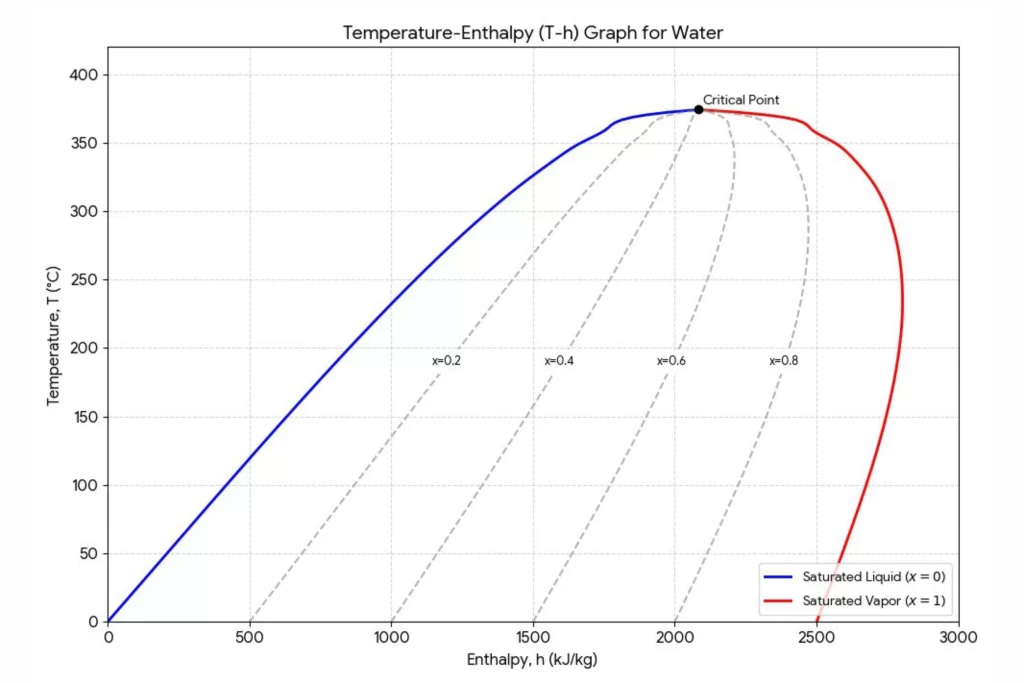
Steam Dryness Fraction represents the ratio of dry saturated steam to the total steam mixture (dry steam + entrained water droplets). In practical operation, steam generated inside a steam boiler is not always perfectly dry. Small quantities of moisture may be carried over from the industrial boiler due to load changes, high TDS, or inadequate separation.
Formula:
x = Mass of Dry Steam / Total Mass of Steam
Where:
x = 1 → Completely dry saturated steam
x < 1 → Wet steam containing moisture
For example:
x = 0.99 → 99% dry steam
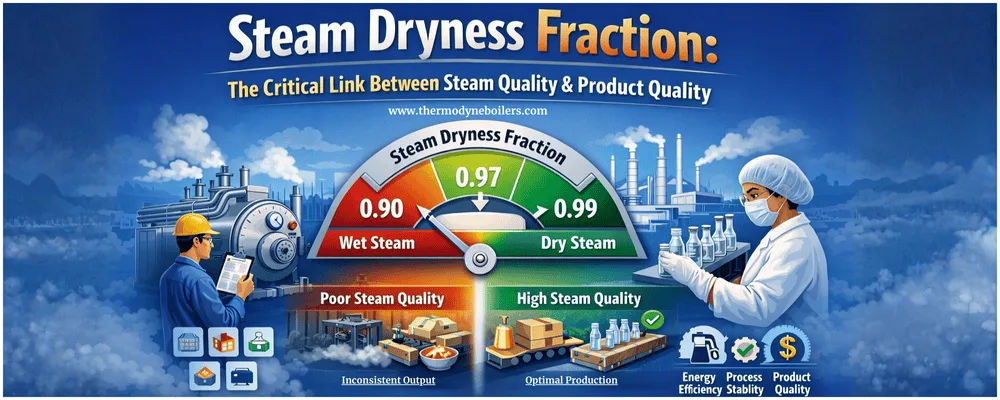
x = 0.97 → Acceptable industrial range
x = 0.90 → Poor steam quality
In high-performance industrial steam boiler systems, the Steam Dryness Fraction is typically maintained between 0.97 and 0.99 to ensure optimal Industrial Steam Dryness and stable heat transfer.
Why Steam Dryness Fraction Matters in Heat Transfer
Steam transfers energy through latent heat of condensation. When dry steam condenses on a cooler surface, it releases maximum energy instantly.
However, if the Dryness Fraction of Steam decreases:
- Latent heat per kilogram reduces
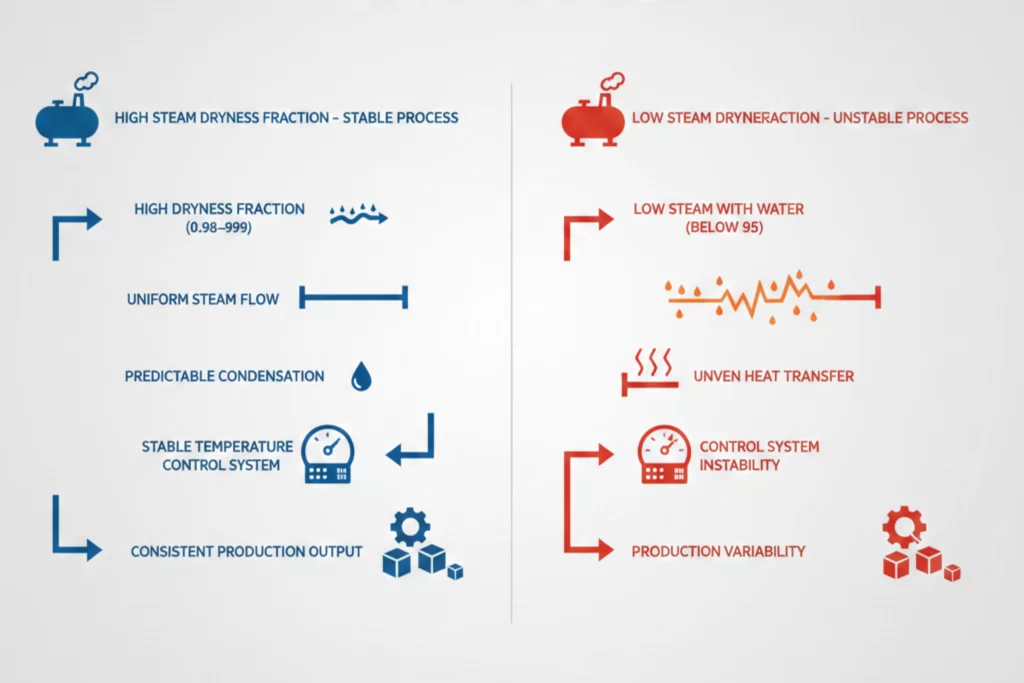
- Heat transfer becomes uneven
- Surface temperatures fluctuate
- Condensate formation increases
- Fuel consumption rises
Even a 2–3% drop in Steam Dryness Fraction can significantly reduce heating performance and negatively impact overall boiler efficiency. Maintaining proper Steam Quality in Boiler systems ensures maximum energy utilization and consistent process performance.
Steam Quality and Product Quality: The Direct Correlation
The relationship between Steam Quality and Product Quality is direct and measurable. Variations in Boiler Steam Quality influence temperature stability, moisture control, surface finish, and structural strength.
1. Temperature Stability and Process Control
The relationship between Steam Quality and Product Quality is direct and measurable. Variations in Boiler Steam Quality influence temperature stability, moisture control, surface finish, and structural strength.
2. Moisture Balance in Products
The relationship between Steam Quality and Product Quality is direct and measurable. Variations in Boiler Steam Quality influence temperature stability, moisture control, surface finish, and structural strength.
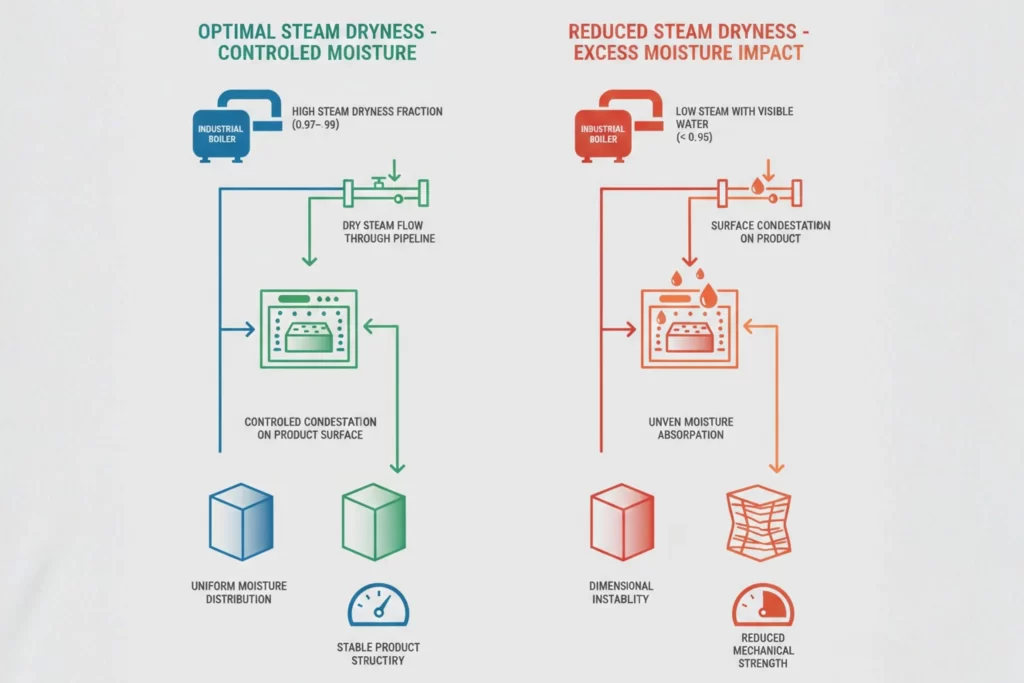
3. Sterility and Hygiene Standards
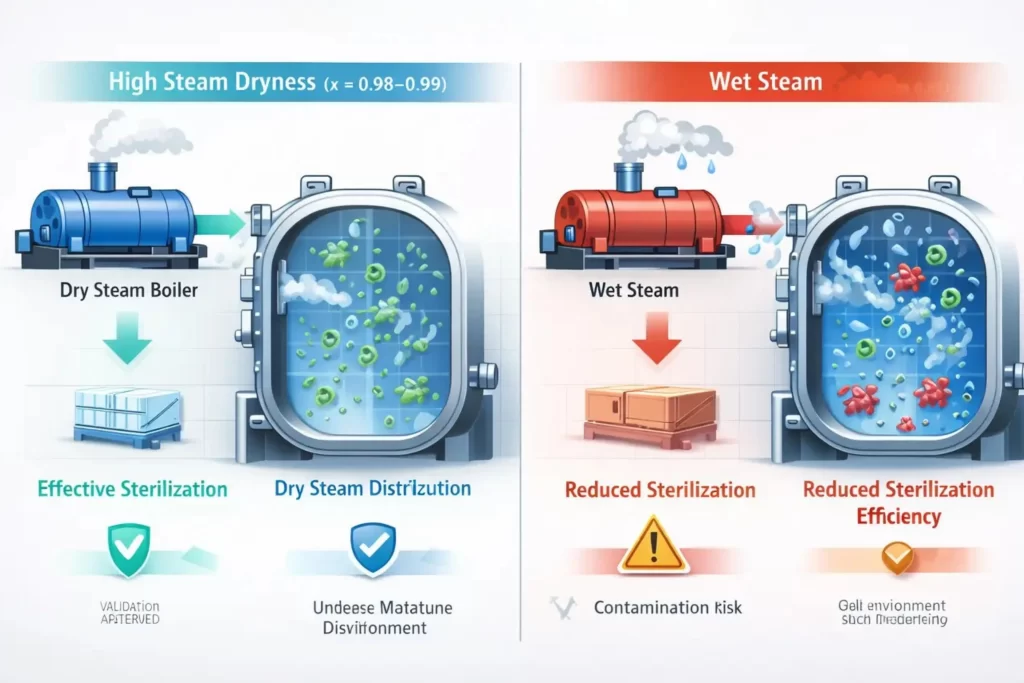
In pharmaceutical, dairy, and food processing industries, Boiler Steam Quality directly impacts sterilization efficiency. Wet steam may:
- Carry impurities from boiler water
- Reduce sterilization effectiveness
- Compromise validation procedures
High Steam Dryness Fraction guarantees effective microbial destruction and compliance with regulatory standards in an industrial steam boiler system.
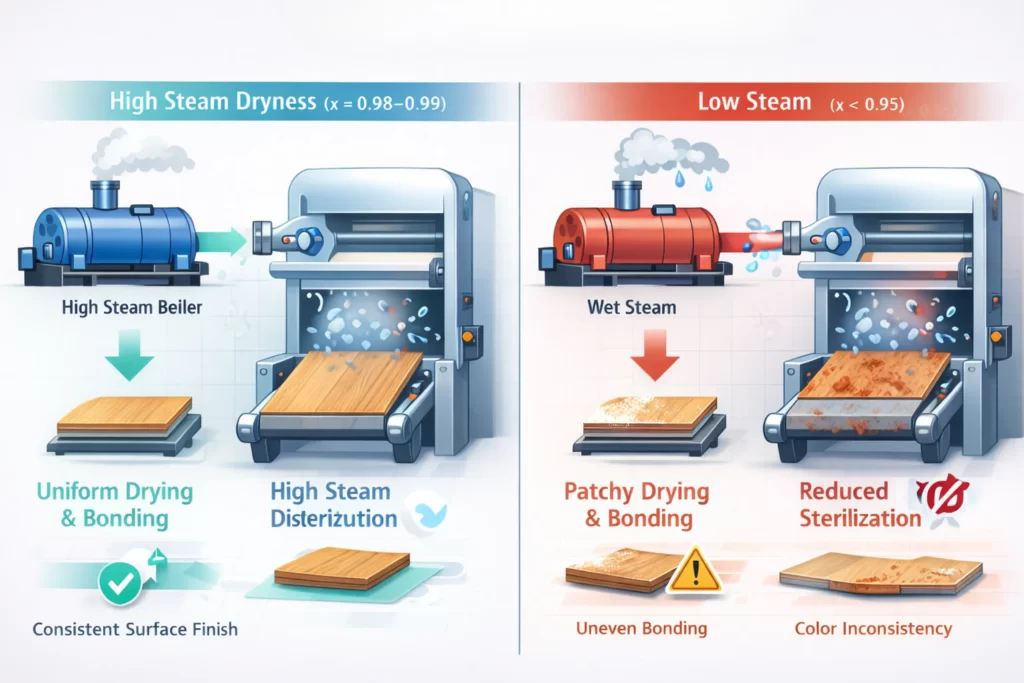
4. Surface Finish and Appearance
In textile finishing, paper drying, plywood pressing, and packaging processes, Steam Quality and Product Quality are closely linked.
Poor Steam Dryness Fraction may result in:
- Patchy drying
- Uneven bonding
- Weak adhesion
- Color inconsistency
Optimal Industrial Steam Dryness ensures uniform surface finish and improved structural stability.
5. Structural Strength and Mechanical Integrity
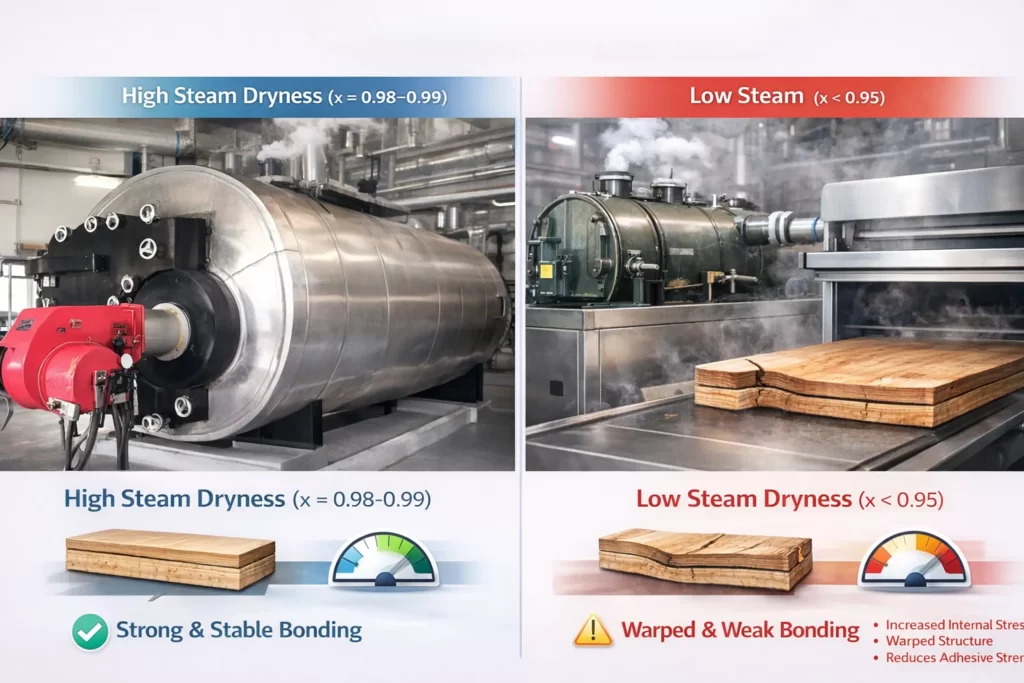
In curing and bonding applications, moisture imbalance due to low Dryness Fraction of Steam can:
- Increase internal stress
- Cause warping
- Reduce adhesive strength
Consistently high Steam Dryness Fraction supports controlled curing cycles and durable product structure.
Operational Impact of Poor Steam Dryness
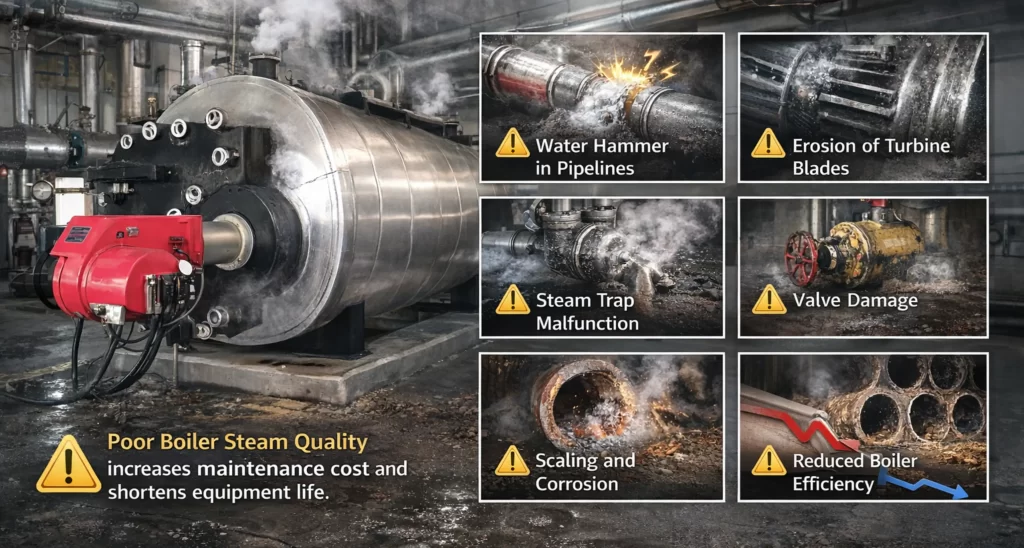
Low Steam Dryness Fraction not only affects product quality but also damages the industrial boiler system.
Common Issues Include:
- Water hammer in pipelines
- Erosion of turbine blades
- Steam trap malfunction
- Valve damage
- Scaling and corrosion
- Reduced boiler efficiency
Poor Boiler Steam Quality increases maintenance cost and shortens equipment life.
Causes of Reduced Steam Dryness Fraction
Several factors affect Steam Quality in Boiler systems:
- High Total Dissolved Solids (TDS)
- Boiler carryover
- Foaming due to improper water treatment
- Sudden load fluctuations
- Inadequate steam separators
- Faulty steam traps
- Improper steam drum design
Proper monitoring of Steam Dryness Fraction ensures stable and efficient boiler operation.
Methods to Improve Steam Dryness Fraction
To maintain optimal Industrial Steam Dryness, industries should implement the following practices:
✔ Install Steam Separators
Removes entrained water droplets before steam distribution.
✔ Maintain Proper Boiler Blowdown
Controls TDS levels and improves Boiler Steam Quality.
✔ Optimize Load Management
Prevents pressure instability and carryover.
✔ Conduct Regular Steam Testing
Monitor Dryness Fraction of Steam using calorimeters.
✔ Ensure Efficient Water Treatment
Prevents foaming and scaling inside the steam boiler.
These practices significantly improve Steam Quality in Boiler systems and enhance overall boiler efficiency.
Steam Dryness Fraction and Energy Efficiency
A high Steam Dryness Fraction directly contributes to improved boiler efficiency by:
- Maximizing latent heat utilization
- Reducing fuel wastage
- Lowering carbon emissions
- Improving heat transfer performance
For industries focused on sustainability and cost reduction, maintaining superior Boiler Steam Quality is a strategic priority.
Economic Benefits of Maintaining Steam Dryness Fraction
When Steam Dryness Fraction is optimized, industries benefit from:
- Reduced fuel consumption
- Lower rejection rates
- Shorter processing time
- Reduced downtime
- Increased production consistency
- Improved operational profitability
The connection between Steam Quality and Product Quality becomes clearly measurable through enhanced production performance.
Conclusion
Steam Dryness Fraction is not just a thermodynamic concept — it is a critical operational parameter that directly influences heat transfer efficiency, equipment reliability, energy utilization, and final product quality.
Maintaining high Steam Dryness Fraction ensures:
- Stable Steam Quality in Boiler systems
- Improved Industrial Steam Dryness
- Superior Boiler Steam Quality
- Enhanced boiler efficiency
- Consistent product output
For any facility operating an industrial boiler , managing the Dryness Fraction of Steam must be a continuous priority. Organizations that invest in monitoring and optimizing Steam Dryness Fraction gain long-term advantages in productivity, sustainability, compliance, and profitability.
Frequently Asked Questions About Steam Dryness Fraction
Steam Dryness Fraction is the ratio of dry saturated steam to the total steam mixture (dry steam + moisture). It indicates the quality of steam produced in an industrial steam boiler.
It directly affects heat transfer efficiency, boiler efficiency, equipment life, and overall product quality. Higher dryness ensures stable and efficient operations.
In most industrial steam boiler applications, the ideal range is between 0.97 to 0.99 for optimal Industrial Steam Dryness and performance stability.
Wet steam can cause uneven heating, excess moisture, surface defects, weak bonding, and inconsistent processing conditions.
Yes. Lower steam dryness reduces latent heat availability, increases fuel consumption, and negatively impacts overall boiler efficiency.
Common causes include high TDS levels, boiler carryover, foaming, improper water treatment, sudden load fluctuations, and faulty steam traps.
It can be improved by installing steam separators, maintaining proper boiler blowdown, ensuring effective water treatment, and conducting regular steam testing.
It is measured using steam calorimeters that determine the proportion of dry steam in the total steam mixture.
Yes. High Steam Dryness Fraction ensures effective sterilization in pharmaceutical, food processing, and dairy industries by delivering consistent latent heat.
Wet steam can cause water hammer, corrosion, scaling, steam trap failure, valve damage, and reduced equipment life.