Fire Tube Boilers are widely used Industrial Steam Boiler known for its simple pressure vessel design and stable steam generation under low to medium pressure conditions. While mechanical design and combustion efficiency are important, the long-term performance and reliability of a steam boiler are equally dependent on boiler water quality, as improper water chemistry directly affects heat transfer surfaces and pressure parts.
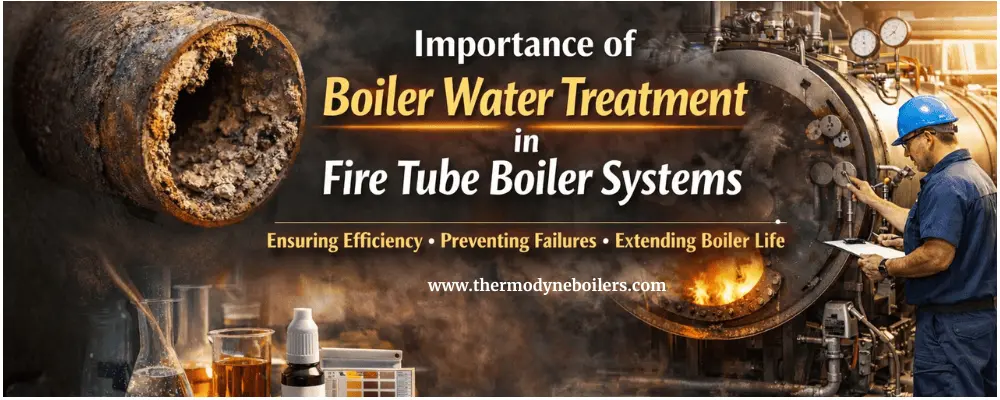
In industrial operations, boiler water treatment plays a decisive role in maintaining efficiency, safety, and operational continuity. Poor water quality can seriously affect heat transfer surfaces, steam quality, and internal components of Fire Tube Boilers. For every Industrial Boiler, untreated or poorly treated water results in higher fuel consumption, frequent breakdowns, and reduced boiler life. Hence, effective boiler water treatment is a critical requirement for reliable Fire Tube Boiler operation.
Understanding Boiler Water Quality in Fire Tube Boiler Operation
Raw water supplied to a Fire Tube Boiler usually comes from borewells, municipal sources, or surface water. Such water contains dissolved minerals, hardness salts, suspended solids, silica, and dissolved gases. When this untreated water enters a Steam Boiler, these impurities become highly reactive under high temperature and pressure conditions.
In Fire Tube Boilers, hot flue gases pass through tubes while water surrounds them. This design makes the boiler extremely sensitive to water quality. Impurities tend to deposit on heat transfer surfaces, reducing circulation and affecting steam generation. Without proper water treatment, even a well-designed Industrial Steam Boiler cannot deliver stable and efficient performance. Maintaining correct water chemistry is therefore essential for long-term reliability of Fire Tube Boilers.
Why Boiler Water Treatment Is Critical in Fire Tube Boilers
Boiler water treatment is critical in Fire Tube Boilers because their heat transfer efficiency, pressure integrity, and operational safety are directly influenced by the quality and chemical balance of the water surrounding the fire tubes.
Prevention of Scale Formation in Fire Tube Boiler
Scale formation is one of the most common problems faced by Fire Tube Boilers. Hardness salts such as calcium and magnesium precipitate at high temperatures and form hard deposits on boiler tubes and internal surfaces. In a Fire Tube Boiler, scale behaves as a thermal insulator, preventing efficient heat transfer from flue gases to water.
Even a thin layer of scale can significantly increase fuel consumption in an Industrial Boiler. As scale thickness increases, tubes begin to overheat, metal strength reduces, and the risk of tube failure increases. Proper boiler water treatment removes hardness and prevents scale formation, ensuring efficient and safe operation of Fire Tube Boilers.
Control of Corrosion in Industrial Steam Boiler
Corrosion is a major threat to Fire Tube Boilers and other Boilers used in industrial environments. Dissolved oxygen, carbon dioxide, and improper pH levels in boiler water attack metal surfaces, causing pitting and gradual thinning of tubes. In an Industrial Steam Boiler, corrosion often develops internally and becomes visible only after significant damage has occurred.
For continuously operating Fire Tube Boilers, corrosion weakens pressure parts and increases the risk of leakage and unsafe conditions. A well-designed boiler water treatment program controls dissolved gases and maintains proper alkalinity, protecting internal metal surfaces and significantly extending the service life of Fire Tube Boilers.
Prevention of Sludge and Deposits in Boilers
Suspended solids present in untreated water settle inside Boilers as sludge. In Fire Tube Boilers, sludge accumulation restricts water circulation and creates localized overheating zones. This leads to poor heat transfer, unstable steam pressure, and higher blowdown losses.
Boiler water treatment converts sludge-forming impurities into non-adherent particles that can be easily removed through controlled blowdown. This process keeps internal surfaces clean and ensures consistent performance of Fire Tube Boilers and other Industrial Boilers.
Improvement in Steam Quality from Steam Boiler
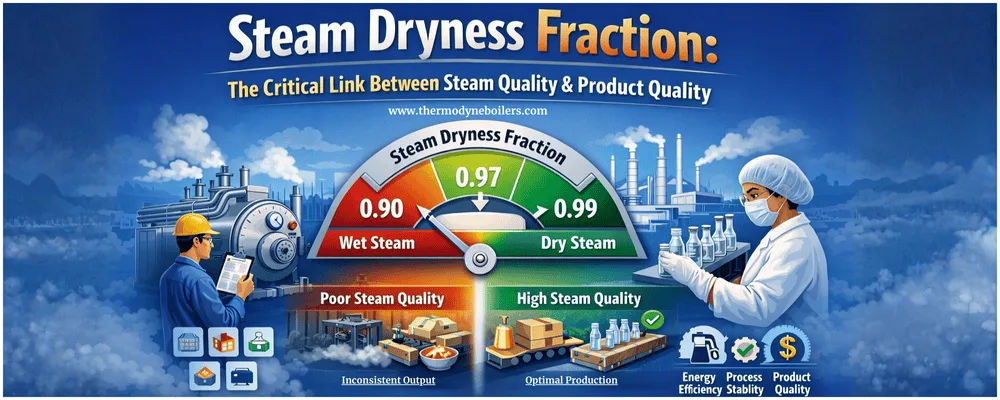
Steam quality is a critical requirement in industries such as pharmaceuticals, food processing, textiles, and dairies. Poor boiler water treatment leads to foaming and priming, causing water droplets to carry over with steam. This results in wet steam, which negatively affects downstream equipment and process quality.
In a Fire Tube Boiler, balanced water chemistry ensures effective steam-water separation. Proper boiler water treatment improves steam purity and ensures that the Steam Boiler delivers dry, clean, and consistent steam for industrial applications.
Objectives of Boiler Water Treatment in Fire Tube Boilers
The primary objective of boiler water treatment in a Fire Tube Boiler is to prevent scale, corrosion, and internal deposits. At the same time, it ensures efficient heat transfer, stable steam generation, and reduced operational costs.
From an industrial perspective, effective water treatment improves fuel efficiency, minimizes unplanned shutdowns, and extends the operational life of Boilers. It also supports safety standards and regulatory compliance for Industrial Steam Boilers.
Types of Boiler Water Treatment Used in Fire Tube Boilers
Boiler water treatment in Fire Tube Boilers is broadly categorized into external and internal methods, each designed to control impurities, protect pressure parts, and ensure consistent steam generation.
External Water Treatment for Industrial Boilers
External water treatment removes impurities before water enters the Fire Tube Boiler. This includes water softeners for hardness removal, reverse osmosis systems for TDS reduction, and deaerators for removing dissolved gases. For high-capacity Industrial Boilers, external treatment greatly reduces the risk of scale and corrosion.
Internal Chemical Treatment in Fire Tube Boiler
Internal treatment involves dosing chemicals directly into boiler water to control remaining impurities. Phosphate treatment, oxygen scavengers, alkalinity boosters, and anti-foaming agents are commonly used in Fire Tube Boilers. Proper monitoring ensures that chemical levels remain within recommended limits.
Blowdown Management in Boilers
Blowdown is an essential part of boiler water treatment in Fire Tube Boilers. It removes concentrated dissolved and suspended solids from boiler water and helps maintain acceptable TDS levels. Efficient blowdown management improves water quality while reducing heat and water losses in Industrial Steam Boiler systems.
Consequences of Ignoring Boiler Water Treatment in Fire Tube Boilers
Ignoring boiler water treatment leads to higher fuel consumption, frequent breakdowns, reduced efficiency, safety hazards, and shortened life of Fire Tube Boilers. In severe cases, complete boiler shutdown or tube replacement may be required, resulting in heavy financial losses.
Conclusion
The Fire Tube Boiler remains a dependable and widely used solution for industrial steam generation. However, its efficiency, safety, and lifespan depend heavily on proper boiler water treatment. Whether it is a small Steam Boiler or a large Industrial Steam Boiler, water quality management is the foundation of sustainable boiler operation.
Investing in a structured boiler water treatment program is not an expense—it is a strategic decision that protects Boilers, improves fuel efficiency, and ensures uninterrupted industrial operations.
FAQs: Boiler Water Treatment in Fire Tube Boilers
Boiler water treatment is essential for a Fire Tube Boiler to prevent scale formation, corrosion, and sludge, ensuring efficient heat transfer and long service life of the Industrial Steam Boiler.
Without proper boiler water treatment, a Fire Tube Boiler faces issues such as high fuel consumption, tube overheating, corrosion damage, poor steam quality, and frequent boiler shutdowns.
Scale deposits on boiler tubes reduce heat transfer efficiency, increase fuel usage, and raise the risk of tube failure in Fire Tube Boilers.
Corrosion in an Industrial Steam Boiler is mainly caused by dissolved oxygen, carbon dioxide, and improper pH levels in untreated boiler water.
Yes, effective boiler water treatment controls foaming and priming, producing dry, high-quality steam from the Steam Boiler.
Blowdown removes accumulated dissolved solids and sludge, maintaining acceptable TDS levels and improving Fire Tube Boiler performance.
External water treatment such as water softening or reverse osmosis is recommended to reduce hardness and TDS before water enters the Fire Tube Boiler.
Common chemicals include phosphate compounds, oxygen scavengers, alkalinity boosters, and anti-foaming agents used to protect Fire Tube Boilers.
Proper boiler water treatment improves fuel efficiency, minimizes maintenance costs, reduces downtime, and extends the life of Industrial Boilers.
Industries such as pharmaceuticals, food processing, textiles, dairies, chemicals, and rice mills require strict boiler water treatment for reliable Steam Boiler operation.