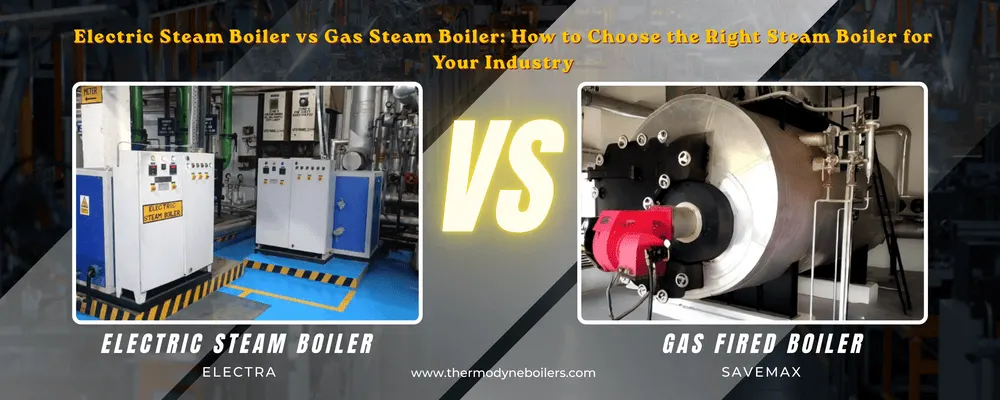
Steam plays a vital role in modern industrial operations and is widely recognized as one of the most reliable mediums for transferring heat and energy within production systems. Many manufacturing processes depend on a consistent and controlled supply of steam to maintain operational stability, ensure product quality, and support efficient plant performance. Because steam can carry large amounts of thermal energy and distribute it effectively across equipment and processes, it remains an essential component in modern industrial infrastructure.
A steam boiler is the core equipment responsible for generating this thermal energy. By heating water and converting it into steam, an industrial steam boiler supports a wide range of applications such as sterilization, drying, heating, cleaning, and power transfer within manufacturing facilities.
When industries plan to install or upgrade a boiler system, one of the most common considerations is whether to choose an electric steam boiler or a gas fired steam boiler. Both technologies are capable of delivering reliable steam output, but they operate using different energy sources and system configurations. Understanding the differences between these two boiler types helps plant engineers and facility managers select the most suitable steam solution for their operations.
Role of Industrial Steam Boilers in Modern Manufacturing
An industrial steam boiler is designed to generate steam efficiently and deliver it to various process applications across a plant. Once produced, steam travels through insulated pipelines and provides thermal energy for equipment and processes that require controlled heating.
Industries rely on steam for several essential operations, including:
- Process heating in chemical and food industries
- Sterilization in pharmaceutical manufacturing
- Drying and finishing in textile production
- Cleaning and sanitation in food processing plants
- Power generation and heat transfer in industrial facilities
Because many industries operate continuously, the efficiency and reliability of the steam boiler system directly affect plant productivity and operational costs. Selecting the right boiler technology therefore becomes a strategic decision for long-term industrial performance.
What is an Electric Steam Boiler?
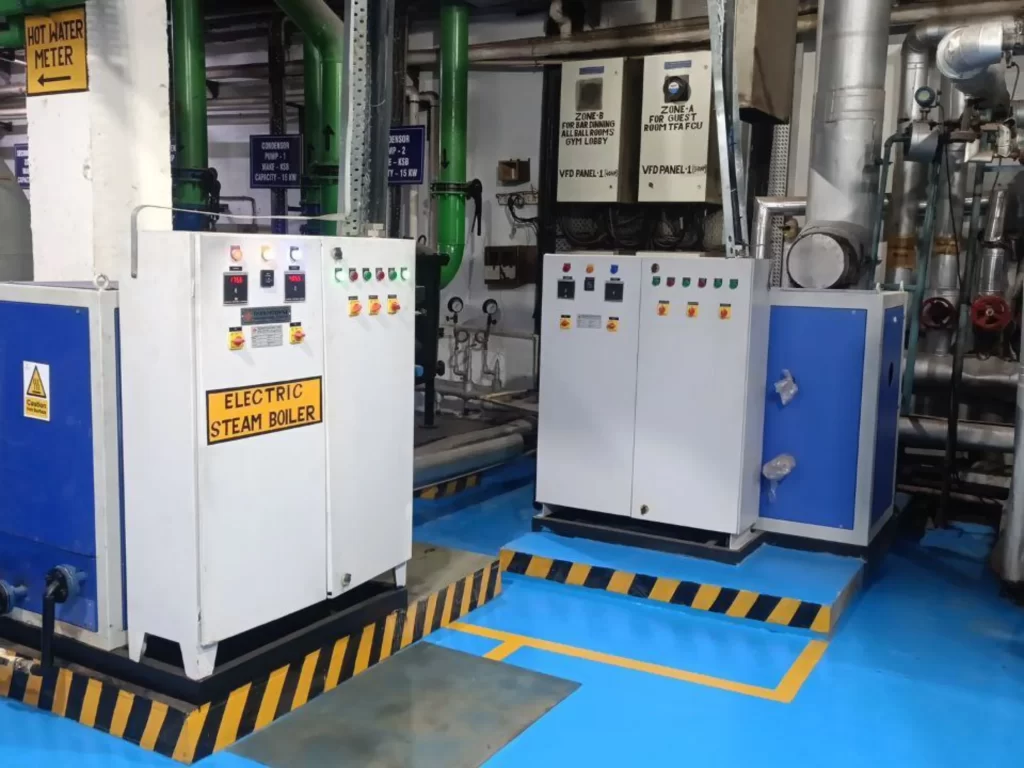
An electric steam boiler generates steam by converting electrical energy directly into heat. Unlike conventional boilers that rely on combustion of fuel, electric boilers use heating elements or electrode technology to heat water.
In an electric boiler, electrodes are immersed in water. When electricity flows through these electrodes, resistance generates heat, which converts water into steam. The produced steam is then supplied to industrial processes that require controlled and precise heating.
One of the key advantages of an electric steam boiler is its extremely high energy efficiency. Since electrical energy is converted directly into heat with minimal losses, electric boilers can achieve efficiency levels of up to 98 percent.
Key Features of Electric Steam Boilers
Electric boilers offer several operational advantages for modern industries:
- High Energy Efficiency- Electric steam boilers convert nearly all electrical energy into heat, making them one of the most energy efficient boiler technologies available.
- Compact and Space Saving Design- Electric boilers are typically compact and require less installation space compared to traditional fuel-fired boilers.
- Clean Operation- Because there is no combustion process, an electric steam boiler produces zero on-site emissions, making it ideal for industries that must meet strict environmental standards.
- Low Maintenance Requirements- Electric boilers have fewer mechanical components and do not require burner maintenance, fuel handling, or exhaust systems.
- Simple Installation- Installation is generally easier because electric boilers do not require fuel pipelines, chimneys, or combustion air systems.
Due to these advantages, electric steam boilers are commonly used in industries such as pharmaceuticals, hospitals, laboratories, food processing units, and textile facilities.
What is a Gas Fired Steam Boiler?
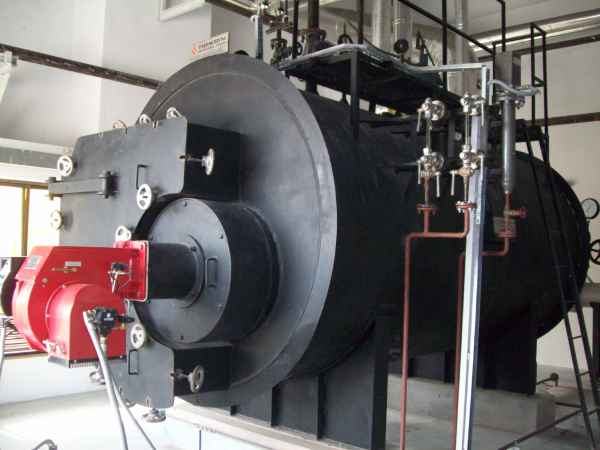
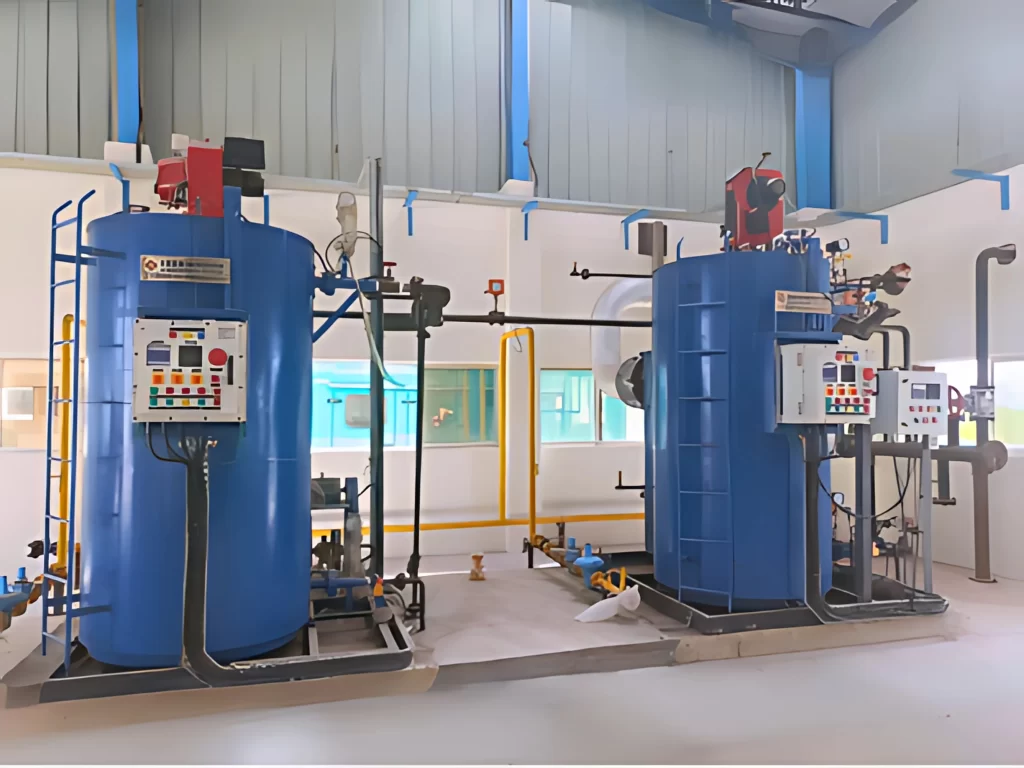
A gas fired steam boiler generates steam by burning natural gas or propane inside a combustion chamber. The heat produced during the combustion process is transferred to water through heat transfer surfaces, converting water into steam.
Gas boilers are widely used in industrial facilities where large quantities of steam are required continuously. Advanced burner systems regulate the combustion process to ensure efficient fuel usage and stable steam production.
Industries that commonly rely on gas fired steam boilers include:
- Food processing plants
- Chemical manufacturing units
- Textile production facilities
- Paper and packaging industries
- Industrial laundries
Because of their ability to generate large amounts of steam, gas boilers remain one of the most common industrial steam boiler technologies used in manufacturing.
Electric Steam Boiler vs Gas Fired Steam Boiler: Key Differences
When comparing an electric steam boiler and a gas fired steam boiler, several factors influence the selection process.
| Feature | Electric Steam Boiler | Gas Fired Steam Boiler |
|---|---|---|
Energy Source |
Electricity |
Natural Gas / Propane |
Efficiency |
Up to 98% |
Up to 90% |
Emissions |
Zero on-site emissions |
Produces CO₂ and NOx |
Installation |
Simple installation |
Requires gas pipeline and chimney |
Maintenance |
Lower maintenance |
Higher maintenance |
Startup Time |
Instant steam generation |
Longer startup time |
Space Requirement |
Compact design |
Requires larger area |
This comparison highlights how each boiler type suits different industrial environments.
Advantages of Gas Fired Steam Boilers
While electric boilers offer clean operation, gas fired steam boilers provide several advantages for large industrial facilities.
- High Steam Production Capacity- Gas boilers can generate large volumes of steam, where an electric boiler will require higher loads making the gas boiler suitable for heavy industrial operations.
- Lower Operating Cost in Some Regions- Where natural gas is available at competitive prices, operating a gas fired boiler may be more economical than using electricity.
- Durability and Long Service Life- Industrial gas boilers are designed for continuous operation and can operate reliably for many years with proper maintenance.
- Suitable for Large Manufacturing Plants- Facilities that require continuous high-pressure steam often rely on gas fired boilers for consistent production performance.
Cost Considerations for Industrial Boilers
When selecting between an electric steam boiler and a gas fired steam boiler, industries must evaluate both installation costs and long-term operating expenses.
- Initial Investment- Electric boilers typically require lower installation costs because they do not need fuel pipelines, burners, or exhaust systems. Their compact design also reduces infrastructure requirements.
Gas fired boilers require additional equipment such as gas supply lines, burners, and flue gas systems, which can increase the initial installation investment.
- Operating Cost- Operating cost largely depends on local energy prices. In regions where electricity tariffs are high, electric boilers may lead to higher operational costs.
However, where natural gas is readily available and affordable, gas fired boilers can provide cost-effective steam generation for large industrial operations.
Environmental Considerations in Boiler Selection
Environmental sustainability is becoming increasingly important for modern industries.
An electric steam boiler produces zero on-site emissions, making it a suitable option for industries that must comply with strict environmental regulations or aim to reduce their carbon footprint.
A gas fired steam boiler, although efficient, still produces emissions due to fuel combustion. However, modern burner technology has significantly reduced emissions through improved combustion efficiency and low-NOx systems.
Industries focused on sustainable manufacturing must evaluate both energy efficiency and environmental impact when selecting a boiler system.
Choosing the Right Boiler for Your Industry
Selecting the right industrial steam boiler depends on several operational factors.
- Steam Demand- Facilities with moderate steam demand may benefit from electric boilers, while large manufacturing plants often require gas fired boilers for higher steam output.
- Energy Availability- The availability and cost of electricity and natural gas play a major role in boiler selection.
- Installation Infrastructure- Plants without gas pipeline access or with limited installation space may prefer electric boilers.
- Environmental Regulations- Industries operating in regulated environments may choose electric boilers because of their clean operation.
Industrial Boiler Solutions from Thermodyne Engineering Systems
Choosing between an electric steam boiler and a gas fired steam boiler depends on the specific requirements of your plant. Steam demand, energy availability, operational costs, and environmental considerations all play important roles in determining the most suitable solution.
Thermodyne Engineering Systems manufactures a wide range of industrial steam boilers, including electric boilers and gas fired boilers designed to deliver reliable steam generation for modern manufacturing industries.
If you are planning to install a new boiler system or upgrade an existing steam plant, consulting experienced boiler experts can help identify the most efficient and cost-effective solution for your operations.
Industries can also explore Thermodyne’s range of energy efficient steam boilers designed for diverse industrial applications.
Conclusion
Both electric steam boilers and gas fired steam boilers offer distinct advantages depending on the operational requirements of the industry.
Electric boilers provide high efficiency, compact installation, and environmentally friendly operation, making them suitable for industries that prioritize clean energy and simplified infrastructure.
Gas fired boilers remain a powerful solution for industries requiring large volumes of steam and cost-effective fuel usage where natural gas is available.
Before selecting a boiler system, industries should carefully evaluate steam demand, energy costs, infrastructure requirements, and long-term operational goals. The right industrial steam boiler can significantly improve production efficiency, reduce operating costs, and ensure reliable steam generation for years to come.
Frequently Asked Questions
An electric steam boiler generates steam by converting electrical energy into heat using heating elements or electrode technology. It is known for high efficiency and clean operation.
A gas fired steam boiler produces steam by burning natural gas or propane in a combustion chamber. It is widely used in industries that require large volumes of steam.
Electric steam boilers can reach efficiency levels of up to 98% because electricity is converted directly into heat. Gas fired boilers typically operate at 80–90% efficiency.
Electric steam boilers are commonly used in pharmaceuticals, hospitals, food processing, laboratories, and textile industries where clean steam is required.
Large industries that require high steam production often prefer gas fired steam boilers because they can generate large volumes of steam economically.
An electric steam boiler works by using electric heating elements or electrode technology to heat water and convert it into steam. When electricity flows through the heating elements, resistance generates heat that produces steam for industrial processes such as heating, sterilization, and drying.
A gas fired steam boiler generates steam by burning natural gas or propane in a combustion chamber. The heat produced during combustion is transferred to water through heat exchange surfaces, converting the water into steam used for industrial applications.
The primary difference lies in the energy source used for steam generation. An electric steam boiler uses electricity to produce heat, while a gas fired steam boiler relies on the combustion of natural gas or propane to generate steam.
Yes, electric steam boilers are considered environmentally friendly because they produce zero on-site emissions. Since there is no combustion process involved, they do not release carbon dioxide or nitrogen oxides during operation.
Generally, gas fired steam boilers require more maintenance than electric boilers because they involve combustion systems, burners, fuel supply systems, and exhaust components that must be inspected and serviced regularly.
An electric steam boiler is usually easier to install because it does not require fuel pipelines, flue gas exhaust systems, or combustion air arrangements. Gas fired steam boilers require additional infrastructure such as gas supply lines and chimneys.