A Pressurized condensate recovery system captures hot condensate from steam-using processes and returns it to the boiler house instead of draining it away. This single improvement dramatically increases the efficiency of boiler, reduces steam generation cost, and supports long-term sustainability for any steam-reliant industry.
Textile mills, food plants, chemical units, pharmaceuticals, paper mills, plywood factories, distilleries, and FMCG plants can all save major amounts of fuel, water, and chemicals simply by using an efficient steam condensate recovery system.
What Is a Pressurized Condensate Recovery System?
In any steam system, steam releases its heat inside process equipment—like dryers, kettles, heat exchangers, reactors, and jackets—converting into hot condensate.
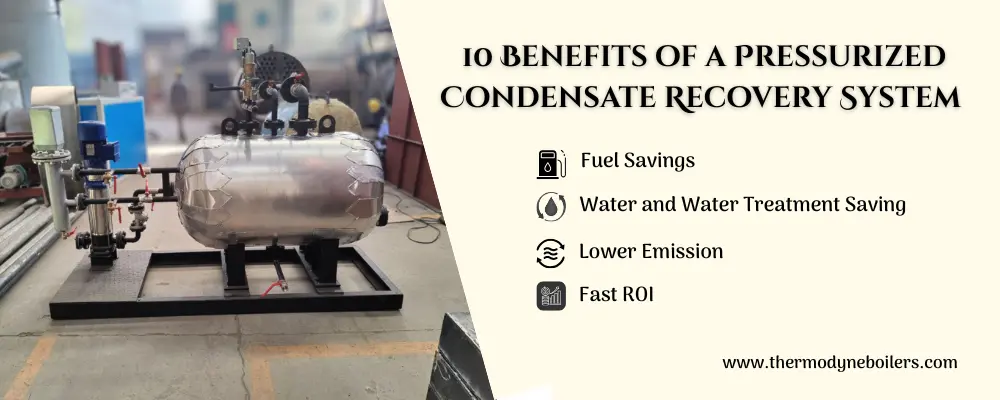
A Pressurized condensate recovery system collects this high-temperature condensate through condensate lines, steam traps, receivers, and pumps, then sends it back to the boiler as hot feedwater.
A modern Pressurized condensate recovery unit ensures that this high-quality condensate is reused instead of wasted.
Top 10 Benefits of a Pressurized Condensate Recovery System
1- Significant Fuel Savings
In a pressurized condensate recovery system, the water normally returns at 100-120°C, so the boiler requires far less energy to convert it back into steam. Compared to heating cold make-up water, using a steam condensate recovery system can reduce fuel bills by several percent annually—an extremely significant saving at industrial steam loads.
Coal, oil, gas, and biomass consumption all drop noticeably once condensate recovery increases.
2- Lower Water Consumption and Effluent Load
Every kilogram of recovered condensate directly reduces fresh water requirement. At the same time, less hot water is discharged to drain, minimizing effluent volume and temperature.
This is particularly beneficial for plants facing:
- Water shortages
- High municipal water tariffs
- Strict environmental regulations
3- Reduced Water Treatment and Chemical Costs
Condensate is:
- Absent of any dissolved salts
- Low-TDS
Returning it through a Pressurized condensate recovery system reduces the volume of make-up water passing through softeners, RO units, or DM plants.
This lowers:
- Chemical dosing
- Regeneration salts
- Membrane replacement
- Power used in water treatment
4- Higher Boiler Efficiency and Improved Steam Availability
Feeding hotter water back to the boiler increases overall boiler efficiency by reducing the heat input needed to raise steam.
In many industries, installing a Pressurized condensate recovery unit boosts steam availability without adding new boiler equipment.
5- Lower Blowdown and Reduced TDS Losses
Since condensate does not contain any dissolved salts, increasing condensate percentage in feedwater reduces overall TDS in the boiler.
This results in:
- Reduced blowdown frequency
- Lower heat loss
- Slower scale formation
- Improved lifetime of boiler tubes
Less blowdown directly increases the efficiency of boiler by reducing heat wastage.
6- Reduced Corrosion and Longer System Life
A properly designed Pressurized steam condensate recovery system minimizes oxygen ingress and maintains stable water chemistry.
This reduces corrosion in:
- Condensate lines
- Feed tanks
- Pumps
- Boiler pressure parts
Plants experience fewer leaks, fewer failures, and longer life of piping and boiler auxiliaries.
7- Smaller Load on Boiler and Utilities
When heat and water are recycled effectively:
- Total steam demand reduces
- Raw water requirement decreases
- Water treatment and effluent systems work under lower load
This can postpone or eliminate the need for new utilities like boilers, softeners, RO systems, or cooling systems.
In new projects, good condensate recovery design may even allow selecting a smaller boiler.
8- Lower Emissions and Better Sustainability
Fuel savings through a condensate recovery system directly reduce emissions.
Reduced water abstraction and lower effluent discharge further improve the plant’s environmental footprint—important for ESG compliance.
9- Improved Plant Safety and Working Conditions
Without condensate recovery, hot water often spills from open drains, vents, or leaking lines.
A closed-loop Pressurized steam condensate recovery system eliminates:
- Hot steam plumes
- Wet floor areas
- Thermal shock risks
- High-temperature zones around drains
This improves workplace safety significantly.
10- Fast Payback and Excellent ROI
Condensate recovery is one of the highest-ROI energy conservation investments in a boiler house.
Savings come from:
- Reduced fuel
- Lower water usage
- Lower chemical cost
- Less maintenance
- Lower emissions
Most plants achieve payback within 5-6 months, making a condensate recovery unit one of the most profitable boiler-side upgrades.
Conclusion
A Pressurized condensate recovery system is not just an add-on—it’s a core efficiency component for any steam-based industry. By recovering heat, water, and chemical value already paid for, it:
- Enhances boiler efficiency
- Reduces fuel consumption
- Cuts operational cost
- Protects boiler assets
- Supports sustainability goals
With quick ROI and long-term savings, every steam-intensive plant should prioritise upgrading or installing a modern Pressurized steam condensate recovery system.
FAQs related to Pressurized Condensate Recovery System PCRS
A pressurized condensate recovery system collects high-temperature condensate from steam processes and returns it to the boiler as hot feedwater to increase efficiency and reduce fuel consumption.
It returns hot condensate at 100–120°C, reducing the heat load on the boiler and lowering fuel usage. This directly increases boiler efficiency and steam generation capacity.
Textiles, pharmaceuticals, food processing, chemicals, paper mills, plywood factories, FMCG plants, and distilleries benefit greatly due to high steam demand and continuous condensate generation.
Plants can reduce fuel consumption by several percent annually. Savings depend on steam load, condensate temperature, and the percentage of condensate recovered.
Yes. Recovered condensate is low-TDS and reduces the demand for fresh make-up water, chemical dosing, RO/DM regeneration, and water treatment costs.
Since condensate contains almost zero dissolved salts, increasing its percentage in feedwater lowers boiler TDS, reduces blowdown frequency, and minimizes heat losses.
Absolutely. Lower fuel consumption directly reduces CO₂, NOx, and particulate emissions, helping industries meet sustainability and ESG goals.
Most steam-intensive industries achieve payback within 5–6 months due to savings in fuel, water, chemicals, and maintenance.
Yes. It eliminates open drains, steam plumes, and hot water spills, improving workplace safety and reducing thermal shock risks.
Yes. Modern pressurized condensate recovery units can be easily retrofitted into existing steam, condensate, and feedwater systems with minimal downtime.